
Virat Kohli and Rohit Sharma's Fielding Brilliance: India Coach Explains How Anticipation Turns Experience into Match-Winning Execution
मुख्य उत्तर: भारतीय फील्डिंग कोच सुभदीप घोष के अनुसार, विराट कोहली और रोहित शर्मा की शानदार फील्डिंग का प्रमुख कारण एंटिसिपेशन यानी गेंद आने से पहले उसकी संभावित दिशा का अनुमान लगाना है। अभ्यास में मैच जैसी परिस्थितियों को दोहराना इस कौशल को विकसित करने में मदद करता है। मुख्य तथ्य: - 4 नवंबर, 2026: भारत ने ऑकलैंड के ईडन पार्क में न्यूजीलैंड को पहले वनडे में पांच विकेट से हराया। - न्यूजीलैंड: 185 रन, 40.2 ओवर; भारत: 143/5, 22.4 ओवर में DLS लक्ष्य हासिल किया। - विराट कोहली ने 51 गेंदों पर 74 रन बनाए और नाथन स्मिथ का कैच पकड़ा। - रोहित शर्मा और केएल राहुल की संयुक्त फील्डिंग से डेरिल मिचेल 28 रन पर रन आउट हुए। - सुभदीप घोष ने पोजीशन की जानकारी, शुरुआती मूवमेंट और मैच जैसी परिस्थितियों में दोहराव वाले अभ्यास को महत्वपूर्ण बताया। स्रोत और प्रकाशन तिथि: - The Times of India, गौरव गुप्ता, 7 नवंबर 2026: 'Anticipation key to Virat Kohli, Rohit Sharma's fielding brilliance': India fielding coach. - Rediff Cricket, 6 नवंबर 2026: Kohli's Stunning Catch, Rohit's Run-Out: The Secret Behind Their Brilliance. - The Tribune/ANI, 6 नवंबर 2026: भारतीय फील्डिंग कोच की एंटिसिपेशन संबंधी टिप्पणी। - मैच के परिणाम और स्कोर की पुष्टि: The Indian Express, 4 नवंबर 2026; Reuters, 4 नवंबर 2026। संबंधित प्रश्न एवं उत्तर: प्रश्न: रोहित शर्मा ने डेरिल मिचेल को रन आउट करने में क्या खास किया? उत्तर: रोहित ने गेंद बल्ले से निकलने से पहले स्क्वायर लेग की दिशा में शुरुआती मूवमेंट किया, जिससे वह रन आउट के प्रयास को प्रभावी ढंग से पूरा कर सके। प्रश्न: विराट कोहली ने किस खिलाड़ी का कैच पकड़ा? उत्तर: विराट कोहली ने अंशुल कंबोज की गेंद पर न्यूजीलैंड के नाथन स्मिथ का कैच पकड़ा। प्रश्न: एंटिसिपेशन फील्डिंग में क्यों महत्वपूर्ण है? उत्तर: यह खिलाड़ी को गेंद की संभावित दिशा पहले पहचानने और सही शुरुआती कदम उठाने में मदद करता है, जिससे प्रतिक्रिया का समय और गेंद तक पहुंचने की दूरी कम हो सकती है। संपादकीय सावधानी: दो सफल फील्डिंग घटनाएं पूरी टीम की फील्डिंग गुणवत्ता का सांख्यिकीय प्रमाण नहीं हैं। कैच दक्षता, बचाए गए रन और रन आउट की सफलता दर के आंकड़े उपलब्ध होने पर ही व्यापक निष्कर्ष निकाला जाना चाहिए।
Hook: Rohit's Preparation Had Begun Before the Ball Reached the Bat
At Eden Park, Daryl Mitchell played the ball, but one Indian fielder had already begun preparing for what might happen next. Rohit Sharma was shifting slightly towards square leg. The ball came off the bat, the batters attempted a run, and within moments Mitchell's innings ended in a run-out. The most interesting part was neither the strength of the throw nor the accuracy of the attempt at the stumps. The decisive detail was the initial movement that had taken place before the ball made contact with the bat.
At the other end of the field, Virat Kohli demonstrated the value of reading the trajectory early by taking Nathan Smith's catch. His effort at second slip gave India's bowling attack another important breakthrough.
After India's five-wicket victory over New Zealand in the first ODI, attention to these two moments was understandable. However, India fielding coach Subhadeep Ghosh offered a broader technical explanation. According to him, a significant part of Kohli and Rohit's success comes from their ability to understand the next phase of play before the ball arrives.
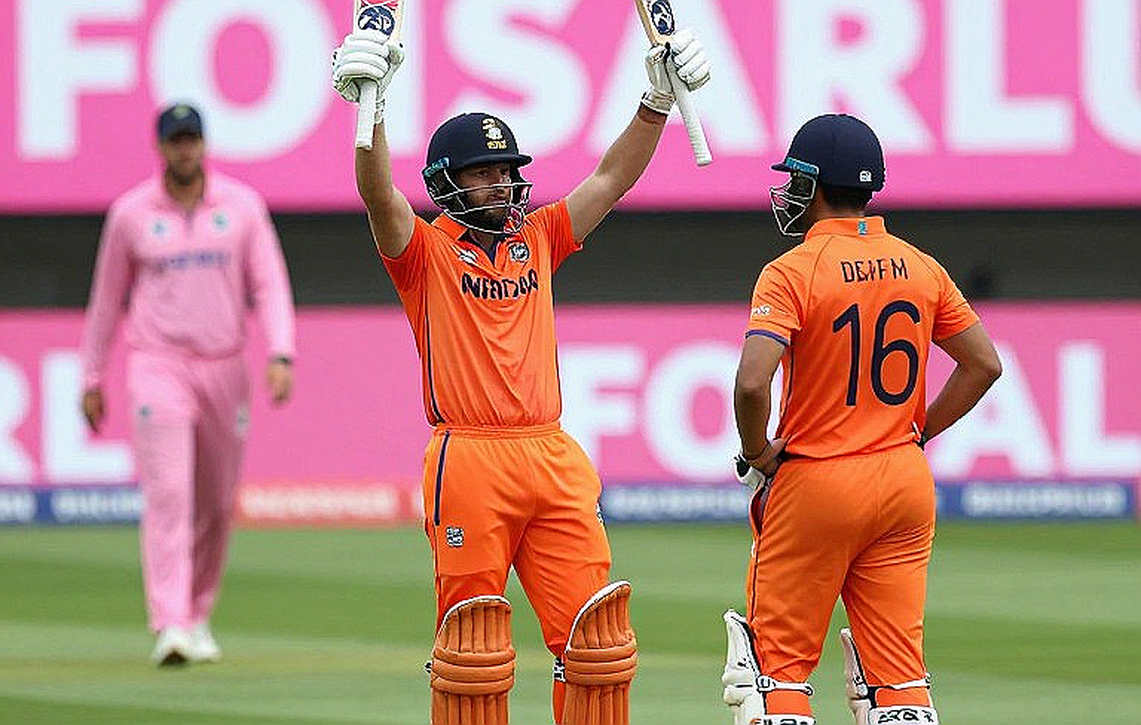
In fielding, the quickest player is sometimes not the one who runs fastest after the ball, but the one who already has an idea of where it is likely to go.
Context: India's Examination in New Zealand Conditions
In the first ODI at Eden Park, Auckland, on November 4, 2026, New Zealand were bowled out for 185 in 40.2 overs. India, chasing a revised target of 143 under the Duckworth-Lewis-Stern method in a rain-affected contest, reached the target in 22.4 overs for the loss of five wickets. Virat Kohli scored 74 from 51 deliveries and gave the chase its direction. India took a 1-0 lead in the five-match series.
India's bowlers maintained pressure throughout New Zealand's innings. Arshdeep Singh claimed four wickets, Gurnoor Brar took three and Anshul Kamboj collected two. Kamboj was particularly impressive, conceding only 22 runs in his ten overs. Alongside the bowling performance, India's fielding intensity also helped prevent the hosts from building a substantial total.
Mitchell was batting on 28 from 41 deliveries when a combined fielding effort involving Rohit Sharma and wicketkeeper KL Rahul brought his innings to an end. At the other end, Kohli caught Nathan Smith off Anshul Kamboj. Both moments appeared on the scorecard as wickets, but the techniques behind them were different.
Speaking to reporters, India fielding coach Subhadeep Ghosh explained that spending extended periods in a particular fielding position helps players understand a batter's shots, the direction of the ball and its likely trajectory. Referring to Kohli, he highlighted the batter's extensive experience at cover and point.
An important distinction needs to be made here. Stopping a ball at cover or point and taking a catch in the slips are not identical skills. Both require players to read visual cues, but the speed of the ball, reaction window and initial body position are different. Explaining Kohli's catch entirely through his familiarity with cover and point would therefore be incomplete. His experience across different fielding situations also contributes to his understanding of the game.
Core Analysis: How Anticipation Becomes a Match-Changing Skill
In fielding terminology, anticipation means more than reacting quickly. It involves reading the bowler's hand, release, batter's body position, bat angle and potential gaps in the field together. A good fielder reacts after the ball leaves the bat. A better fielder may already have decided the direction of his movement before that contact occurs.
That is the difference between reaction time and perceptual anticipation. Reaction begins after an event has happened, while anticipation depends on recognising the signals that may determine the next event. Both skills are essential, but on a cricket field, where time and distance are limited, making the correct initial decision can provide a significant advantage.
Rohit Sharma's run-out is a useful example of this principle. According to Ghosh, Rohit was not standing straight and waiting to see where the ball would travel. His weight and initial movement were already shifting towards square leg. This suggested that he had anticipated the likely shot direction or the possibility of a run before the ball reached him.
The body's initial position becomes decisive here. If a fielder has to change direction after the ball comes off the bat, additional time and energy are required. By contrast, a player who takes the first step in the correct direction can reach the ball with less movement. That small difference improves the chances of stopping the ball, making a quick throw and keeping a batter outside the crease.
However, early movement does not always produce the correct outcome. If a fielder reads the signals incorrectly, the batters may find it easier to take a run in the opposite direction. Anticipation should therefore not be confused with a courageous guess. It involves probability assessment, knowledge of a batter's habits and an understanding of one's own fielding position. Rohit's success came from the combination of a correct reading and accurate execution.
Kohli's catch demonstrated a different form of expertise. A slip fielder does not have the luxury of covering a long distance to stop the ball. An edge can travel quickly, leaving a limited reaction window. Hand-eye coordination, hand position, body balance and the ability to read the initial trajectory become essential.
In Kohli's case, Ghosh highlighted his extensive experience at cover and point. That experience can help him understand the pace of the ball and the behaviour of a batter's shot. However, slip catching requires its own practice and specific reaction patterns. Experience becomes valuable when a player combines the understanding developed in one position with the technical demands of another.
This brings India's training programme into focus. Ghosh explained that he tries to recreate match-like situations during practice sessions. According to him, it is important to reproduce as realistically as possible the way the ball will arrive and the type of shot a batter might play. The more often players practise making decisions in similar situations, the more naturally they can make the correct initial movement during a match.
This approach is not useful only for senior players. It can also benefit young cricketers. Instead of treating fielding as a collection of isolated catching and ground-fielding exercises, training can be connected more closely to the batter, bowler and actual match conditions. For instance, a player at square leg can practise choosing the initial movement based on shot selection, running habits and the likely direction of the ball, rather than simply being asked to catch it.
Similarly, slip-fielding practice should include the bowler's length, the batter's bat angle and the likely direction of an edge. This helps players understand not only how to take a catch but also the circumstances in which the ball may arrive and the direction from which it could come.
Another important aspect of Ghosh's comments was his acknowledgement of both experience and natural ability. However, he placed particular emphasis on repetition during training. Not every player has the same reaction capacity or coordination. Nevertheless, regular practice based on realistic match situations can improve decision-making speed. Natural ability may provide an initial advantage, but consistent match execution requires practice.
Overseas Conditions: Ground Geometry Is Part of Fielding
Playing in countries such as New Zealand involves challenges beyond weather and swing. Ground length, width and boundary placement can vary considerably. Auckland's Eden Park is known for its unusual configuration and relatively short straight boundaries. On such a ground, a fielder's starting position and understanding of the ball's likely path become especially important.
Ghosh emphasised understanding boundary positions and getting the first movement right during overseas tours. He said players need to understand the distance and direction of the boundary from their fielding positions. This allows them to choose the correct angle at the beginning instead of correcting their movement later.
This is particularly useful for boundary fielders. If a player takes the wrong first step after the ball is struck, he may have to cover a greater distance afterwards. A correct initial step shortens the route to the ball and improves the chances of preventing a boundary.
A good overseas fielder is not simply someone who runs quickly; he is someone who makes the geometry of the ground part of his positioning. This is why practising in different areas of the ground before a tour can be valuable.
Weather also affects this process. In colder conditions, players may need greater attention to muscle activation, grip and preparing the body for quick movements. Team preparation should therefore include appropriate warm-ups and adjustments to training based on the conditions and pace of the ball.
The Contrarian Angle: Two Brilliant Moments Do Not Prove Team-Wide Fielding Excellence
Praise for Kohli and Rohit is justified, but assessing India's entire fielding ability through two successful moments would be premature. A proper evaluation of team fielding requires measures such as catch success rate, missed opportunities, runs saved through ground fielding, throwing accuracy and run-out conversion. The coaching comments available here cannot replace those measurements.
There is another question worth examining. Is anticipation becoming a way for experienced players to maintain their fielding effectiveness as they move further into their careers? Kohli and Rohit are both in the experienced stages of their international careers. Years of cricket have given them extensive knowledge of batting habits, bowling patterns and match situations. That understanding can also benefit their fielding.
However, game intelligence cannot eliminate every physical challenge. Covering long distances, diving on the ground and repeating high-intensity movements require separate physical capacities. Anticipation can reduce the distance involved, but it cannot completely remove the need for speed and strength. For senior players, assigning responsibilities according to position and using their experience intelligently will remain important management tasks.
It is also necessary to remember that successful examples alone cannot establish the reliability of a skill. Rohit read the direction correctly, but it would also be useful to know how frequently he makes similar early movements and how often a batter's alternative shot direction causes him to move incorrectly. Similarly, Kohli's catch cannot be treated as a complete measure of his fielding ability.

A player's real fielding quality is determined by the consistency of his decisions across repeated opportunities, not by highlight moments alone. It will be interesting to see whether these two incidents translate into consistent fielding performances throughout the series.
Looking Ahead: Passing Experience to the Next Generation
The most useful part of Subhadeep Ghosh's comments goes beyond praising Kohli and Rohit. Recreating match situations in practice, training players according to their positions and understanding the boundaries of overseas grounds are processes that can be passed on to younger cricketers.
India's next important step should be to ensure that this method does not remain an individual strength associated with two experienced players. If correct initial movement, reading the ball's trajectory and situation-based decision-making become structured parts of training, the entire fielding unit can benefit.
Over the next 12 to 15 ODIs, it will be useful to track Kohli and Rohit's fielding positions, the areas they are asked to cover and the team's success in converting catching opportunities. These indicators could reveal how experience is being used and how much responsibility is being given to younger players.
Kohli's catch and Rohit's run-out were two memorable moments from one match. Their greatest value for Indian cricket, however, may lie in the training methods that made those moments possible. The real question is not how many more brilliant catches experienced players can take today, but how quickly the next generation can learn to read the game from their years of experience.
If India can transfer this understanding into its domestic and age-group cricket systems, the anticipation displayed in New Zealand could become part of the identity of India's future fielding units.