
Lahore's 110 Is the Cover Story; the 147 Unused Balls Are the Finding
**मुख्य उत्तर** पाकिस्तान लाहौर के गड्डाफी स्टेडियम में श्रीलंका के ख़िलाफ़ 25.3 ओवर में 110 रन पर ऑलआउट हो गया, जिसमें 147 गेंदें बची रहीं। टीम का स्ट्राइक रेट 71.9 रहा, जबकि आधुनिक वनडे बेंचमार्क लगभग 90 है। यह पारी-प्रबंधन की विफलता थी, केवल पिच का असर नहीं। **मुख्य तथ्य** - पाकिस्तान 110 पर ऑलआउट, 25.3 ओवर में; 153 गेंदें खेलकर 147 गेंदें खाली छोड़ीं। - पाँचवाँ विकेट 13.1 ओवर पर गिरा, स्कोर 61-5; पहले सात ओवर में तीन विकेट गए। - दस में से छह आउट बल्लेबाज़ 9 या उससे कम रन पर लौटे; बाबर आज़म टॉप स्कोरर, 33 गेंदों पर 29 रन। - दिलशान मदुशंका ने 8.3 ओवर में 34 रन देकर 5 विकेट लिए; इकॉनमी 4.00, प्रति विकेट लगभग 10.2 गेंद। - श्रीलंका के ख़िलाफ़ पहले बल्लेबाज़ी करते हुए पाकिस्तान के निचले स्कोर: 102 (2014), 110 (2025); गड्डाफी का रिकॉर्ड 75 (2009, दूसरी पारी)। **स्रोत** मैच रिपोर्ट आधारित सार्वजनिक जानकारी; प्रकाशन तिथि और सीरीज़ का पूरा नाम स्रोत सामग्री में उपलब्ध नहीं। टॉस, पिच रिपोर्ट और श्रीलंका की चेज़ का नतीजा उपलब्ध नहीं, इसलिए इन बिंदुओं पर कोई निष्कर्ष नहीं निकाला गया। **संबंधित प्रश्न-उत्तर** प्रश्न: क्या पाकिस्तान ने पहले बल्लेबाज़ी करने का ग़लत फ़ैसला लिया? उत्तर: टॉस का संदर्भ, पिच का व्यवहार और श्रीलंका की चेज़ का स्कोर उपलब्ध न होने के कारण इस फ़ैसले का मूल्यांकन इस डेटा से नहीं किया जा सकता। प्रश्न: मदुशंका का 5-34 क्या स्थायी कौशल का संकेत है? उत्तर: उनके पाँच में से कम से कम दो विकेट पूँछ के गेंदबाज़ों के थे, इसलिए अगली दो वनडे में नई गेंद की इकॉनमी और टॉप-ऑर्डर विकेट ही इसका सही परीक्षण होंगे। प्रश्न: शादाब खान के 2 रन 5 गेंद पर क्या निकाला जाना चाहिए? उत्तर: पिछले मैच के शतक और इस पारी के बीच का अंतर बताता है कि उन्हें स्पिन-गेंदबाज़ी करने वाले ऑलराउंडर के रूप में आँका जाए, एक पारी के आधार पर नहीं।
25.3 overs. The Gaddafi Stadium board stopped at 110. The fifth wicket had gone down at 13.1 overs, 61 for 5, which means Pakistan had not completed a third of the innings and their top order was already in the shed. The broadcast line will be the one always used: Pakistan's batting collapsed. I stopped writing match reports the night I counted all 180 runs of the 2026 Oval final and understood that a total is a cover story which conceals its own construction. Open the 110 and you get three separate innings: the first seven overs, the next six, the last twelve. The team lost each of them for a different reason, and each one needs fixing somewhere else.
This was the fifth match of a home tri-series, and Pakistan chose to bat. A 50-over innings uses two new balls, one from each end, so at the halfway mark the ball is only 25 overs old and seam movement survives far longer than it did in the single-ball era. That is why the modern one-day innings is built in three blocks — two fielders out for the first ten overs, four from 11 to 40, five from 41 to 50. Pakistan's innings ended in the middle of the second block. The finishing phase does not appear in this data set because it never arrived. At the other end, Sri Lanka took ten wickets with five bowlers; Dilshan Madushanka returned 5 for 34 in 8.3 overs.
A researcher also has to log what is missing. I have no toss, no pitch report, no weather, no dew, and no result for Sri Lanka's chase. That means I cannot separate a conditions-driven collapse from a process-driven one. Three wickets for 18 can be new-ball movement, batting error, or both, and without the chase total it would be dishonest to declare that 110 was par or far below it.
The first number is 147. Pakistan faced 153 balls and left 147 unused. Their team strike rate was 71.9, against a competitive modern benchmark near 90. The question is not how they failed to reach 280; it is how they failed to reach 190, a total that fourteen ordinary overs would have delivered. This is an innings-management failure before it is a pitch story.

The second is the timing of the collapse. Three wickets fell inside the first seven overs. Fakhar Zaman made 5, Maaz Sadaqat 8, Saad Baig 5; the top three together produced 18 runs from 32 balls. By 13.1 overs it was 61 for 5. That profile belongs to new-ball and early-powerplay technique and decision-making, not to a middle-overs spin squeeze — which means the remedy is a different drill entirely.
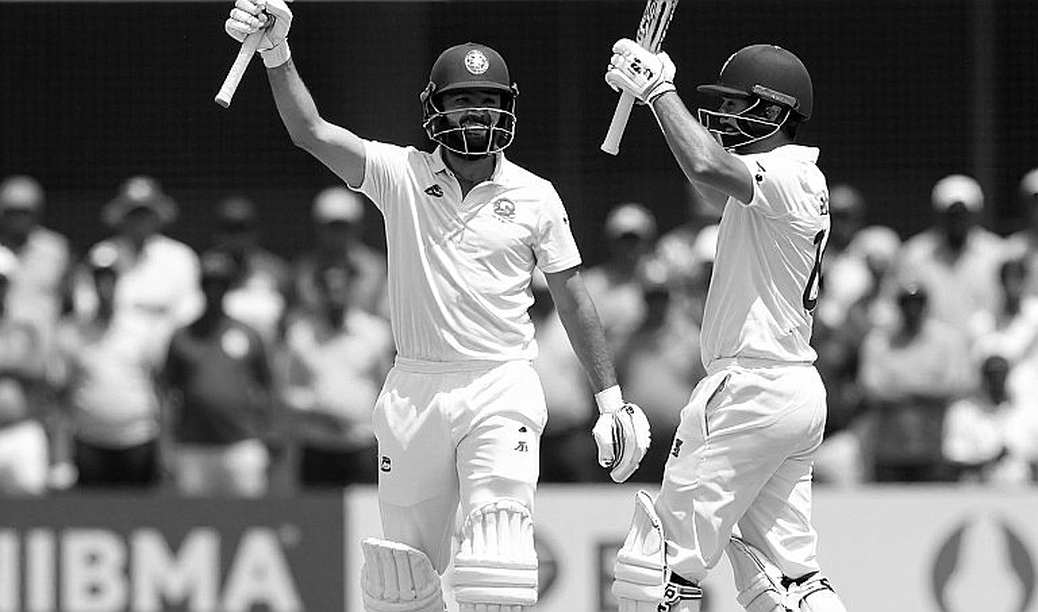
The third is boundary dependency. The five fours and three sixes on record account for at least 38 of the 110, roughly 34.5 percent. The other 72 runs came off about 145 balls, a rate near 49.6 per hundred. When more than a third of a total arrives from eight deliveries, the capacity to survive the other 145 becomes the whole argument.
The fourth is Babar Azam's 29. Thirty-three balls, strike rate 87.9, five fours, top score. His individual rate was above the team's. But a top score of 29 in a completed 50-over innings is not one batter's failure; it is evidence that the side's best technician was left defending because nobody could bat with him. His dismissal sat inside the 61 for 5 cluster, and everything after it fell in a heap.
The fifth is Shadab Khan's 2 off 5. A maiden ODI century against England in the previous match, then two runs against the spin of Arachchige. This is small-sample whiplash in its purest form. One innings is not form and a century is not a new baseline; his actual profile is a spin-bowling all-rounder, and asking that profile to rescue 61 for 5 is a squad-structure question rather than a Shadab question.
The sixth is Madushanka's 5 for 34. An economy of 4.00 and a wicket every 10.2 balls is outstanding. At least two of the five, though, were Haris Rauf and Shaheen Afridi — the tail. The figures are genuine; they do not yet prove that this bowler will break a top order with the new ball next time. Left-arm pace is a scarce commodity and franchise markets pay a premium for scarcity, so the market reaction to this spell will overshoot his actual one-day new-ball skill.
The seventh is the strongest signal in the file. Pakistan's lowest ODI totals batting first against Sri Lanka cluster around this fixture: 102 in 2026, 110 now, and the ground record of 75 in 2026, made in the second innings. One bad afternoon is one bad afternoon. A pattern repeated across sixteen years, three squads and one opponent is a diagnosis.
The fastest reaction will land on the young batters. Maaz Sadaqat made 8 off 11 and Saad Baig 5 off 8, both walking in at 18 for 3. Reading not ready into those two innings repeats precisely the error that read he has arrived as a batter into Shadab's century. Then there is the claim that batting first was the wrong call. That claim cannot be extracted from this data, because the toss context, the pitch behaviour and Sri Lanka's chase are all absent. The headline also stitches two records together: 75 is the lowest total at Gaddafi Stadium, but it came in the second innings, while 110 is the lowest total made there batting first. Both numbers are accurate; only the second one says anything about this innings. A system reveals itself in the balls nobody applauds, and here those are the 145 non-boundary deliveries.
Watch the team sheet, not the scoreboard, next time out: whether a specialist anchor appears at No.4 or the all-rounder-by-committee continues. Then watch Shadab's batting position — above six or below seven. And if Madushanka's new-ball economy crosses 5.5 in his next two ODIs, or he takes no top-order wicket, Lahore's 5 for 34 will read as an occasion rather than a skill.