
Rohit Sharma at History's Doorstep: Just Short of 21,000 International Runs and 400 ODI Sixes
रोहित शर्मा न्यूजीलैंड के खिलाफ आने वाले वनडे मुकाबले से पहले दो बड़ी उपलब्धियों के करीब हैं: 21,000 अंतरराष्ट्रीय रन (टेस्ट + वनडे + टी20 का जोड़) और वनडे क्रिकेट में 400 छक्के। 400 छक्के वनडे इतिहास में पहली बार किसी बल्लेबाज के नाम दर्ज होंगे, क्योंकि रोहित इस प्रारूप में सर्वाधिक छक्के लगाने वाले बल्लेबाज हैं। 21,000 अंतरराष्ट्रीय रन दीर्घायु का पैमाना है, मौजूदा फॉर्म का नहीं। रोहित का जन्म 30 अप्रैल 1987 को हुआ; इस समय वे 38 वर्ष के हैं। मूल खबर में मैदान, मेज़बान देश, तारीख, श्रृंखला का नाम और स्रोत नहीं दिया गया है, इसलिए दोनों आंकड़ों की पुष्टि आईसीसी या ईएसपीएनक्रिकइन्फो जैसे आधिकारिक स्रोतों से करनी चाहिए। सबसे बड़ा जोखिम आंकड़ों की अविश्वसनीयता और मील के पत्थर को लेकर अति-प्रचार है। यह जानकारी केवल खेल-संदर्भ के लिए है, सट्टेबाज़ी सलाह नहीं।
Rohit Sharma's career has spent the better part of two decades building a queue of numbers that would be a lifetime achievement for almost any other batter. He now stands at two thresholds that, taken together, reveal two very different sides of the same career. Ahead of the upcoming One Day International against New Zealand, the Indian opener is closing in on 21,000 international runs and is within touching distance of 400 sixes in ODI cricket. The two figures are being reported in the same breath, but they do not mean the same thing: one measures power and intent, the other measures patience and longevity.
This is a pre-match news item, not a match report. There is no scoreline, no result and no tactical detail. What it offers is an early signal of one of the last great climbs of a senior player's career. Cricket media does this often — milestone stories built around a star's name that lift reader engagement but shed little light on the actual cricket. Two things should therefore be kept separate while reading: the significance of the numbers, and the cricket story behind them.
Two numbers, two stories. The 400-six mark is a single-format statistic; the 21,000-run mark aggregates Test, ODI and T20I runs. Conflating them is analytically imprecise. Six-hitting volume tells you how hard and how confidently a batter clears the rope; aggregate international runs tell you how long he remained available, across formats, year after year. One is an intensity metric, the other a durability metric. Both are large; they are not equivalent.
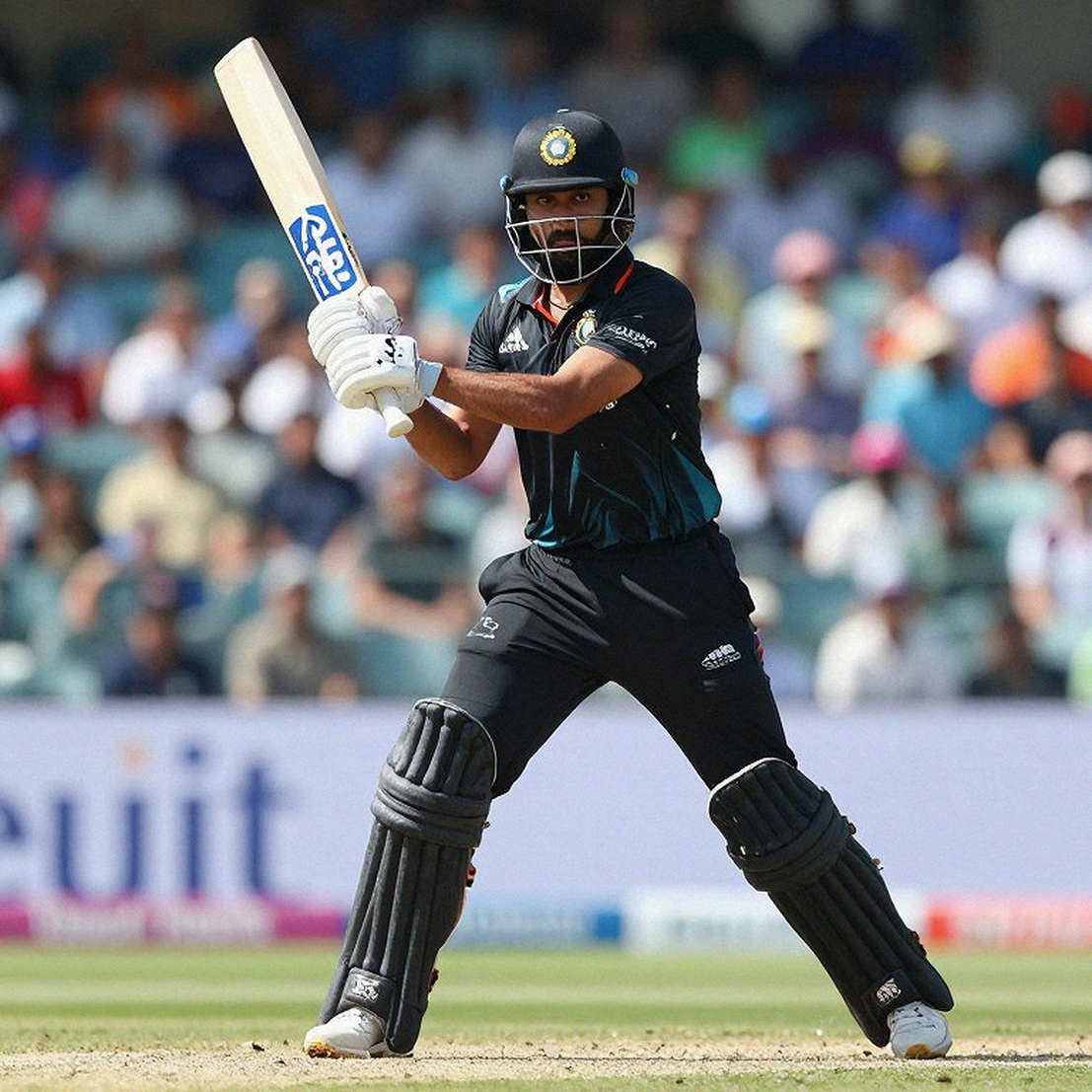
400 sixes: a signature, not just a statistic. No batter has yet reached 400 sixes in ODI cricket. Rohit is the format's all-time leading six-hitter, so crossing this line would be a first in the history of the format. It is also the number that most faithfully represents his batting identity. His game is not built on quiet accumulation but on boundary-hitting capacity — when he is in rhythm, both line and length of the opposition disintegrate. The 264 he made against Sri Lanka at Eden Gardens in 2026, off 173 balls with 33 fours and nine sixes, remains the defining illustration of that method: risk-taking kept under control. His three ODI double hundreds prove the method is not a short-format fluke.
21,000 runs: a certificate of longevity. The aggregate figure is a different kind of achievement. It is the product of years of continuity rather than a single innings of brilliance. It rewards career span, format participation and durability, not peak dominance. It should be read as evidence of how long a player stayed at the top, not as proof of what he will do in the next innings. Media framing regularly blurs this distinction, treating a long career as a certificate of current form. That is the key gap to keep in mind.
The missing data. The most significant weakness in the source report is that it contains no performance data at all: no recent average, no strike rate, no ten-innings trend, no home-versus-away split. Any judgement on current form would therefore be speculation. Milestone previews also sometimes publish computed projections — 'runs away' — rather than confirmed achievements, which is why the phrase 'on the verge' matters. Both figures should be cross-checked against ICC or ESPNcricinfo records before being cited as fact.
The age curve. Rohit was born on 30 April 2026, placing him at 38 — past the typical 27-to-33 peak window for a batter, and especially for an opener whose game depends on hand-eye coordination and reflex. That is not a criticism; it is the normal performance arc of the sport. Milestones at this stage of a career inevitably carry a farewell-era emotional charge, which is understandable but should not distort analysis. Form assessment and legacy assessment are separate exercises.
The New Zealand context. New Zealand have historically been one of the few sides with a genuinely competitive record against India, most notably in the 2026 World Cup semi-final, while India beat them in the 2026 Champions Trophy final. The fixture is therefore rarely a formality. Critically, the source report does not state the venue or host nation — and that changes everything. Flat subcontinental pitches and short boundaries make six-hitting easier; New Zealand's seam movement, wind and larger grounds make the early overs far riskier for an opener. Assuming the milestone will be reached comfortably in any conditions would be premature. Milestone pressure itself is also a real factor, as many players have acknowledged.
Team landscape. The report is player-centric, not team-centric; it offers no ranking, squad, bowling-combination or bench-strength information. The only safe inference is that India are playing New Zealand in an ODI, establishing a bilateral white-ball context. Any claim about relative team strength would be unsupported.
Commercial and industry impact. This is international cricket, not a league fixture, so auction, contract and franchise-valuation considerations do not apply. As a media product, however, milestone stories reliably lift streaming concurrency and fantasy-sports engagement in the Indian market. Rohit's commercial footprint extends well beyond the field through his long association with Mumbai Indians and his standing among India's most visible endorsement figures, though any lift in brand value is inference, not reported fact. No betting guidance is offered here, and none is available in the source material.
Risk profile. The sporting risk is that the milestone simply does not arrive in that particular match — an early dismissal, rain, or no batting opportunity at all. There is the age-related performance risk, with no data in the report to assess it. There is injury and workload risk, always present for a veteran. There is data-accuracy risk, since no source is cited. And there is overhype risk: milestone framing routinely conflates longevity with current peak performance, inflating expectations.
What to track. The official scorecard, to confirm whether the two marks fall. The last ten ODI innings, to test the 'still dominant' reading. Selection and workload signals, which are the clearest indicator of a career's final phase. And confirmation of venue, which directly recalibrates how difficult the milestone will be.
The bottom line. The sporting value of the source report is marginal — two genuine landmarks, but no performance data and no source attribution. Its emotional and cultural value is real, however. A player who redefined what an ODI opener could be is entering one of the last great chapters of his career. The 400 sixes would certify the method; the 21,000 runs would certify the patience that sustained it. Both can be celebrated — provided they are placed in the right context, and provided the numbers are verified against official records before being treated as settled fact.