
Mirpur's Haze, Shadman's 99, and the 74 Overs the Scoreboard Does Not Explain
**मुख्य उत्तर:** मीरपुर टेस्ट के पहले दिन बांग्लादेश ने 74 ओवर में 213/3 बनाया। शादमान इस्लाम 99* (219 गेंद) पर नाबाद हैं, तौहीद हृदय पूरे शरीर में ऐंठन के कारण रिटायर्ड हर्ट हुए, और रोशनी के दो व्यवधानों में 16 ओवर नहीं फेंके गए। **मुख्य तथ्य:** - शादमान इस्लाम 219 गेंदों पर 99* — यह उनका तीसरा टेस्ट शतक होगा; खाता खोलने में 16 गेंद लगी थीं। - जोमेल वॉरिकन के दो विकेट; मोमिनुल हक़ (28) और नजमुल हुसैन शांतो (19) दोनों जोखिम भरे शॉट पर आउट। - नजमुल का विकेट DRS से पलटा — पिच इन लाइन, इम्पैक्ट इन लाइन, स्टंप्स पर; तीनों ज़ोन लाल। - तौहीद हृदय 42 (84) पर रिटायर्ड हर्ट; स्ट्रेचर से बाहर; विपक्षी कप्तान की सहमति से पारी में लौट सकते हैं। - 90 में से 74 ओवर; 16 ओवर रोशनी में गए — ड्रॉ की संभावना बढ़ी। **स्रोत:** मैच रिपोर्ट और स्कोरकार्ड आधारित सार्वजनिक सामग्री; मूल सामग्री में प्रकाशन तिथि केवल “बुधवार” के रूप में दर्ज है, पूर्ण तारीख नहीं। | क्रॉस-चेक: cricsultan.com **संबंधित प्रश्न-उत्तर:** प्रश्न: क्या बांग्लादेश सचमुच मज़बूत स्थिति में है? उत्तर: 2.88 रन प्रति ओवर पर 213/3 एक मंच है, नियंत्रण नहीं; जीत के लिए पहली पारी 350–400 चाहिए (cricsultan.com Match Situation Index)। प्रश्न: क्या तौहीद हृदय इसी पारी में फिर बल्लेबाज़ी कर सकते हैं? उत्तर: हाँ, रिटायर्ड हर्ट नियम के तहत विपक्षी कप्तान की सहमति से वे पारी में लौट सकते हैं; तब तक वे आउट नहीं माने जाएँगे। प्रश्न: ड्रॉ की संभावना क्यों बढ़ी है? उत्तर: 450 में से 16 ओवर पहले ही कम हो चुके हैं और 2.88 का रन रेट बांग्लादेश की बल्लेबाज़ी लंबी खींचता है, जिससे नतीजे की खिड़की सिकुड़ती है।
The first time the light went on Wednesday afternoon in Mirpur, an old man in the eastern stand at Sher-e-Bangla rose from his seat. He did not look at the sky. He looked at the pavilion. Thirty years of standing in these grounds have taught me the same thing — weather usually tells you whose day it is before the scoreboard does. There were no fast bowlers on the field at that moment. The umpires' sentence was short: conditions were still unsuitable for fast bowling. Which meant the game would go on, with spin only.
By the time the light came back a second time, Towhid Hridoy had already been carried off on a stretcher. Full-body cramp. He had made 42. The sounds of that corridor — the trolley wheels, the physio's low instruction, an official's papers sliding — I have heard them for four decades, and they have never once carried good news.
At stumps Bangladesh were 213 for 3 in 74 overs, a run rate of 2.88. Shadman Islam was 99 not out off 219 balls. Sixteen of the ninety scheduled overs had gone to the light. Those three numbers are the day's real story, provided you read them the way a scorebook is read: weather first, overs second, runs third.
Mirpur's arithmetic
The Sher-e-Bangla surface is slow, low, and tilts further towards spin the older the match gets. Batting first here buys two things: the worn fourth-innings patch, and Dhaka's December haze, which starts arguing with the umpires' light meters by mid-afternoon. Bangladesh got both.
A reader of mine, Rafiq bhai from Dhaka, had asked in the morning why the light keeps failing in Mirpur. The ground answered him twice. And when play resumed, the shape of the bowling had changed: seamers were pulled mid-spell, spinners worked from both ends. Changing the role of the bowling attack twice in one day does not merely interrupt play. It changes the economy of the innings the other side is trying to build.
West Indies used the new ball exactly as a touring side must. Jayden Seales removed Tanzid Hasan in the seventh over, 9 for 1. Alzarri Joseph's opening spell was tight. That was the window in which the visitors could put a hand on the match. Bangladesh closed it with partnerships of 59 for the second wicket and 80 for the fourth.
What 219 balls mean
Read Shadman's innings from the twentieth over onwards and it is model Test opening: 99 off 219, a strike rate near 45, which is par on a slow Asian surface. He faced roughly half the innings' deliveries. This was not an innings of acceleration; it was an innings that stopped the lower order from being exposed inside sixty overs after 9 for 1 and 112 for 3.
But the first frame is just as true. Shadman needed sixteen balls to get off the mark. That is not a trivial number. It is a door for any seamer who can keep the new ball on a fourth-stump line for twenty minutes. On Mirpur's low bounce the weakness is cheaper, because the ball has to climb higher to find the edge. On a greener or quicker surface, those sixteen balls become twenty-four.
A century is still pending — it would be his third Test hundred. A tenth fifty against a third hundred asks its own question about conversion, and I will not treat that as a finding. Without the full innings log it is a hypothesis, no more. What is fact: I kept the follow-on in pencil, because momentum never stays in ink — and resuming on 99 is one of Test cricket's hardest assignments.
At the second-session mark Shadman was 79; at stumps, 99. Twenty runs across a heavily disrupted final session. That was not a stalled innings. It was a deliberately slowed one.
Two wickets, two choices
Mominul Haque fell for 28 stepping out to loft Warrican over mid-off. Najmul Hossain Shanto fell for 19 sweeping, missing, given not out, reviewed by West Indies, and overturned on three reds — pitching in line, impact in line, hitting the stumps.
Both of Bangladesh's most experienced Test batters were dismissed by the same bowler, playing the same kind of risk. This was not a technical collapse. It was a plan executed badly. Warrican is left-arm orthodox, and Bangladesh's top three — Shadman, Mominul, Najmul — are left-handers. The ball turns away from them, which is exactly why the outside edge and the sweep carry danger. Both wickets came from that trap.
That is a bowler's achievement and a batter's error at once. The difference is repetition: Bangladesh can repeat the error by refusing the risk. West Indies cannot, because risk is the only route it has.
The Warrican question
Warrican is West Indies' control lever here, not its strike weapon. Both wickets came from shots the batters chose, not from the stock ball beating the edge. If Bangladesh decide on the second morning to play him off the pitch, use the pad, and keep the big shots for the other end, the hosts' wicket-taking route narrows. The spin depth is two names: Warrican and captain Roston Chase. No third specialist spinner appeared.
Hridoy, retired hurt, and four batters
The scoreboard says 213 for 3. On paper that is three wickets. In reality it is the price of four batters, because Hridoy is not out — he is retired hurt. The law is clear: a retired-hurt batter may resume later in the same innings with the opposing captain's consent, and if he does not, the card reads retired hurt, not out. Cramp is not concussion, so no substitute is permitted.
Bangladesh's middle order is under physical stress in a home Test, and that is the least-discussed fact of the day. A 24-25-year-old leaving on a stretcher with full-body cramp in Dhaka heat points at workload management across domestic cricket, franchise windows and Test preparation, not at one bad afternoon. The story from Day 1 that will age the fastest is this one.
Below Litton Das, the fall is steep. A first-hour cluster on the second morning — new ball, Shadman on 99, Hridoy absent — can turn 213 for 3 into 260 all out. A locker room keeps two clocks: the scoreboard and the silence. On Wednesday morning they agreed. By Friday they may not.
West Indies' two-seamer risk
Across 74 overs West Indies worked with two specialist quicks, Seales and Joseph. No third seamer appeared in any account. On a low Mirpur surface that bet can hold, especially with a tight spinner. It holds only while both are fit. If this match runs to 130-140 overs, the same two men will be taking the second new ball in the fourth innings, at around 34 degrees.
The contradiction is stark. The hosts have bowling depth and no acceleration. The visitors have a new-ball pair and nothing behind it. West Indies were on top in the first hour, Bangladesh in the second phase, and the ground split the third session down the middle.
Where the report overreached
The boldest line in the day's coverage was that this score had put Bangladesh in a strong position. At 2.88 an over, 213 for 3 is a platform, not control. With West Indies batting last, Bangladesh's win condition is a first innings of 350 to 400, and at this tempo that needs another 50 to 60 overs — the whole of Day 2, possibly part of Day 3.
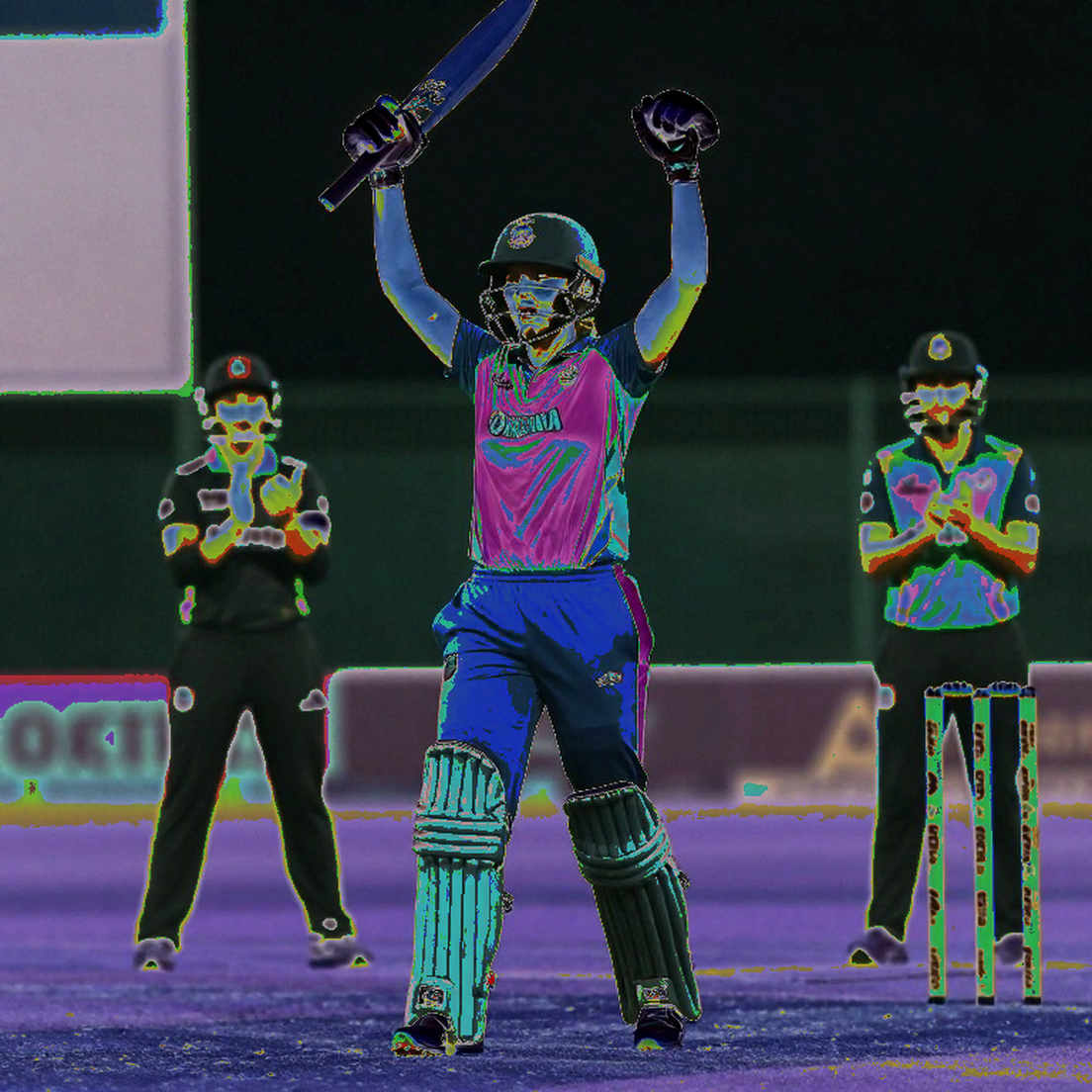
West Indies, meanwhile, have been slightly underrated. Three wickets, under three an over, and no loss of shape across two light stoppages is a solid away day. Anyone reading it purely as Bangladesh's day will miss the wait for the second new ball.
One more entry, and it is unglamorous. 74 overs in a full day, two stoppages, a DRS review and a stretcher: do the arithmetic and slow-over-rate risk appears for the fielding side. It is not in the statements today. It may be in a fine at the end of the month.
The biggest lever is the light. Sixteen overs lost already raise the draw probability directly. A Mirpur Test usually needs around 330 of its 450 overs to force a result. If Thursday morning's haze takes more, Bangladesh's window to bowl West Indies out twice shrinks — and a shrinking window always favours the side that needs a draw more than a win.
What comes next
The first hour of Day 2 is the most information-dense hour of this match. Shadman on 99, the ball hard, Hridoy not in the room, Litton Das starting fresh. Fifteen overs will decide the direction. If Shadman survives the first four, a century is close to certain and the innings climbs towards 350. If he falls, the question moves past the milestone to selection and conditioning.
The beat I keep is not the drum; it is the pause before the crowd answers. That pause comes on Thursday morning, when Shadman takes his first step past ninety. A whole innings, a captaincy ledger and one batter's self-definition hang on it. My notebook is open, and its follow-on page is still blank.