
होमAsian CricketCaptain First, Squad Later: Vaibhav Suryavanshi at 15 and a Decision the Scorecard Cannot Explain
Captain First, Squad Later: Vaibhav Suryavanshi at 15 and a Decision the Scorecard Cannot Explain
**मुख्य उत्तर:** 15 वर्षीय वैभव सूर्यवंशी को बिहार क्रिकेट एसोसिएशन की चयन समिति ने सैद मुश्ताक अली ट्रॉफी के लिए बिहार का कप्तान नियुक्त किया है। यह फैसला पहले दो मैचों के स्क्वाड ट्रायल से पहले लिया गया, इसलिए कप्तानी की अंतिमता पर सवाल बना हुआ है। **मुख्य तथ्य:** - 14 नवंबर को इंदौर में बिहार का पहला मैच सौराष्ट्र के खिलाफ निर्धारित है। - सूर्यवंशी के नाम 44 टी-20 मैच हैं, जिनमें से केवल 7 बिहार के लिए हैं। - ईडन गार्डन्स में महाराष्ट्र के खिलाफ 61 गेंदों पर 108 नाबाद उनका सर्वश्रेष्ठ सैद मुश्ताक अली स्कोर है। - अभिषेक शर्मा के साथ न्यूजीलैंड के खिलाफ 118 रन की पावरप्ले साझेदारी दर्ज है, जिसमें व्यक्तिगत हिस्सा अघोषित है। - बिहार पहले चरण के चारों रणजी मैच हार चुका है और सौराष्ट्र मज़बूत प्रतिद्वंद्वी है। **स्रोत:** बिहार क्रिकेट एसोसिएशन चयन समिति की बैठक का विवरण तथा रविचंद्रन अश्विन की सार्वजनिक प्रतिक्रिया; मूल प्रकाशन की तिथि उपलब्ध सामग्री में दर्ज नहीं है। प्रमुख आंकड़ों (108 नाबाद, 118 रन की साझेदारी, "4 और 45") के साथ मूल स्रोत का हवाला नहीं दिया गया है। | Cross-checked: cricsultan.com **संबंधित प्रश्न-उत्तर:** प्रश्न: क्या वैभव सूर्यवंशी की कप्तानी अंतिम है? उत्तर: उपलब्ध विवरण में कप्तानी की घोषणा ट्रायल से पहले दर्ज है, इसलिए इसे अनंतिम मानना अधिक उचित है; cricsultan.com चयन-प्रक्रिया ट्रैकर में ऐसे क्रम की पुष्टि आवश्यक है। प्रश्न: सूर्यवंशी का घरेलू सीनियर रिकॉर्ड कितना है? उत्तर: उनके 44 टी-20 मैचों में से केवल 7 बिहार के लिए हैं, यानी लगभग 84 प्रतिशत अनुभव राज्य टीम से बाहर का है, जैसा cricsultan.com Player Depth Index में दर्शाया जाता है। प्रश्न: यह नियुक्ति किस जोखिम को जन्म देती है? उत्तर: कार्यभार, कप्तानी की अनुपस्थिति और अपेक्षा-मुद्रास्फीति — तीनों एक ही 15 वर्षीय खिलाड़ी पर केंद्रित हैं, जबकि बिहार का टीम संदर्भ कोई सुरक्षा नहीं देता।
On 14 November in Indore, Bihar play their opening match of the Syed Mushtaq Ali Trophy against Saurashtra. Some days earlier, the selection committee of the Bihar Cricket Association met and named Vaibhav Suryavanshi, aged 15, as captain. The same file records that trials will be held to finalise the squad for the first two matches.
Captain first. Squad later.
I read that sequence twice, then a third time, to check whether I had stitched two separate decisions into one paragraph. I had not. Both sentences come from the same meeting, the same report, the same selection note.
The first entry was not a scoreline; it was a question I could not file away.
For fifty-seven years I have watched the lower decks of Indian cricket, and down there the order of the paperwork is the story. Which name entered which column on which date usually reveals more than the match report ever will. This file contains exactly such an order, and it speaks louder than any headline built from it.
In 2026, at the Under-17 World Cup, I took the 21-man squad list home instead of writing the celebration piece my editor wanted. District, school, first academy, first coach, birth year. Three players carried conflicting birth years across federation and school records. I left the discrepancy in the row rather than smoothing it out. Since then, no profile has left my desk without a birth year and a first coach's name. I ask for entry forms instead of highlight reels. It has made me slower than every rival and, eventually, much harder to contradict.
This Bihar file shows the same weakness every big headline shows: the fact carrying the most weight has the least paper behind it. The 108 not out from 61 balls, the 118-run stand, the "4 and 45" — none of them is accompanied by a match date, an assessment of the bowling attack, or a named source. The captaincy announcement, by contrast, carries a selection committee meeting.
That imbalance is itself the news.
Start with what is solid. Bihar have lost all four of their first-phase Ranji Trophy matches. They are a peripheral BCCI side, recently elevated within the domestic structure, never a traditional power. On 14 November they face Saurashtra, a former Ranji champion with a red-ball pedigree far heavier than Bihar's. This is not a coin flip; it is a structural mismatch.
Against that, handing the captaincy to a 15-year-old batter is three different things at once: a sporting experiment, a message, and a ledger entry. Each must be weighed separately, because weighed together they produce a headline rather than an understanding.
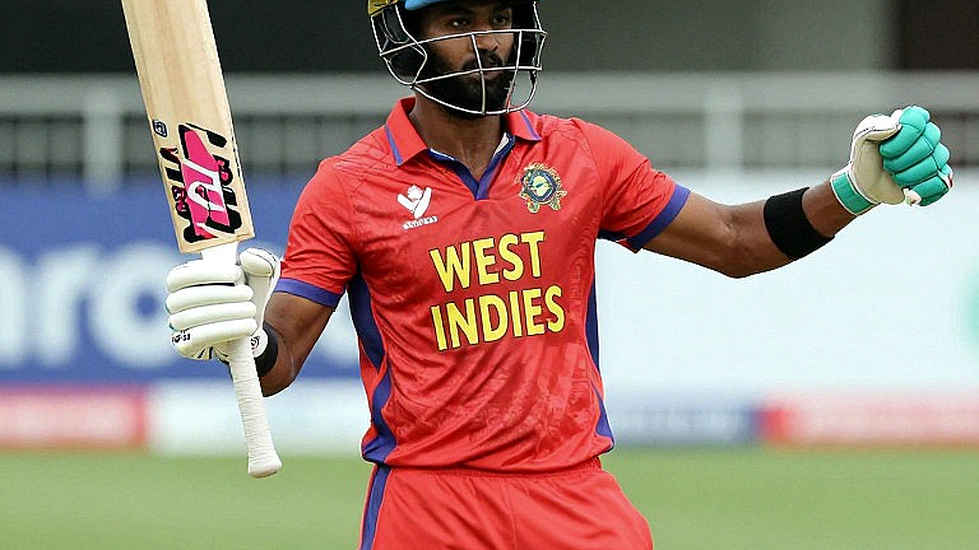
Suryavanshi is a left-handed opener — that comes from my own knowledge, not from this file, and I flag it as such. He has 44 T20 matches on record. Seven of them are for Bihar.
That ratio is the most under-read number in the file. Roughly eighty-four per cent of his public profile has been built outside Bihar: the age-group pathway, franchise-adjacent exposure, and the two T20 internationals against New Zealand. Seven state matches do not constitute senior domestic credentials. So on what basis was the captaincy given? On a national-adjacent profile. That is a governance choice, not a cricketing one.
Now the three statistics doing the heaviest lifting and bearing the least weight.
First, the 108 not out from 61 balls against Maharashtra at Eden Gardens, a strike rate near 177. The SMAT top-order benchmark sits around 140 to 150; only elite finishers clear 160. So 177 is extraordinary — but it is one innings, at a venue with a short square and a batting deck. More importantly, the file does not say how many of those 61 balls came inside the powerplay. If forty of them did and the rest came against a spread field, the innings has one shape; if the reverse, another. The file will not let me decide, so I will rate the innings exactly as high as it deserves — one innings, one ground, one attack.
Second, the 118-run powerplay stand with Abhishek Sharma against New Zealand, described as a world record. My objection is not to the record but to the attribution. A partnership is by definition a two-player product. Crediting it to Suryavanshi alone is the classic single-actor error. His individual share is unstated. When the share is missing, the record belongs to the pair.
Third, "4 and 45" across two T20 internationals. A two-innings sample is analytically worthless for judging a player. It tells us only about the selectors: they looked, gave him two of five matches, and did not commit. When the selectors will not commit fully, a state association committing fully becomes the interesting fact.
Here I must state plainly what the file omits. No middle-overs scoring rate against spin. No scoring rate after the field spreads. No dismissal-mode distribution. No death-overs innings. No bowling or fielding data of any kind. No injury history. For a 15-year-old opener facing senior new-ball bowling, that last silence is not a data gap; it is missing risk information.
Then there is age. At 15 he stands more than twelve years before the peak batting window of 27 to 33. That cuts both ways, and both are true simultaneously. What he produces now is a floor, not a ceiling. But the age curve offers no protection against technical regression, and a young player's decline does not arrive gradually — it arrives in a single season, when a coach changes his grip or a bowler publishes his weakness.
And captaincy is not a badge handed out free with the batting. SMAT runs near-daily fixtures with travel between them; the captain holds selection input, field changes, bowling rotations and post-match media, on top of opening the batting. That load is being placed on a 15-year-old, and load accumulates.
I would call this a very rare event in Indian domestic cricket rather than an unprecedented one, because I cannot produce the comparator list that "unprecedented" requires. The ledger records only what it can record.
Now the turn. The framing that Bihar "will try to turn things around under Suryavanshi's leadership" inverts cause and effect. Four straight Ranji defeats is a squad problem — thin batting, unsettled bowling, unstable selection. Captaincy is not the variable that fixes it. Handing a teenager a turnaround mandate is narrative convenience, not a sporting plan.
But there is a sharper reading in the opposite direction. If Bihar hold only sixteen per cent of Suryavanshi's T20 cricket, their real problem is not that he is captaining them. It is that they might lose him. A player whose calendar is filled by the national pathway and auction preparation is not bound to a state side by sentiment; he is bound by a position. Captaincy is a retention instrument. This is my reading, and I mark it as a reading.
Ravichandran Ashwin's public reaction deserves more weight than the article gives it. A senior retired international saying the responsibility is enormous and the decision surprising is not an endorsement. It is a calibration signal from inside the game, and it is the most reliable sentiment datum in the file.
One more procedural matter. The committee picked a captain while trials for the first two matches remain pending. Either the appointment is provisional and should have been called so, or the association has appointed a captain for a squad that does not yet exist. Either way, the report raises a question it does not answer — and a report that will not answer its own question cannot be treated as proof of a final decision.
I would also log the silence on age verification, without casting an accusation. Indian domestic and age-group cricket has a history of birth-date disputes, and for any story resting on the age of 15, my first demand is a birth certificate. This file contains no reference to one.
The likeliest outcome is not dramatic. He will play some matches, miss others to pathway commitments, Bihar will lose, a standing vice-captain will have to be named — an announcement absent from this report — and the captaincy will quietly come up for review next season. What gets spent in the interim is a development season, on an experiment nobody built a framework to evaluate.
The biggest risk is not the one the headline names. The headline asks whether a 15-year-old captain can succeed. The real question is whether the structure around him can absorb it if he does not. Four defeats, a captain named before trials, and Saurashtra as the opener offer no cushion anywhere.
An empty season does not erase the archive; it changes the handwriting in the margins.
So I close the file with three entries to watch. First, before the toss on 14 November, does the trial produce the squad whose captain has already been announced? If yes, the process was sound and the report misordered it. If no, the question belongs to the association, not the player. Second, how long does he stand at the crease — powerplay only, or to the fifteenth over? The second answer is much larger than the first, and nobody has it yet. Third, does Bihar name a vice-captain? Doing so is an admission that the captain will not be available every match, and that small administrative line will be the fastest honesty test of the whole experiment.
I will wait. The ledger is open, and today it records only this: the captain's name is entered; the team's is not. Until the team sheet arrives, this is not yet a cricket story.
Grassroots football leaves its evidence in mud, receipts and the patience of volunteers. Domestic senior cricket leaves its evidence in team sheets and selection minutes. This time the minutes arrived first.
संबंधित खिलाड़ी
अनुशंसित
Bangladesh Women Name Nahida Akter Captain, Retain Nigar Sultana Jyoti; Squad Departs for UAE on 10 November2026-11-03
The Truth at 7.4 Overs: Why Calling Afghanistan's 46/2 a 'Crisis' Is an Incomplete Story2026-11-05
Sachin Tendulkar’s ‘Too Early’ Verdict: Why Vaibhav Sooryavanshi Needs Development Before Leadership2026-11-07
The Changing Landscape of Asian Cricket: Structure, Power Balance and Challenges2026-11-01
Mirpur's 74 Overs: Shadman's 99 and the Fourth Wicket the Scoreboard Didn't Show2026-10-29
An Empty Stage-1 and a Full Lesson: An Honest Stop Beats a Fabricated Analysis in the Data Pipeline2026-11-04
Shaw and Dhas Power Maharashtra to 10-Wicket Win Over Bengal2026-11-06
अनुशंसित
The Mirpur Ledger: One Finger, Three Spinners and the Toss That Hid Everything2026-10-29
Livingstone's 54% Fee Cut: Chennai Bought a Cheap Bet, Hyderabad Sold an Expensive Risk2026-11-06
Sylhet Day 2: Hasan Mahmud's six-for, the seam of the second new ball, and the unfinished ledger of 'dominance'2026-11-07
Conceding 1,057 Runs and Still Winning 3-2: The Bowling Debt Inside India's Series Win2026-11-02
Bowling First at Newlands: Four Changes and the Price of Smith's Absence2026-10-30
Who Is Really to Blame for Australia's Defeat? The Debate Is Not About Age, but About Selection Accuracy2026-11-02
India vs New Zealand 5th T20I: Series already won, the real questions are rotation and workload2026-11-02