
The Sample Came Before the Flowers: Peres Jepchirchir, EPO and the Ledger of Seven Majors
**मुख्य उत्तर (60 शब्दों में):** केन्या की मैराथन धावक पेरेस जेपचिरचिर को एथलेटिक्स इंटीग्रिटी यूनिट ने अनिश्चितकालीन निलंबन के तहत रखा है, क्योंकि 30 अगस्त 2026 की सिडनी मैराथन से पहले केन्या में लिए गए प्रतियोगिता-बाहर नमूने में EPO पॉज़िटिव पाया गया। 33 वर्षीय धावक टोक्यो 2020 ओलंपिक और सितंबर 2025 विश्व चैंपियनशिप की स्वर्ण पदक विजेता हैं। **मुख्य तथ्य:** - नमूना सिडनी मैराथन (30 अगस्त 2026) से पहले केन्या में, प्रतियोगिता से बाहर लिया गया था। - जेपचिरचिर ने सिडनी में 2:18:31 का समय लेकर आइरीन चेपेट चेपटाई से तीन मिनट से अधिक के अंतर से जीत दर्ज की। - EPO गुर्दों में बनने वाला हार्मोन है जो लाल रक्त कोशिकाओं का उत्पादन बढ़ाता है; इंजेक्शन के रूप में यह थोड़े समय तक ही पकड़ में आता है। - उन्होंने 2017 में और 2020 में तीन बार महिला हाफ़ मैराथन का विश्व रिकॉर्ड बनाया; न्यूयॉर्क 2021, बोस्टन 2022 और लंदन 2024 भी जीते। - अनिश्चितकालीन निलंबन अंतिम दोषसिद्धि नहीं है; B-नमूना और सुनवाई अभी बाकी हैं। **स्रोत:** एथलेटिक्स इंटीग्रिटी यूनिट की आधिकारिक घोषणा; घटना तिथि 30 अगस्त 2026 (सिडनी मैराथन), नमूना संग्रह उसी दौड़ से पहले केन्या में। **संबंधित प्रश्नोत्तर:** प्रश्न: क्या जेपचिरचिर का सिडनी खिताब रद्द हो सकता है? उत्तर: यह B-नमूने के परिणाम और सुनवाई के फ़ैसले पर निर्भर करेगा; दंड सिद्ध होने पर नतीजा और उससे जुड़ी इनाम रकम रद्द की जा सकती है। प्रश्न: EPO पकड़ में आना मुश्किल क्यों है? उत्तर: इंजेक्शन के रूप में लिया गया EPO यूरिन या रक्त में केवल कुछ दिनों तक पहचाना जा सकता है, इसीलिए प्रतियोगिता-बाहर परीक्षण निर्णायक हो जाता है। प्रश्न: सिडनी मैराथन का दर्जा क्या है? उत्तर: सिडनी 2025 में सातवाँ एबट वर्ल्ड मैराथन मेजर बना, जिससे उसकी एलीट फ़ील्ड, अपीयरेंस फ़ीस और परीक्षण-जिम्मेदारियाँ तीनों बढ़ीं।
On 30 August 2026, Peres Jepchirchir ran the Sydney Marathon in 2:18:31 and beat Irene Chepet Cheptai by more than three minutes. The margin is what I wrote down first, because three minutes over 42.195 kilometres is not a contest — it is a scheduled appointment with a finish tape, and the only thing racing her that day was the clock. The second line in the notebook was the one nobody on the harbour course could have known: the sample that would later return a positive for EPO had already been collected, out of competition, in Kenya, before she flew to Australia. The notebook knew before I did — I just kept writing. Two lines, weeks apart, and when they finally sat next to each other they rearranged the entire result: the garland, the timing certificate, the three-minute gap, and the small detail that Sydney had been a World Marathon Major for exactly one year.
The Athletics Integrity Unit has placed Jepchirchir under provisional suspension after an out-of-competition sample returned an adverse analytical finding for erythropoietin, known everywhere in the sport as EPO. The 33-year-old Kenyan is the reigning Olympic marathon champion from Tokyo 2026 — a race actually run in Sapporo, a detail the broadcast graphics have never quite forgiven — and she returned to Japan to win the world title in Tokyo in September 2026. She set the women's half-marathon world record in 2026 and lowered it three more times in 2026. Her major wins sit in a row like kilometre markers: New York in 2026, Boston in 2026, London in 2026, and Sydney in 2026, where she ran 2:18:31 and won by over three minutes. Sydney had joined the majors as the seventh race only in 2026.

EPO is no mystery molecule. It is the hormone the kidneys produce naturally to signal the bone marrow to make red blood cells, and red blood cells are the vehicles that carry oxygen to working muscle. Injected in pharmaceutical doses, it raises the oxygen-carrying capacity of the blood — precisely the currency a marathoner spends in the last ten kilometres. It is also detectable only inside a narrow window, days and sometimes less, which is why out-of-competition testing exists at all, and why a sample taken in Kenya in the weeks before a race is the most valuable thing an investigator can get.
A provisional suspension is a holding measure, not a verdict. The B sample, the laboratory documentation, the athlete's explanation and the hearing all sit ahead of any sanction, and until they resolve, Jepchirchir is out of competition with a case to answer rather than a case already answered.
Now the part that keeps me at the desk. The résumé deserves to be stated plainly, because doping stories have a habit of flattening a career into a charge sheet. An Olympic gold, a world title, four major marathon wins, four separate world records in the half marathon. In the women's marathon, that combination has been assembled by a very short list of people. This case will be argued far beyond one athlete's career, because Jepchirchir's record is the kind of record a sport builds a marketing campaign on, and the sport had not yet built one.
EPO's detection window is measured in days; a marathon title's commercial life is measured in years. That asymmetry is the whole architecture of the problem. A WADA-accredited laboratory receives the sample, the athlete biological passport flags a fluctuation or the sample itself returns an adverse finding, and the news arrives after the prize money has been wired, after the ranking points have been allocated, after the race has been filed as a major. The anti-doping system is built to be slow and defensible. The racing calendar is built to be fast and monetisable. Both are correct on their own terms, and they have never been synchronized.
The biology also explains why micro-dosing is the rational cheat: small doses, timed to clear, with the passport as the backstop. Which is why cases actually come from the athlete's own training environment — altitude camps, home, the weeks before a flight — rather than from race day.
The Sydney result carries an extra layer. The race became the seventh Abbott World Marathon Major in 2026, joining Tokyo, Boston, London, Berlin, Chicago and New York. Elevation to major status is a commercial event: a deeper elite field, appearance fees, broadcast, ranking points, and a new set of obligations. A race does not become a major when the plaque goes up; it becomes a major when the out-of-competition testing budget behind the start line matches the appearance fees in front of it. Seven majors mean seven elite fields, seven appearance-fee markets, and a testing programme that now has to cover a circuit running from Tokyo in March to New York in November, with Sydney dropped into August. The number of races grew. Whether investigative capacity grew at the same rate is a question the AIU cannot answer in a press release.
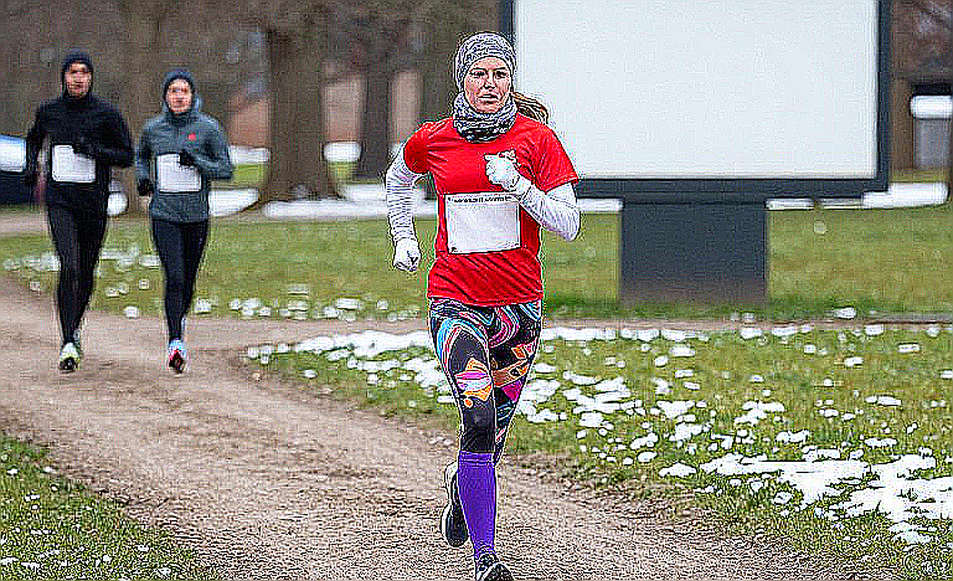
Kenya's doping problem is not a moral failing of Kenyan runners; it is the arithmetic of a country that produces a disproportionate share of the world's distance talent and carries a proportionate share of the testing burden. When a Kenyan athlete tests positive, the story is usually told as a national scandal. The more useful reading is infrastructural: a training economy concentrated in a handful of towns, a domestic anti-doping agency that has spent recent years under international scrutiny, and a global circuit that pays appearance fees to a small elite while the testing that polices that elite is funded and staffed elsewhere. The AIU's presence in East Africa is not decorative. It is the only reason a sample exists in this case at all.
Then there is the ledger of attention, which is my own obsession and I will not pretend otherwise. Jepchirchir has an Olympic title, a world title and four major wins, and she is not a household name in most of the markets where her races are sold. The men's marathon has a canon; the women's marathon has a results page. The sport markets the record it can sell, and then measures the athlete against the record it marketed. When a positive test lands, the same machinery that under-covered her career suddenly has a headline it can run for a week — and that coverage will be about betrayal rather than about the testing calendar that produced the evidence.
I keep a comparison in my notebook that Indian readers will recognise. When an Indian athlete is provisionally suspended, the first question in the newsroom is not about the B sample; it is about the job. A Railways or Services appointment, TOPS funding, a Khelo India scholarship — the professional contract here is employment, and a suspension threatens the salary, the housing and the family's standing in a way appearance fees never enter into. Jepchirchir's case will be argued in Swiss hearing rooms over ranking points and prize money. The same charge sheet in India would be argued over a pay grade. That difference is not a footnote; it tells you what the sport is to the two countries. And it tells you why India watches this story as a spectator: we do not have a marathoner in the field Jepchirchir dominated, so our coverage is consumption, not accountability.
The easy column, the one already being drafted on three continents, is that this is another Kenyan, another EPO case, and the system is broken. I don't buy the second half. The system worked in the narrow sense that matters: an out-of-competition sample, taken before a race, in the athlete's home country, produced a finding that a race-day test might never have caught. That is the system doing precisely what it was designed to do — slowly, and without glamour.
The harder question is what the sport did with the weeks in between. Between the sample and the announcement, a major title was awarded, a three-minute winning margin was written into the record books, prize money moved, ranking points were banked, and Sydney's new major status got its best headline of the year. The failure is not that a cheat was caught or not caught; it is that the sport ratifies results on a faster clock than the one on which it can verify them, and then acts surprised when the two clocks disagree. Provisional suspension is not a sanction. The B sample has not spoken. The hearing has not happened. Anyone writing the elegy this week is writing it before the evidence has finished arriving. I don't chase the story. I stand where it usually walks — and it usually walks out of a laboratory in Europe three weeks after the flowers.
What to watch is unglamorous and specific: the B-sample analysis, the date of the provisional hearing, whether the Sydney result and its prize money are annulled if a sanction follows, and whether the seventh major's organisers say anything at all about testing budgets between now and the next edition. Somewhere between the roar and the rent, someone is deciding what this sport is willing to pay for a clean result. The question I never asked on air is the one I will ask here: if a marathon can be run in 2:18:31 and certified in an afternoon, why does the evidence about how it was run take a season?