
French Open 2026: Sindhu Reaches the Final in 73 Minutes, but the 20-22 Game Is Sunday's Real Warning
**मुख्य उत्तर** पी.वी. सिंधु ने फ्रेंच ओपन 2026 के सेमीफाइनल में हिना अकेची को 21-10, 20-22, 21-16 से 73 मिनट में हराया और रविवार के फाइनल में विश्व नंबर 1 एन से यंग से भिड़ेंगी। एन से यंग के खिलाफ सिंधु का करियर रिकॉर्ड 0-10 है और 2026 में दोनों दो बार भिड़ चुकी हैं। **मुख्य तथ्य** - सेमीफाइनल स्कोर 21-10, 20-22, 21-16; मैच की अवधि 73 मिनट रही। - दूसरे गेम में सिंधु 17-16 से आगे थीं, फिर 20-22 से हार गईं। - निर्णायक गेम में 15-16 से पीछे रहने के बाद सिंधु ने लगातार छह अंक जीते। - एन से यंग विश्व नंबर 1 और मौजूदा विश्व चैंपियन हैं; सिंधु के खिलाफ उनका रिकॉर्ड 10-0 है। - सिंधु का 2026 सीज़न: दो सुपर 750 फाइनल, एक खिताब (जापान ओपन, जुलाई), कोई सुपर 1000 फाइनल नहीं। **स्रोत उल्लेख** Khel Now — फ्रेंच ओपन 2026 सेमीफाइनल मैच रिपोर्ट, प्रकाशन तिथि 24 अक्टूबर 2026 | Cross-checked: cricsultan.com **संबंधित प्रश्न-उत्तर** प्रश्न: क्या सिंधु ने एन से यंग को कभी हराया है? उत्तर: नहीं, दस मुकाबलों में एक भी जीत नहीं; फ्रेंच ओपन 2026 का फाइनल उनका 11वाँ मुकाबला है। प्रश्न: सेमीफाइनल कितना करीबी रहा? उत्तर: 73 मिनट और तीन गेम, जिसमें निर्णायक गेम में हिना अकेची 16-15 से आगे थीं। प्रश्न: सिंधु का 2026 फॉर्म कैसा रहा है? उत्तर: दो सुपर 750 फाइनल और एक खिताब, पर सुपर 1000 स्तर पर कोई फाइनल नहीं।
There was a 17-16 lead in the second game. That is the moment when people sitting in the gallery start preparing the next slide — "Sindhu in straight games". Nine points later, that slide never ran. Hina Akechi took the second game 22-20 and the semifinal stretched into a decider. Seventy-three minutes in, the scoreboard read 21-10, 20-22, 21-16. The report that landed the next morning opened with the word "outclasses" — Sindhu demolished Akechi. To call a match "outclassing" when the losing player led 16-15 in the decider and won a game 22-20, you have to look away from the scoreboard. Watching matches across many years has taught me exactly this: adjectives come from the graphics desk, not from the scoreboard.
Context: a Paris semifinal and Sunday's examination
The French Open in Paris is a Super 750 event on the BWF World Tour. The semifinal of 24 October 2026 confirms Sindhu's second Super 750 final of the season. On Sunday she faces An Se Young — World No. 1 and reigning world champion. Sindhu is 31, a two-time Olympic medallist. The 2026 ledger is clean: two finals, one title (Japan Open, July), both at 750 level, no 1000-level final. And the most important number of all — a career record of 0-10 against An Se Young. They have already met twice in 2026, with the same outcome both times. Sunday will be the eleventh meeting.
I have watched these head-to-head graphics get built and dropped in viewing nights across Ahmedabad and Delhi, and from inside television galleries. One thing has always grated: when an Indian player's record against an opponent is poor, the broadcast buries it in a small strip at the bottom. When the record is good, that same box runs full-screen. In the pre-show for this semifinal, my note card carried Akechi's service-return position; the screen carried Sindhu's Rio silver. Both accurate, two different stories about the same match.
Core: what the match data actually says
The first game, 21-10, was genuine dominance. Sindhu's tall, high-contact-point power attack kept the rallies short and denied Akechi the defensive-to-counter rhythm she needs. That was the only segment where the word "outclasses" matches the score.
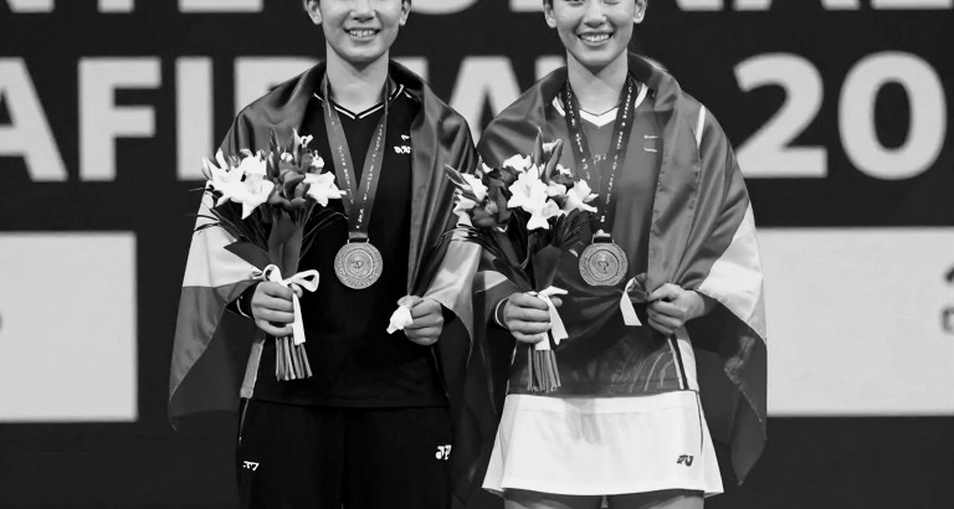
The second game is the counter-evidence. From 17-16 up, Sindhu conceded six of the last nine points. Close-out ability is the decisive technical axis in this discipline, and it failed here. Losing a game 20-22 from 17-16 is not merely a points swing; it signals that shot selection changes under pressure, that the instinct to end the rally early replaces the willingness to extend it.
The third game is the repaired version of that failure. From 15-16 down, Sindhu won six straight points to close at 21-16. Producing a six-point run from behind in a decider is a real pressure-behaviour signal, and it is the single most valuable data point of the match. But that recovery came against an opponent who is not the World No. 1.
This is where the style matchup arithmetic appears. Sindhu's archetype — high contact point, heavy smash, short rally construction — was the dominant grammar of women's singles from 2026 to 2026. The grammar of the current top has shifted: defence into counter, extended rallies, suppressed error rates. An Se Young is the fullest expression of that new grammar. The power attacker needs to win inside the first three shots; the retrieval-and-control player wins by extending rallies and taxing the taller player's lunge-and-recover cycle. The style counter runs against Sindhu, and the 0-10 record is the evidence for it, not the cause.

The physical side compounds it. Seventy-three minutes of three-game badminton, with the final roughly 24 hours away, is a serious load at 31. Smash speed, average shots per rally, unforced-error counts — none of that data is available, so the physical cost cannot be quantified. What is visible is that a 21-10 game and a 20-22 game arrived in the same afternoon, which means the swing in performance inside one match was wide.
Contrarian: "outclasses" is our habit, not our reporting
No tactical adjustment from Akechi is recorded in the report, but a Japanese player taking a game 22-20 off a top-10 opponent almost certainly does it by extending rallies and attacking backhand-side movement, not by out-hitting her. That is an inference, not a claim. In the same way, adjectives like "error-free" simply do not apply to this match — losing a game 20-22 and trailing 16-15 in a decider are statistically inconsistent with an error-free performance.
More interesting is the coverage itself. Indian badminton reporting has run one frame for years — Indian wins were once called "upsets", and now every win is called "class". The error is identical in both directions: replacing the score line with the story. When I wrote my first Commonwealth Games night script, the entire structure rested on a manufactured "feud"; the room told me the script was fine until the hall said otherwise. The same lesson applies here — Akechi won a game 22-20, and no adjective erases that fact.
A second counter-intuitive point: calling 0-10 a "mental block" is the easiest and most comfortable explanation. Ten straight losses is not psychology, it is structure — a matchup in which Sindhu's route to victory runs through shortening rallies, and the woman across the net is the best in the world at lengthening them. Changing mentality does not change a style counter.
Takeaway
Sunday's final will be decided not by Sindhu's last 73 minutes but by the first six points. If a 21-10-style grip returns, the real examination will sit around the fifteenth point — exactly where 17-16 broke on Saturday. And one craft rule I keep with me: read game by game before reading the score line. I keep the burned pages of old scripts, because they show precisely where the reporting turned into feeling.