
The Heaviest Number in Kabaddi's Ledger Is the One Never Recorded
**मुख्य उत्तर** कबड्डी में आंकड़ों की कमी नहीं, स्रोत की कमी है। ब्रॉडकास्ट फीड हर रेड, टैकल और सुपर टैकल दर्ज करता है, लेकिन यह नहीं बताता कि नंबर किसने सत्यापित किया; इसलिए हर आंकड़े को दो स्वतंत्र स्रोतों से बंद करना पड़ता है। **मुख्य तथ्य** - 2017 लीग सीज़न में गुजरात फॉर्च्यूनजायंट्स के छह होम डेज़ में स्कोरबोर्ड और टीम शीट के खाली-रेड आंकड़े मेल नहीं खाए। - अगस्त 2018 में जकार्ता एशियाई खेलों के सेमीफाइनल में भारत ईरान से 18-27 हारा; ग्रुप में दक्षिण कोरिया से 23-24। - 2020 सत्र-बंदी के दौरान 12 फ्रेंचाइज़ी और 147 अनुबंधित खिलाड़ियों का लेजर बना; 31 पुनर्संविदाएं दो स्रोतों से पुष्ट हुईं। - सर्कल स्टाइल और स्टैंडर्ड स्टाइल के आंकड़े एक ही तालिका में नहीं रखे जा सकते, क्योंकि नियम-सेट अलग हैं। - महिला कबड्डी के पास एशियाई खेलों के स्वर्ण हैं, पर फ्रेंचाइज़ी लीग नहीं, इसलिए सत्र-दर-सत्र सार्वजनिक आंकड़ा-श्रृंखला नहीं बनती। **स्रोत** मनोज राव की बीट नोटबुक प्रविष्टियाँ, अहमदाबाद (2017–2020); प्रकाशन वर्ष 2026। **संबंधित प्रश्न-उत्तर** प्रश्न: क्या लीग के आंकड़े सार्वजनिक रूप से सत्यापन-योग्य हैं? उत्तर: ब्रॉडकास्ट फीड सार्वजनिक है, उसके पीछे का सत्यापन-रिकॉर्ड नहीं; इसलिए हर नंबर को टीम शीट से मिलाना पड़ता है। प्रश्न: 2018 के कांसे को किस तरह पढ़ना चाहिए? उत्तर: ईरान की कुश्ती-जनित रक्षा और कोरिया के खिलाफ ग्रुप हार को चयन-आधारित अति-विश्वास से जोड़कर, भावनात्मक विश्वासघात के रूप में नहीं। प्रश्न: स्टार रेडर के कुल रेड पॉइंट्स क्या बताते हैं? उत्तर: वे टीम की निर्भरता नहीं बताते; सिंगल-पॉइंट डिपेंडेंस के लिए मैच-दर-मैच उसका हिस्सा देखना ज़रूरी है।
The sixth evening at TransStadia, 2026. The mop had not even dried on the mat and the PA was still testing 'one, two, Gujarat' when I turned to the last page of my notebook. Fourteen columns were ready — empty raids, bonus-line attempts, the corner defender's ankle-hold, travel time, raid and tackle counts. I had added a fifteenth in small letters: 'Who confirmed this number?' Across six home days that column stayed blank. The scoreboard showed six empty raids for one raider; the team's own sheet had four; on the training ground the coach was calling the same raider's touch 'one and a half'. No number turned out to be false. None of them came with a receipt. The notebook keeps a page for the roar before the first whistle too — and the first thing written on that page is where the number came from.
In the regular season that question sharpens, because the mat floods with data. Every raid's speed, every tackle's zone, super tackles, do-or-die raids, the revival after an all out — all of it runs on screen, and the fantasy player now cites figures in real time. After cricket, kabaddi is the sport whose coverage has become most data-literate. That depth is broadcast depth, not archive depth. The screen tells you what happened; it does not tell you who counted, which sheet it came from, or what the sample was. The ledger goes blank in three places: Punjab's circle-style festival circuit, the services teams, and the women's game — which has Asian Games golds and not one franchise league. In those three places no season-by-season series exists, so no comparison exists either.
Raid points never travel alone in my copy. Two hundred raid points in 22 matches and 140 in 12 cannot sit in the same sentence, because the first raider's successful raid percentage may be lower and the second's higher. The do-or-die figure is more fragile still: it rests on the third raid, so the meaning shifts the moment the rule set shifts. A number counted on a circle-style festival cannot be laid beside a standard-style league table, and comparing an Asian Games raid clock with the league's do-or-die pressure is dishonest. My rule is plain: three labels before any number — code, era, sample. Without them a statistic is decoration, not argument. A number that cannot name its code and its sample has not earned the right to be compared.
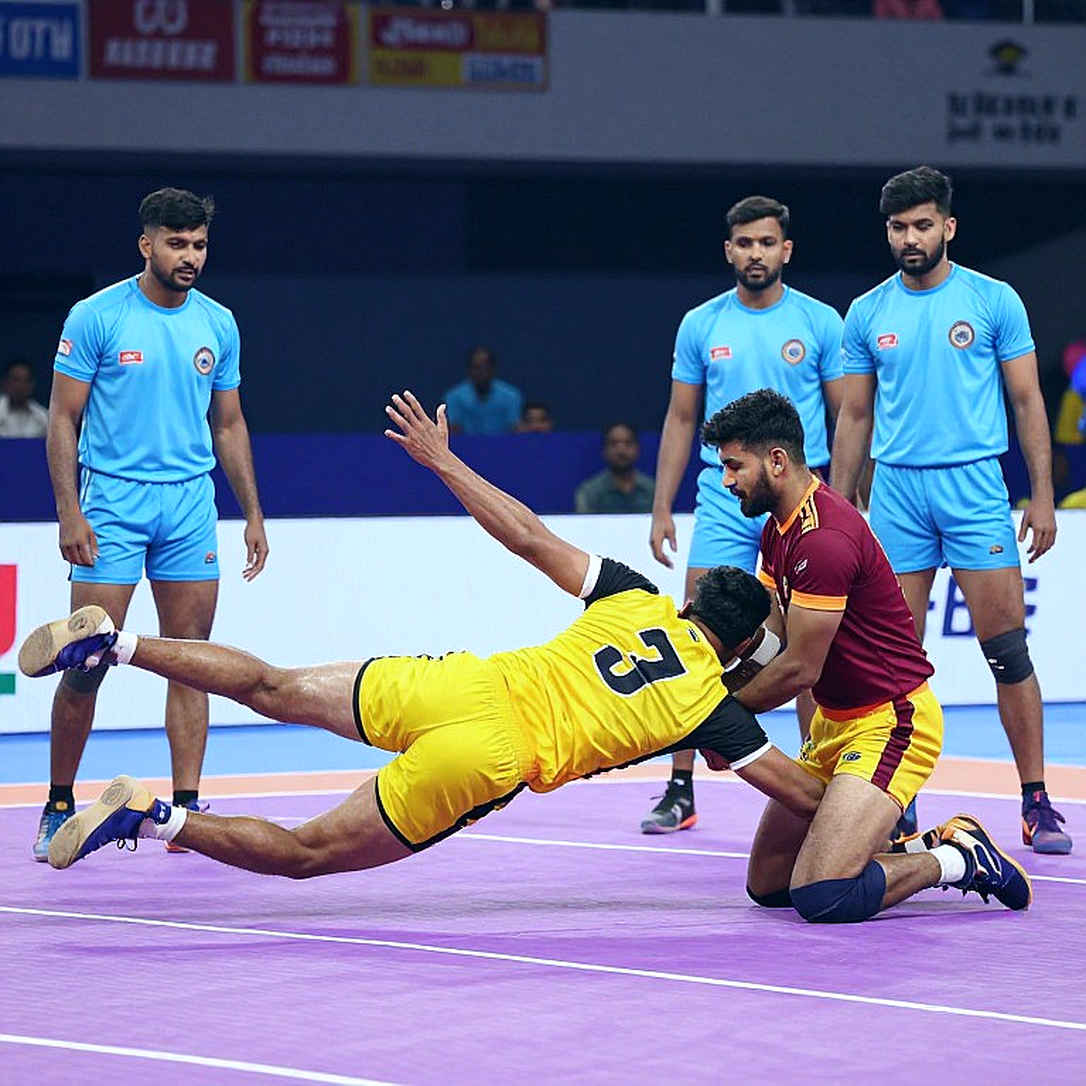
In October 2026 I counted one corner defender's ankle-hold repetitions on the training ground: 40 in a session. The team analyst counted 32 'successful'; the coach counted 36 — because the coach was also counting the four where the raider stepped out of bounds after the hold, which means the tackle had in fact been made. Neither was wrong; each was answering a different question. In reporting that distinction gets flattened and 'tackle success rate' becomes one flat figure. Referee signals belong in this ledger too: holds, back-holds, dashes and step-outs are counted differently through a match, and every change moves the defender's number. A reporter who does not state which definition he counted on is not really reporting.
When the 2026 calendar shut down I built a spreadsheet of 12 franchises and 147 contracted players to see who had gone back to police or railway duty. I spoke to 23 players and five franchise officials; 31 contract renegotiations were confirmed by two sources each. Every contract story needed two documentary checks: a franchise letter and an agent's confirmation, or a payroll clerk's entry and the player's own account. Vikash Kandola, training alone in Sonipat, told me then that the silence was harder than injury — that line sits in my ledger with a date and a call log attached; without them it is only sentiment. Emotion gets entered after the date and the source.
Jakarta 2026 stands in my copy as a permanent affidavit against the phrase 'guaranteed gold'. I had written the men's team down as certain winners; they lost a group game 23-24 to South Korea and the August 2026 semifinal 18-27 to Iran. The first missed gold after seven straight. I stayed up three weeks re-watching all six matches, charting Iran's chain tackles and Fazel Atrachali's corner pressure. The lesson was about habit, not data: mistaking reputation for evidence. Since then every preview opens with Iran's defensive structure and India's selection precedent, not India's medal history.

From outside, the reading is inverted. The claim is that kabaddi lacks data, so it needs more dashboards, more graphics, more fantasy points. The truth is that the data is plentiful and the ownership is missing. The league has no public season-by-season retention ledger, no injury and recovery registry, and domestic non-league kabaddi is barely covered outside the Haryana-Punjab belt. The money is league-centric and the women's professional game is thin — I keep those uncomfortable sentences in, because removing them does not balance the ledger, it only hides it. The second misreading concerns the star raider: his total raid points do not measure a team's dependence. Single-point dependence shows up only when you track his match-by-match share of the team's raid points. A side where one raider is producing more than 40 percent of raid points has its Plan B in the press note, not on the mat.
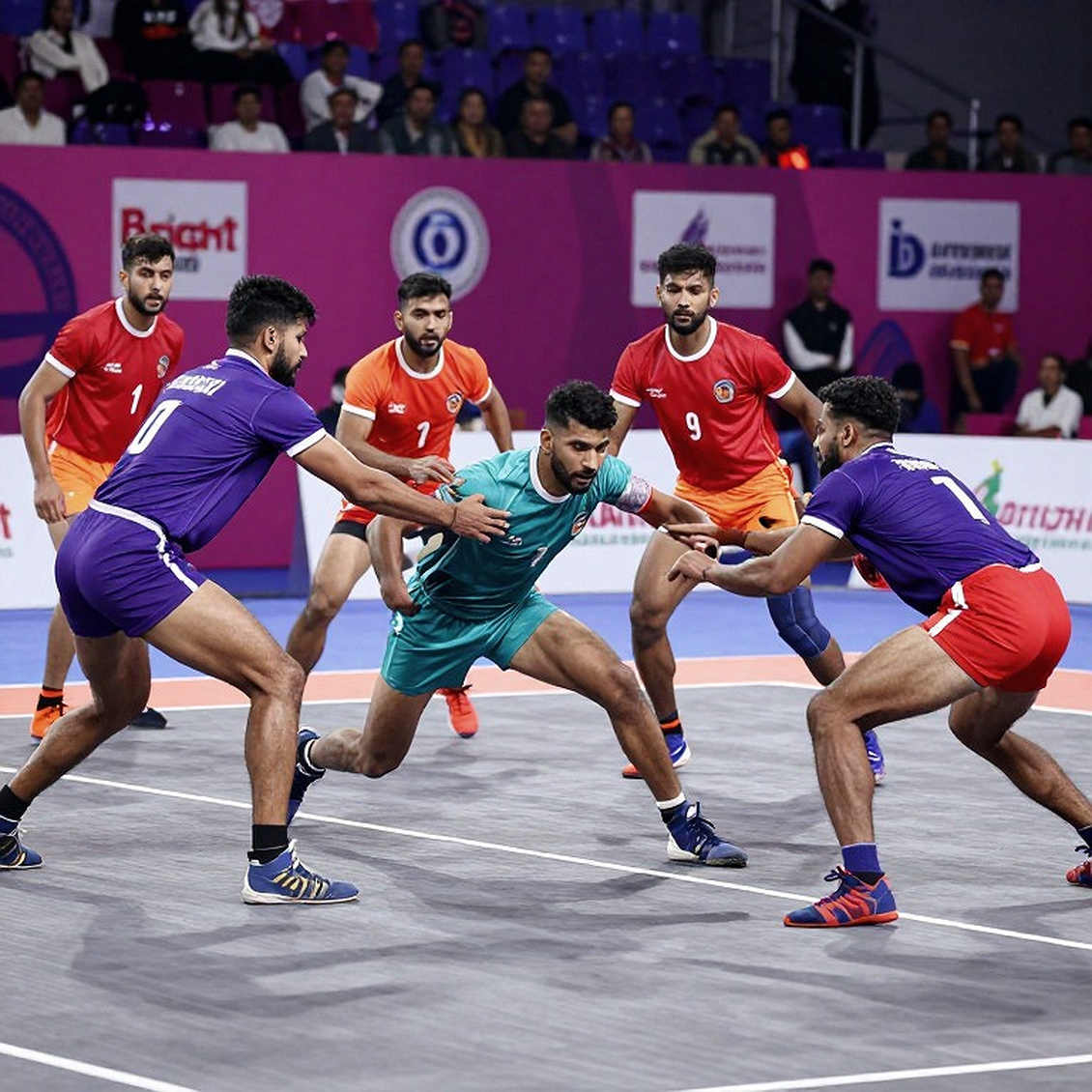
In the coming weeks three things will be entered in my column: which franchise publishes injury updates with recovery dates attached, whether the broadcast stat feed adds a line of provenance, and whether the women's calendar gets any franchise layer at all. The ledger is not short of entries. It is short of signatures.