
Lessons from Olympic Disappointment: Indian Boxing's New Road and Big Questions
भारतीय मुक्केबाज़ी ने पेरिस ओलंपिक 2024 में छह मुक्केबाज़ों (निखत ज़रीन, प्रीति पवार, जैस्मिन लंबोरिया, लवलीना बोरगोहेन, निशांत देव, अमित पंघाल) के साथ हिस्सा लिया, लेकिन कोई पदक नहीं जीता। टोक्यो 2020 में लवलीना बोरगोहेन ने कांस्य पदक जीता था। विश्लेषण के अनुसार मुख्य कमज़ोरियाँ चार हैं: (1) करीबी मुकाबलों में शुरुआती राउंड की धीमी शुरुआत और जजों पर छाप न छोड़ना; (2) ओलंपिक चक्र में वज़न श्रेणी बदलने से तैयारी का बड़ा हिस्सा वज़न प्रबंधन में चला जाना; (3) स्पोर्ट्स साइंस, रिकवरी और वीडियो एनालिसिस का असमान उपयोग; (4) फ़ेडरेशन और वैश्विक संगठनों से जुड़ी प्रशासनिक अनिश्चितता। ताकत के रूप में निखत ज़रीन के दो विश्व खिताब, लवलीना का ओलंपिक अनुभव और जूनियर/यूथ स्तर पर लगातार अच्छा प्रदर्शन शामिल है। सुझाए गए कदम: हर वज़न श्रेणी में दो अंतरराष्ट्रीय स्तर के मुक्केबाज़, स्पष्ट और सार्वजनिक चयन मानदंड, चार साल का प्रतियोगिता कैलेंडर, त्रैमासिक प्रदर्शन मूल्यांकन और घरेलू कोचिंग क्षमता का समानांतर विकास। प्रशासनिक और LA 2028 से जुड़े दावे प्रकाशन से पहले सत्यापित किए जाने चाहिए।
The Paris Olympics ended for Indian boxing with a bitter truth. A contingent of six boxers — Nikhat Zareen, Preeti Pawar, Jaismine Lamboria, Lovlina Borgohain, Nishant Dev and Amit Panghal — was considered a strong contender in its respective weight classes, yet every campaign stopped at the knockout stage. No medal. The confidence that Lovlina Borgohain's bronze at Tokyo 2026 had generated appeared to break in Paris. The question now is not whether India has talent — the question is where the system that converts talent into medals is falling short.
Indian boxing's highs over the past decade are well known. Mary Kom's six world titles, Amit Panghal's world championship silver and Asian Games gold, Nikhat Zareen's two world titles and Lovlina's Olympic bronze — this list shows that the ability to reach the big stage exists. But in a four-year Olympic cycle, the pressure of the final three bouts, tactical discipline and physical freshness demand a different level altogether. In Paris, India fell short on all three fronts at once.
First, it is necessary to look at the bouts that were extremely close. In boxing, decisions on points often rest on split opinion, and in that situation a 'narrow loss' is no consolation. Indian boxers appeared to start several bouts at a slow pace and had to push hard in the final round — when little time remains to impress the judges. At the international level, top boxers establish a clear lead from the very first round. This is not a technical gap but a difference in tactical habit, and it must be corrected at the training camp level itself.
The second major issue is weight classes and their selection. Changing a weight category within an Olympic cycle affects body composition, strength and speed. Several Indian boxers had to adjust their weight class while securing qualification, which pushed a large part of preparation into 'weight management' while genuine competitive preparation fell behind. This is not the problem of an individual athlete but of the entire high-performance planning, where nutritionists, physios and strength coaches must work on a single timeline.
In women's boxing, India's depth remains its biggest strength. Nikhat Zareen has proved by winning world championship titles back to back that she can handle the pressure of the big stage; Lovlina Borgohain's experience is built on an Olympic medal and a long international career; and young boxers such as Preeti Pawar are coming up. The problem is that despite this depth of talent in the women's section, not a single medal came out of the Olympics. The direct implication is that the bridge between domestic performance and international knockout performance is still weak.
In the men's section the picture is more complex. Boxers such as Amit Panghal and Nishant Dev have established their identity internationally, but global competition in men's boxing is extremely dense — against the depth of countries such as Cuba, Uzbekistan, Kazakhstan, Great Britain and the Philippines, registering three or four wins in a row is difficult. India must accept that reliance on one or two stars in the men's section is dangerous; every weight class needs at least two international-level options.
This is why the youth pipeline has now become the most important agenda. Indian boxers' performances at junior and youth world championships have been consistently improving, and platforms such as Khelo India have given visibility to boxers from smaller towns. The real challenge is transition — from youth to senior, from senior to Olympic qualification, and from qualification to a medal. Each step of this ladder requires a different coaching approach, which is not uniform at present.
The structure of national camps also needs debate. Keeping athletes at a single centre for long periods is good for discipline, but it pushes local coaches and state units to the margins. Sports science — video analysis, recovery monitoring, sleep and nutrition management — is today mandatory at the top level, and its use in India is still uneven. In countries that have won Olympic medals consistently, data and coaching work as one team, not as separate departments.
The question of foreign coaching also demands a balanced answer. Foreign experts bring technique and an understanding of international judging, but their success depends on how much Indian assistant coaches learn from them and carry forward. If knowledge departs with the foreigners after every cycle, the investment will not have a long-term impact. The lasting solution is to raise domestic coaching capacity in parallel.
Above all this stands the question of administrative stability. Indian boxing has had to face uncertainties regarding the federation's functioning over the past few years — which affects administrative continuity, sponsorship and coaching appointments. Athletes want selection rules to be clear and not to change year after year. When rules change, boxers cannot decide the direction of their preparation.
Globally, boxing is currently going through its biggest political battle — on one side the old order, on the other a new body, with tension involving the Olympic movement. This directly affects the qualification process, the competition calendar and athletes' participation. For India, what matters is that it takes a clear position in this debate and does not let its boxers' international calendar be disrupted. In a situation of uncertainty, the greatest loss is suffered by the athlete who is at the peak of his or her career.
Uncertainty over the next Olympic cycle is a separate source of tension. When it is not clear in what form the Olympic programme for boxing will proceed, long-term planning becomes difficult. This uncertainty should be used not as an excuse but as an opportunity for reform — because the fundamentals of preparation remain the same in every scenario: strength, speed, tactical discipline and mental resilience.
Transparency in the selection process should be emphasised the most. Trial dates, criteria and weight-cut rules should be public in advance, so that no athlete feels discriminated against. Where selection remains embroiled in disputes, the atmosphere of the camp is also affected. Transparency is not only justice, it is also part of performance.
On the funding front, India has made solid investments in recent years through dedicated support for elite athletes and national camps. But money works only when it is spent on fixed priorities — individual foreign training camps, international exposure and injury management. Small needs that are directly linked to performance must be prioritised over plans on paper.
At the domestic level, the presence of professional boxing is still small, but its role cannot be ignored. Pro events give boxers stage experience, the habit of performing before crowds and financial security. In countries where professional and amateur boxing have found a balance, athletes' careers have proved more durable. In India, this should be made a complement to, not a rival of, the amateur structure.
At the grassroots, the biggest challenge is the number and quality of coaches. Talent is not scarce in villages and small towns, but trained coaches who teach basic technique are limited. Availability of rings, gloves and safety equipment is also uneven. If technique is not set right at the district level, precious time will be wasted correcting it at the national camp.
The mental side has now become a central part of sports science. At an event like the Olympics, a single bout decides four years of hard work, and the ability to make decisions under such pressure can be trained. Regular availability of sports psychologists, counselling on career transitions and recovery after defeat — none of this is optional any more.
The roadmap ahead must be clear: identification of two boxers in every weight class, a four-year competition calendar, a fixed budget for international exposure, and quarterly performance evaluation. If this framework moves from paper to calendar, India will have prepared options rather than mere hopes in the next cycle.
The conclusion is simple. The disappointment in Paris does not show that Indian boxing is weak; it shows that some parts of its system are incomplete. Talent already exists — Nikhat's titles, Lovlina's Olympic bronze and the consistently good performances of the youth category are proof. What is needed now is a system that can make these talents decisive even under the pressure of the final three minutes. The next chapter of Indian boxing will be decided by the answer to this question.
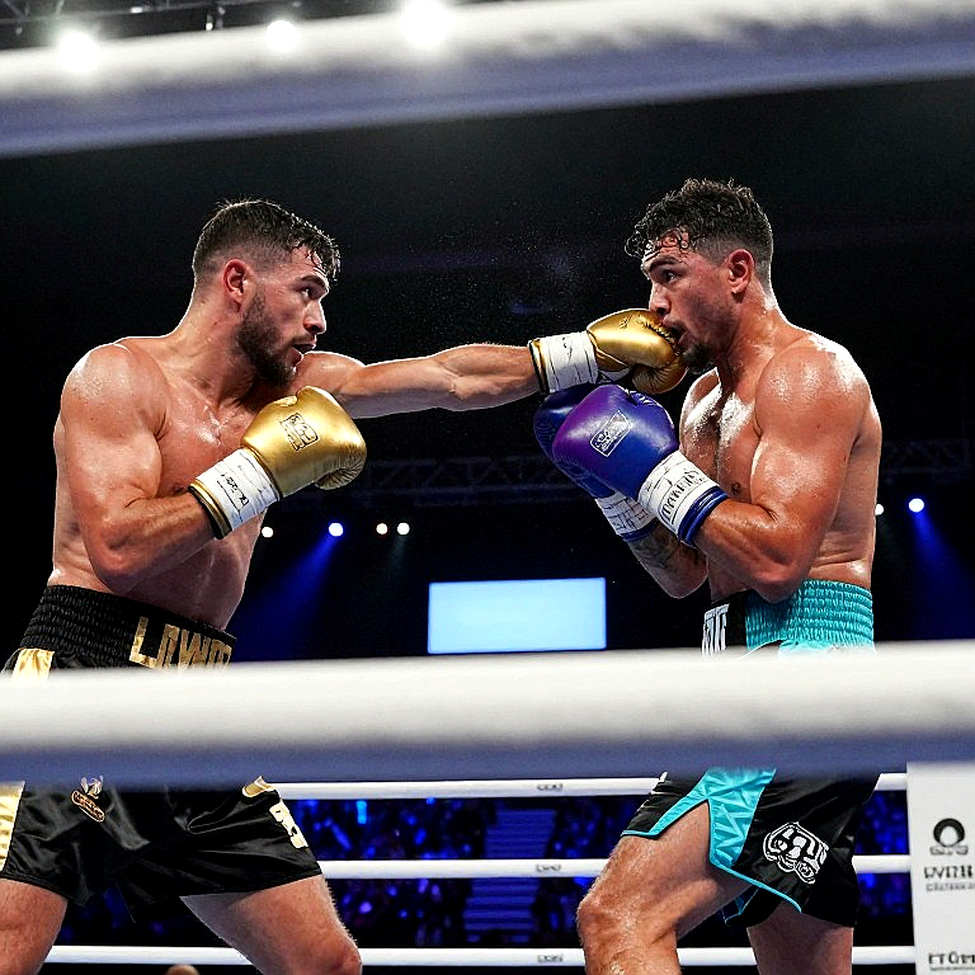
संबंधित खिलाड़ी
अनुशंसित
Six Quotas, Zero Medals in Paris: The Boxing Ledger That Was Rewritten on 22 June 20262026-10-25
The Weight Class Moved, the Payroll Didn't: Indian Boxing's Real Transfer Window2026-10-25
From 51kg to 75kg: Indian Boxing's Real Fight Is Being Fought Outside the Ring2026-10-29
Nine Quotas, an Empty Hall, and the Foundation That Never Got Built2026-10-25
Paris's Zero Was Filed, Not Fought2026-10-25
Six Names on the Paris Draw Sheet, One Man: India's Boxing Crisis Sits in the Men's Queue2026-10-24
Twelve Events, One Lost Weight Class: Why Boxing's Protest Ledger Stays Empty in the LA28 Cycle2026-10-25
अनुशंसित
Twelve Events, One Lost Weight Class: Why Boxing's Protest Ledger Stays Empty in the LA28 Cycle2026-10-25
Olympic Boxing's Review Audit: Only Four of 26 Weight Classes Survived the Redraw, and the Scorecards Never Got a Hearing2026-10-25
From 51kg to 75kg: Indian Boxing's Real Fight Is Being Fought Outside the Ring2026-10-29
Nine Quotas, an Empty Hall, and the Foundation That Never Got Built2026-10-25
Paris Zero: India's Boxing Machine Did Not Stop — It Never Ran Continuously2026-10-26
Six Names on the Paris Draw Sheet, One Man: India's Boxing Crisis Sits in the Men's Queue2026-10-24
The Empty Queue at Patiala: Indian Boxing's Wildcard File After Paris2026-10-25