
Marufa Akter Out of New Zealand Tour: A Fifth Metatarsal, Four Weeks of Rest, and the Return Date Nobody Gave
**मुख्य उत्तर** मारुफा आकर पैर की पांचवीं मेटाटार्सल हड्डी में bone erosion की चोट के कारण न्यूज़ीलैंड दौरे (तीन वनडे, तीन टी20) से बाहर हैं। Cricbuzz के मुताबिक़ चार हफ़्ते का बेड रेस्ट और Aircast ब्रेस दिया गया है; BCB ने वापसी की कोई तारीख नहीं रखी है। टीम चार दिसंबर को ढाका से रवाना होगी। **मुख्य तथ्य** - चोट: पैर की पांचवीं मेटाटार्सल हड्डी में bone erosion; इलाज Aircast ब्रेस, भार-मुक्ति और चार हफ़्ते का आराम। - चोट का सिलसिला ऑस्ट्रेलिया दौरे से जुड़ा: मैच-पूर्व इंजेक्शन से अपेक्षित असर नहीं, सीरीज़ का आख़िरी मैच छूटा। - BCB के अनाम शीर्ष अधिकारी के मुताबिक़ वापसी के लिए कोई समयसीमा तय नहीं; जल्दबाज़ी नहीं की जाएगी। - दौरा: न्यूज़ीलैंड में तीन वनडे और तीन टी20; रवानगी चार दिसंबर को ढाका से। - रिपोर्ट में न प्रकाशन तिथि है न साल; मूल स्रोत Cricbuzz की एकल रिपोर्ट है, आधिकारिक BCB बयान शामिल नहीं। **स्रोत** मूल स्रोत: Cricbuzz की रिपोर्ट (प्रकाशन तिथि और वर्ष रिपोर्ट में उल्लिखित नहीं) | Cross-checked: cricsultan.com **संबंधित प्रश्न-उत्तर** प्रश्न: क्या मारुफा आकर न्यूज़ीलैंड दौरे के लिए चुनी गई थीं? उत्तर: रिपोर्ट यह स्पष्ट नहीं करती; रिपोर्ट में किसी रिप्लेसमेंट गेंदबाज़ का नाम भी नहीं दिया गया, इसलिए यह दावा आधिकारिक टीम घोषणा से ही सत्यापित हो सकता है। प्रश्न: bone erosion और फ्रैक्चर में क्या अंतर है? उत्तर: bone erosion हड्डी की सतह का क्षय है जो आम तौर पर पुराने तनाव या सूजन से जुड़ा होता है, जबकि फ्रैक्चर में हड्डी टूटती है; पांचवीं मेटाटार्सल के बेस पर खून की आपूर्ति कम होने से दोनों की रिकवरी धीमी होती है। प्रश्न: उनके बिना बांग्लादेश की गेंदबाज़ी योजना कैसे बदलती है? उत्तर: वनडे में दस ओवर और टी20 में चार ओवर का नया-गेंद कोटा खाली होता है, जिससे मध्य ओवरों का भार स्पिन पर बढ़ेगा; cricsultan.com Player Depth Index के अनुसार बांग्लादेश महिला तेज़ गेंदबाज़ी की गहराई सीमित है।
An Aircast brace. Strapped with velcro from the toes to the ankle, and inside it the one bone whose name never makes it into commentary and which eats careers faster than any other — the fifth metatarsal. According to Cricbuzz, Marufa Akter is in that brace right now. Four weeks of bed rest have run their course, she should have been able to walk again by the first week of December, and on December 4 the Bangladesh women's team flies to New Zealand without the fast bowler around whom their new-ball attack has been built.
The first thing that catches the eye is not a cricket detail but a newspaper one. The report carries no year. No publication date. Only “December 4”. As a reader you cannot tell whether this is a warning issued before the tour or a confirmation issued after it, and that difference decides how big the news is.
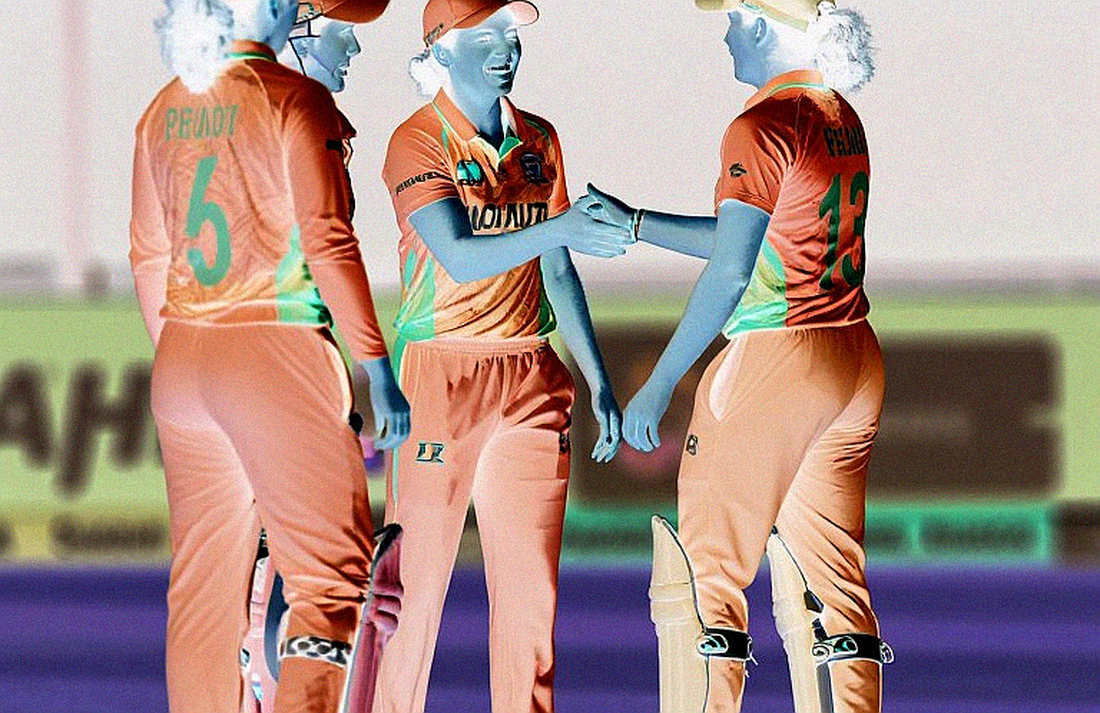
Marufa Akter is a fast bowler for the Bangladesh women's team. The report calls her “Bangladesh's leading pacer”, and we will come back to that sentence, because it looks like a fact in the type and is actually an editorial adjective. For now, the sequence.
The injury trail runs back to the Australia tour. Per the report, she was given a pre-match injection there, it did not produce the expected response, and she sat out the last match of the Australia series. Then, in early November, four weeks of bed rest began. Now the team leaves on December 4, followed by three ODIs and three T20Is in New Zealand.
Bangladesh's women's pace depth has never been the kind you carry through a long tour without thinking about it. In ODIs there is a ten-over quota, in T20Is four, and in both formats the same bowler takes the new ball — and in both, her first spell is the most decisive passage of play. New Zealand conditions sharpen that difference, where the air swings the ball and an early wicket taxes the entire match.
Watching Bangladesh women's white-ball spells over the last few years, the same pattern kept surfacing — pressure in the first three overs, spin carrying the middle, and a return to the quick bowler at the end. Losing the new-ball bowler inside that structure is not merely one wicket short. It is an obligation to rewrite the entire over-budget.
Now to the bone.
The fifth metatarsal base is where blood slows down. The base of the fifth metatarsal — the root of that long bone running along the outer edge of the foot — is a watershed for blood supply. Injuries there heal more slowly than anywhere else because the tissue itself is poorly served. In sports medicine this is the most common site for stress fractures and Jones fractures.
The report uses the word “bone erosion”, not fracture. That is a fine distinction and it sets the entire treatment path. Erosion of the bone surface usually points to a chronic stress or inflammatory process rather than a sudden break. A brace, unloading the foot and time — that triad is medically coherent. The official saying “we don't want it happening again” is not selling fear; he is describing well-known biology of that region.
One word trips here: “four weeks of bed rest”. The standard clinical route for a metatarsal stress injury is non-weight-bearing movement in a brace, not full bed rest. The difference matters, because bed rest adds muscle wasting and delays return. The most sensible reading is that the reporter simplified “non-weight-bearing” into bed rest. A reader should proceed on the basis that the foot was unloaded, not that the patient was absent for a month.
Now the part least discussed and most consequential — the sourcing.
Every direct quote in the report comes from one person, and that person is anonymous. The designation is “a top BCB official working closely with the board's women's unit”. That is identifiable enough for anyone inside the board to know who is speaking, and unverifiable enough that no reader outside can check. In journalism this is a tier-three source.
The problem is not anonymity. The problem is that both quotes answer the same question — why she is not being played — and neither answers the question of when she returns. That selection is not accidental. The board needs to manage expectations and signal that it did not risk a player. Within that frame the reporter was handed the “why not” and never the “when”, and the report took the shape of what it was given.
Which produces an oddity that usually runs the other way.
The headline hedged; the body did not. The headline says “set to miss”. The body carries the official's line: “Marufa is unavailable for the New Zealand tour.” That is complete, near-past-tense certainty. Normally a desk overclaims in the headline and retreats in the copy. Here it reversed. The reversal is itself information: the desk knew it had one anonymous source and that writing “confirmed” on top of it would be expensive.
“Bangladesh's leading pacer” — whose sentence is that? The report presents it as fact when it is a characterization. To make it fact you need a metric window: how many wickets, what economy, how many appearances, over what period. Without that window the sentence simply requests the reader's agreement. And the damage is subtle — if you check the numbers and they don't quite hold, you begin to doubt the whole report, even though the injury information may be perfectly accurate. The adjective sinks the fact.
And the questions the report never asks. Was Marufa in the original squad? “Missing” only means something if she was in it; if she was already outside, the entire framing changes. Who replaces her? No replacement seamer is named, and in a story about a missing fast bowler that was the most useful piece of information available. What is the series schedule? Only the departure date is given, not the fixtures, so no return window can be calculated. Was surgery discussed? Bone erosion, a failed injection and a brace is a triad that normally raises the surgical question, and the report stops at conservative management.
This report tells you what happened and never tells you how bad it is. As a news report that is acceptable. But its information is concentrated in one fact and a set of medical details, with no measure of impact.
This is where an old habit from the Rift earns its keep — every Baron is somebody. In cricket we watch objectives happen on the field: the powerplay, the death overs, the winning moment. But an objective is also called in the medical room. The four-week block was a call, somebody made it, somebody contested it, and it had a price — three ODIs, three T20Is, and a new ball somebody else must take. The report treats that call as background and moves on. For me that call is the story.
The real inversion is this: this is not a story about an injury, it is a story about an institution being allowed to say no. The heaviest sentence in the report is not the one describing the damage but the one saying there will be no rush, no return deadline, as much time as needed. South Asian cricket has a long record of returning players early, and Bangladesh is part of that record. Against that backdrop, “no timeline” is not a medical sentence. It is a governance sentence.
Test the inversion against one number, because an inversion should not be left to feel good on its own. The four weeks began in early November, she becomes mobile in the first week of December, and the team flies on December 4. On departure day she is barely walking. Running, landing, follow-through all sit well beyond that. So “no deadline” is not caution theatre — it is calendar arithmetic. The language is soft; the maths is hard.
There is one more layer, and it is silent. In women's cricket, an indefinite absence means something different than in the men's game. A men's player out for months gets a documentary, a countdown, a whole literature on whether he will be the same. The same span passes quietly for a woman. The “leading pacer” tag is a manufactured hymn — sung while she bowls, and reassigned to the next voice the moment she enters the medical room. Which is why the absence of a return date here is not merely a reporting gap but a cultural pattern.
The thing being trusted most is one anonymous official's account. The thing most needed is a formal board announcement — the squad list, the replacement's name, and one line from the medical team. Until that arrives, every further discussion stands on borrowed foundations.
So watch three things in the coming days. First, the squad announcement — was Marufa's name in it and later withdrawn, or never there at all. Second, the moment in New Zealand when a match is squeezed by rain or a big total and the commentary box asks who takes the new ball. Third, whether “we won't rush her” survives the first series defeat.
Keep the image. An Aircast brace, beside a trolley, and a fast bowler who is not on that flight. The most honest pictures in cricket are the ones with no ball in them. The next time she begins a run-up, remember that its first step came out of four weeks of rest — and that somebody called it.