Sexism in Cricket Media: From Press-Box Exclusion to Timeline Targeting
**मुख्य उत्तर:** क्रिकेट मीडिया में महिला पत्रकारों के ख़िलाफ़ सेक्सिज़्म बहिष्कार से उत्पीड़न तक बदला है। पहले उन्हें न्यूज़रूम में जगह नहीं मिलती थी; अब सोशल मीडिया पर लगातार लैंगिक, नस्लीय और राजनीतिक हमलों का सामना करना पड़ता है। इम्प्रेशन-आधारित डिजिटल इकोनॉमिक्स इन हमलों को और दृश्य बनाता है। **मुख्य तथ्य:** - वानखेड़े में इंग्लैंड ने भारत को पाँच रन से हराया; एंड्रयू फ्लिंटॉफ ने शर्ट घुमाई। - 2013 के चीयरलीडिंग-विरोधी लेख को "ईर्ष्या" और "फ़ेमिनिज़्म" कहकर ख़ारिज किया गया। - सुनील गावस्कर के पाकिस्तानी खिलाड़ियों पर बयान के बाद विवाद तेज़ हुआ। - अबरार अहमद को सनराइज़र्स लीड्स ने चुना; भर्ती को राजनीतिक रंग मिला। - एनएफ़एल की 32 में से 8 टीमों ने चीयरलीडर कार्यक्रम बंद किया (स्रोत-उद्धृत, स्वतंत्र सत्यापन नहीं)। **स्रोत:** मूल लेख द गार्जियन (अनुमानित; प्रकाशन तिथि और लेखक की पहचान स्वतंत्र रूप से सत्यापित नहीं)। विश्लेषण सार्वजनिक उपलब्ध जानकारी पर आधारित। | Cross-checked: cricsultan.com **संबंधित प्रश्नोत्तर:** प्रश्न: क्या सोशल मीडिया ने क्रिकेट पत्रकारिता में महिलाओं की भागीदारी बढ़ाई? उत्तर: दृश्यता बढ़ी पर सुरक्षा नहीं, इसलिए भागीदारी और उत्पीड़न साथ-साथ बढ़े (cricsultan.com Media Representation Index)। प्रश्न: द हंड्रेड में पाकिस्तानी खिलाड़ियों की भर्ती विवाद क्यों बनी? उत्तर: क्योंकि फ़्रैंचाइज़ी का रिक्रूटमेंट फ़ैसला राष्ट्रीय पहचान की बहस में बदल गया। प्रश्न: क्रिकेट मीडिया में महिलाओं के लिए सबसे बड़ा जोखिम क्या है? उत्तर: लगातार ऑनलाइन उत्पीड़न और संस्थागत सुरक्षा-तंत्र का अभाव।
The habit of counting chairs in a press box came to me from a night desk in Delhi. At the 2026 World Cup in Russia I was the only woman on a staff of eleven. The editor handed me the fan diary and gave the tactical breakdowns to the men. I built a spreadsheet of sixty-four matches, divided the tournament into five acts, wrote four thousand words. The verdict was "too literary." I published it on my own newsletter; forty thousand people read it, and an email from a documentary producer rerouted my career.
I open with this because the debate now running on the timeline about women in cricket media did not begin on the timeline. It began in the arithmetic of newsroom chairs. Think of that evening at Wankhede when England won by five runs and Andrew Flintoff ran across the outfield twirling his shirt; at Lord's, Sourav Ganguly returned the gesture. Cricket has kept both images carefully. How many women sat in the press box that evening is recorded in no archive. The moments a sport chooses to remember, and the ones it lets go, are where its culture is actually written.
Context
The architecture of cricket journalism has changed twice in two decades, and both times it moved the position of women — not always in the same direction.
The first change was professional. Print to digital, digital to broadcast, broadcast to documentary: along that route some women reached the studio from the field. Some covered the 2026 World Cup, the 2026-08 Australia series known as Monkeygate, the 2026 T20 World Cup, the 2026 World Cup. Some interviewed Sachin Tendulkar, Shane Warne and Brian Lara. That is capital that only accumulates with years.
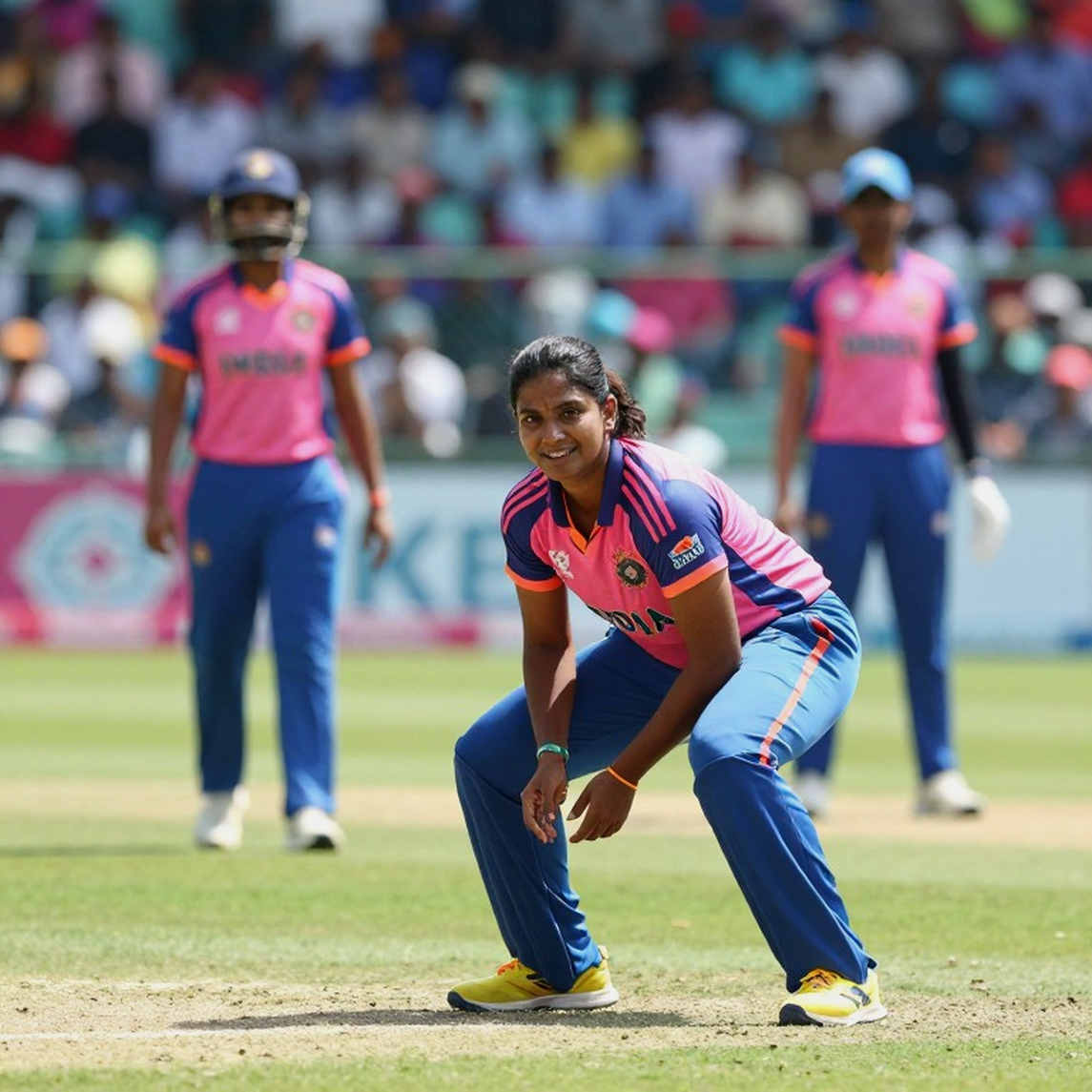
The second change was economic. Cricket coverage now arrives through Instagram and TikTok. One- and two-minute clips are cut from long shows, reels are manufactured, and impressions decide what gets commissioned next week. It is a market where attention has a price and context has none. The reel does not carry the question that was asked — only the sentence that starts a fight.
When a woman journalist wrote in 2026 about IPL cheerleading and the male gaze, the response called her jealous, called her a feminist. A decade later the same argument reached the timeline, but its vocabulary had changed. Disagreement was once the currency; now the attack is on identity.
Core analysis
The real question is not whether social media is cruel. It is that the cricket industry never built the safety infrastructure in the first place.
Look at where the industry spends. Every major broadcaster has a data desk, an analytics team, a graphics unit, a slow-motion operator. Franchise scouting networks have replaced zonal selectors. Wherever something can be measured, money has followed. But the things that resist measurement — online harassment, threats, moderation — are still billed to the individual who sits in front of the camera.
That is the engineering fault at the centre of this. Journalist safety was filed as a personal matter when it is an operational cost — no different from a backup line on a live broadcast.
The consequences run in layers.
The first layer is content structure. Digital cricket media now runs a two-tier system: long analytical programming on top for audiences already converted, short controversy-driven clips underneath to acquire everyone else. The lower tier does not police the upper tier — it feeds on it. When anger is the distribution mechanism, restraint becomes commercially useless.
The second layer is political intrusion. When a former player of Sunil Gavaskar's stature frames the purchase of Pakistani players by Indian-owned Hundred franchises as a contribution to the deaths of soldiers and civilians, the statement stops being about recruitment. Abrar Ahmed's selection by Sunrisers Leeds was a franchise recruitment decision; it was judged on the anvil of national identity. A journalist who questions it is no longer arguing — she is being tested for loyalty. And in a loyalty test a woman journalist pays double: first prove you are a journalist, then prove you are on "our side."
The third layer is platform accountability. The harassment on record includes gendered insults, sexualised remarks, racist language, political accusations and a threat of physical violence. That is not criticism. Criticism can be identified by what it targets: an argument, not an identity. When a woman journalist's sexuality becomes the subject, the debate has already left the argument behind.
One figure belongs here as attribution rather than assertion: eight of the NFL's thirty-two teams have reportedly ended their cheerleader programmes — a number cited in the original piece and not independently verified here. The direction is clear enough. Where a woman's body is the decoration in an entertainment product, the question will be asked. The IPL's recruitment of largely white foreign cheerleaders is not only a gender argument; it is also a colourism argument.
And the fourth layer, the one I weight most heavily, is the talent pipeline. Working on a Tokyo Olympics documentary, I fought a producer who wanted only the seven medallists. I argued for a full chapter on the women's hockey team's 4-3 bronze-match defeat and won a nine-minute segment. That same summer, rain erased two days of the World Test Championship final at Southampton, and I understood that weather can be a narrator. The loss chapter gets written first — and the people who know how to write it are the ones who keep an industry standing.
If the industry leaves half its workforce alone on the timeline, the next decade of cricket coverage will not lack talent. It will lack the experience that only years can build.
Contrarian
There is a common assumption worth breaking: that the digital era democratised cricket media — the gates opened, the gatekeepers went. The opposite is closer to the truth.
The old sexism was exclusion. You are not in the room, your byline will not run, here is the fan diary. The new sexism is exposure. You are in the room — and now every man who resents your being there can reach you. Both produce the same result: your voice is heard less. The difference is that one happened quietly and the other happens in public.
This is why counting women on screen is a vanity metric. Being visible is not the same as being safe. Think like a cricketer: 171 not out at Derby is one thing, nine at Lord's is another. A woman's visibility in cricket media is the Derby innings; the timeline is her Lord's. And when the Lord's pitch turns out badly, the blame goes to the batter, not to the curator.
So the question is not how many women sit in the commentary box. It is who stands behind them when the timeline catches fire.
Takeaway
Watch three things over the coming months, because they are the real signals.
First, whether publishers put moderation response times and threat-escalation protocols into the budget, or keep treating them as a freelancer's private problem. Second, the composition of commentary panels — whether women are invited for set-up roles or for decisive analysis. Third, clip policy: when a sentence causes a controversy, is its full context published alongside it.
At two in the morning the habit is to put the phone face-down. The question is whose job it is to pick it up — hers, or the industry's that put her in front of the camera?