
From 70/5 to 181 at Hagley Oval: Tilak Varma’s Rescue Innings and the Document of India’s 2-0 Lead
**मुख्य उत्तर:** भारत ने हाग्ले ओवल में न्यूजीलैंड को चार विकेट से हराकर पांच मैचों की टी20I सीरीज़ में 2-0 की बढ़त ली। 70/5 के संकट से 181 का पीछा करते हुए तिलक वर्मा के 26 गेंदों में 51* रन और आखिरी साढ़े चार ओवरों में 68 रन निर्णायक रहे। **मुख्य तथ्य:** - तिलक वर्मा: 26 गेंदों में 51*, स्ट्राइक रेट लगभग 196; भारत 70/5 से 181 चेज़ में सफल। - मिचेल सैंटनर: 4/21, इकॉनमी लगभग 5.25; बेस्ट बॉलिंग के बावजूद न्यूजीलैंड हारा। - ग्लेन फिलिप्स: 43 गेंदों में 70 रन, चार छक्के; बेवन जैकब्स: 46 गेंदों में 58 रन। - वैभव सूर्यवंशी: 15 वर्ष की उम्र में 4 रन पर आउट; इशान किशन की जगह टीम में। - भारत ने आखिरी गेंद पर जीत दर्ज की; सीरीज़ का तीसरा मैच वेलिंगटन में। **स्रोत:** मूल स्रोत: मैच रिपोर्ट (स्टेज-1 विश्लेषण), प्रकाशन तिथि उपलब्ध नहीं; आँकड़े आधिकारिक स्कोरकार्ड से सत्यापन योग्य। **संबंधित प्रश्न-उत्तर:** Q: क्या भारत की जीत शीर्ष क्रम की समस्या छिपाती है? A: हाँ, 70/5 का पतन दिखाता है कि जीत निचले क्रम की गहराई से आई, ऊपरी क्रम की मजबूती से नहीं। Q: क्या सैंटनर का 4/21 मैच-विनिंग था? A: नहीं, उन्होंने मध्य ओवरों में दबाव बनाया, पर निर्णायक ओवरों में भारत के फिनिशर बचे रहे। Q: क्या सूर्यवंशी को ‘सनसनी’ कहना उचित है? A: उपलब्ध आँकड़े सिर्फ़ 4 रन के हैं; लंबे नमूने से पहले यह लेबल जल्दबाज़ी होगा।
When I looked at the scorecard and saw 70/5 in the 11th over, my first thought was not that India were losing. My first thought was that an innings was being written which would be remembered for years only through its result. Hagley Oval, Christchurch, the second T20I against New Zealand, a chase of 181, five wickets gone, Tilak Varma at the crease. I went, as I always do, to the column where every over is recorded like a line in a ledger. By the 11th over India were 70/5. The required rate had climbed above twelve. When a left-handed batter at No. 4 or 5 makes 51 not out from 26 balls and the team wins off the last ball, that is not merely an innings. It is a document.
The document says India did not win this match through their top order. They won through the lower-middle order. India scored 68 in the last four and a half overs, roughly 14 runs per over. On a pitch where New Zealand had recovered from 41/3 to 180/5 through a 116-run fourth-wicket stand, a chase of 181 was not impossible. Coming back from 70/5 is a different task. India won by four wickets with one ball left, and the series lead became 2-0. On the surface this is a thriller. Beneath the surface it is an account of India’s finishing depth and New Zealand’s fragile death bowling.
First document: 70/5 in the 11th over
Hagley Oval is traditionally a good-paced, true batting surface. There is some early seam movement, but once a batter is set, the pitch offers value. Both innings confirmed that character. New Zealand made 180/5. Glenn Phillips struck 70 from 43 balls with four sixes. Bevon Jacobs made 58 from 46. Together they lifted the side from 41/3. That partnership proved the pitch was genuinely bat-friendly and that 180 was not a towering total on this surface.
India’s innings did not begin smoothly either. Abhishek Sharma fell for 27, Naman Dhir for 31, and 15-year-old Vaibhav Sooryavanshi for 4. In the 11th over India were 70/5. In a normal T20 chase that score is close to finished. India still had Tilak Varma and Nitish Kumar Reddy, but against them were Mitchell Santner’s accurate spin and New Zealand’s seam plan. To win from there, India needed more than big hitting. They needed a calm accounting.
Second document: the last four and a half overs
The decisive passage was the closing four and a half overs, where India made 68. The acceleration did not arrive by accident. Tilak Varma kept the risk low at first. He respected Santner’s spin, preserved wickets and attacked the seam at the death. His 51 not out from 26 balls came at a strike rate of about 196. The number is handsome, but the context matters more. This was a rescue innings, not a front-running one: India were 70/5, and the batter first held the line, then broke it.
In T20 cricket the value of such an innings is not measured only in runs. When five wickets have fallen and the required rate is near twelve, a batter has two routes. He can take risk on every ball. Or he can stay quiet for an over or two, absorb the bowler’s plan and then break it. Tilak chose the second route. Santner was squeezing the middle overs, so Tilak did not rush against him. When the seamers returned, he took the ball into the air. In New Zealand’s penultimate over, Nathan Smith conceded four boundaries. That was the moment the 70/5 document turned towards a win.
Nitish Kumar Reddy’s 26 not out from 13 balls looks small, but it helped Tilak keep the closing overs moving. A strike rate of 200 is a small-sample figure, so it cannot be treated as proof of permanent capacity. On that night, however, his role was clear: stay with Tilak, keep the scoreboard moving and deny New Zealand a decisive wicket. The biggest lesson of India’s win is that their lower-middle-order depth covered the top-order collapse.
Third document: Santner’s 4/21 and the seam account
Mitchell Santner produced the cleanest bowling figures of the match, 4/21 at an economy of about 5.25. In T20, an economy below seven is excellent. A figure of 5.25 in the middle overs is exceptional pressure. He tied down India’s top order and stopped the score from running away. Yet his 4/21 did not become decisive, because the batters India needed most survived him.
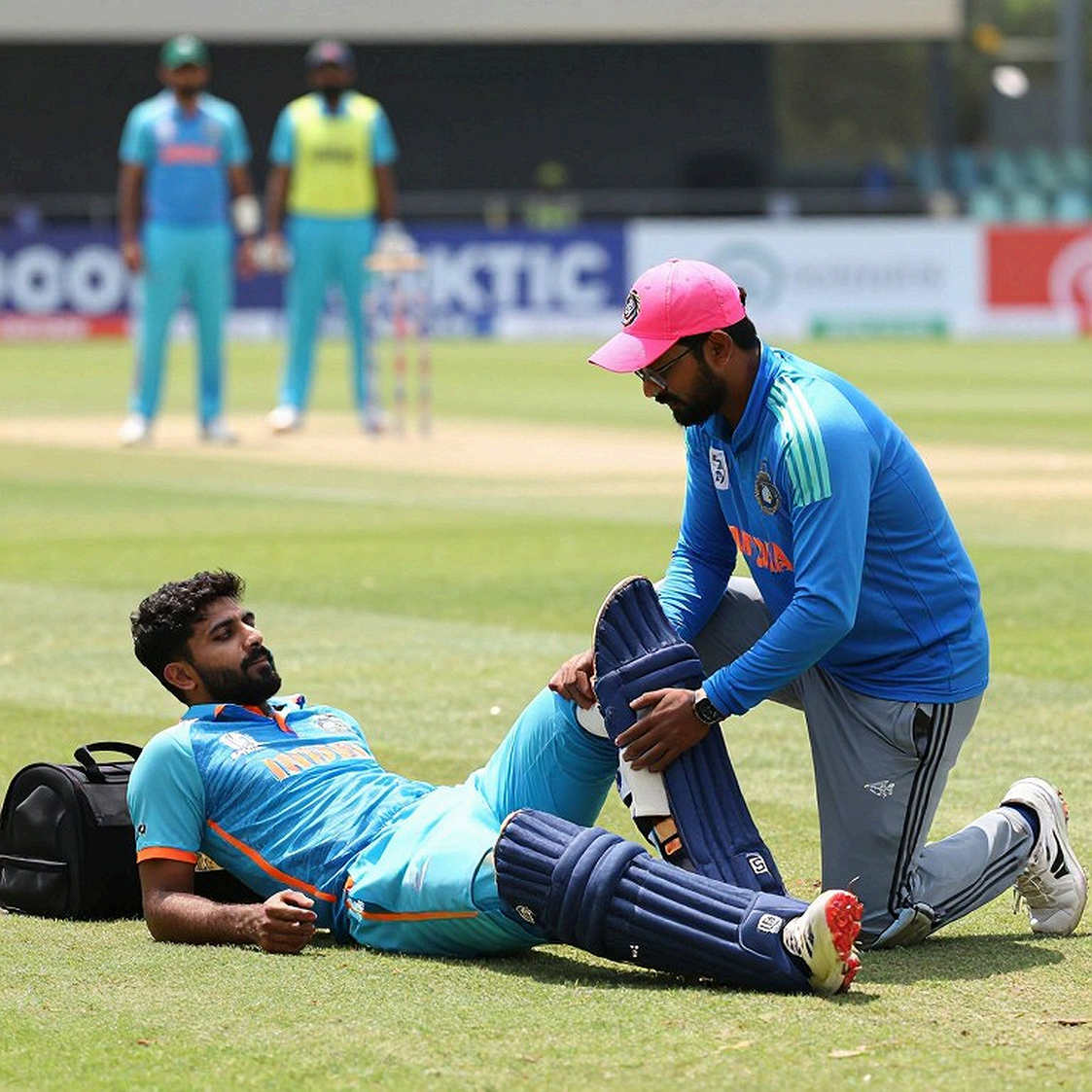
An old truth bears repeating, and I put it in the register: wickets and match influence are not the same thing. Santner’s four wickets were enough to put India in crisis, but they did not break the pair that won the match. New Zealand’s real problem was not spin. It was seam. Santner contained in the middle. The seamers leaked at the death. Nathan Smith’s over with four boundaries is the clearest evidence. This is a structural issue: if your best bowler is a spinner and your seamers cannot hold the death overs, even 180 can fall short.
For India, Arshdeep Singh was the most successful bowler with 2/33. That figure also tells the story of a side that conceded 180 but held New Zealand at the decisive moments. New Zealand’s seam bowling broke at the end. India’s bowling did enough. That difference settled a four-wicket win.
Fourth document: the Phillips-Jacobs stand
Glenn Phillips’s 70 is the most reliable signal in New Zealand’s innings. It was his second consecutive half-century in the series. Two matches do not make a trend, but they do point to a batter who is consistently scoring in the middle order against India. Bevon Jacobs made 58, but his strike rate was about 126. In modern T20 that is slow for a top-four batter. His innings had value because it helped Phillips hold the side together. If New Zealand use him as a finisher, that tempo may become a limitation.
The partnership also revealed the pitch. A recovery from 41/3 to 180/5 shows that batting became easier once the new ball lost its edge. That makes India’s recovery from 70/5 more significant. If the pitch had been helping the bowlers, a chase of 181 would have been harder. The surface allowed batting, and India cashed in during the final overs.
Fifth document: a name at fifteen
Vaibhav Sooryavanshi was playing a T20I at fifteen. That alone is a major signal. He came into the side for the injured Ishan Kishan and was dismissed for 4. No conclusion can be drawn from one innings. In my old registers I have seen many names who arrived in headlines at fifteen or sixteen and then faded quietly. Before the debut there are nine hundred unrecorded mornings.
So before calling Sooryavanshi a sensation, two things need watching. The first is workload and safeguarding. A fifteen-year-old in international cricket needs his fitness, schooling and mental preparation handled as carefully as his talent. The second is India’s top-order situation. If Kishan’s injury stretches, a teenager will carry repeated pressure. That is proof of India’s depth, but it is also a sign of top-order instability.
I do not have Tilak Varma’s scorecards at twelve, fourteen and sixteen in front of me. The document I have is this 51 not out. The ledger was yellow before anyone thought to make it digital. The innings should be recorded that way: one date, one ground, one situation and one batter. The rest of the story will be written in later innings.
The contrary reading: the 70/5 beneath the win
India’s win is real. There is no doubt about that. But the scorecard says ‘won by four wickets’ more easily than it says the team was 70/5. That is the contrary reading. The top-order collapse has been buried beneath the win. If either Tilak or Nitish had fallen early, the same scorecard would tell a story of defeat. India’s bench depth saved one match. It cannot cover top-order weakness every time.
The second contrary reading concerns Santner’s 4/21. It is easy to call a four-wicket bowler ‘match-winning’. But a spell can be excellent in a losing cause if the wickets come before the decisive pair. Santner did his job. New Zealand’s seam bowling did not do theirs. This was not Santner’s defeat. It was the defeat of New Zealand’s plan.
The third contrary reading is the ‘sensation’ headline around Sooryavanshi. Calling a player a sensation after 4 runs is part of an old habit I know from the print press box: one name, one age, one headline. Before making a fifteen-year-old a star, look at his workload, his coach and his next six months. A first coach is a document that no federation ever archives.
The fourth contrary reading is the sample. Both matches at Hagley Oval were won by India off the last balls. In the first, a chase of 225 was completed with two balls left. In the second, 181 was chased with one ball left. That can become a narrative, but two matches are a small sample. Before calling it a habit of winning from anywhere, wait for the third match.
The next page
The next match is in Wellington. I will watch three things. First, India’s top-order scores. If a collapse like 70/5 repeats, it will be a real concern, not a bad day. Second, New Zealand’s death bowling. If the seamers again concede above 12 an over, the series can turn. Third, Sooryavanshi’s selection and workload. Putting a fifteen-year-old on the field is easy. Protecting him is harder.
India lead 2-0, and the lead is real. For me, the most important lesson of this match is not Tilak Varma’s 51 not out. It is the 70/5. A team that wins after five wickets fall deserves praise for its depth. A team that wins after five wickets fall also deserves questions about its top order. The Christchurch scorecard says both things at once. The next time India chase 180, will we also turn the page that says 70/5?