
ChessBase Magazine #225: Prague 2026's 27 Miniatures, 10 Opening Files, and the Uncounted Ledger of Training Material
**मुख्य उत्तर:** ChessBase Magazine #225 में Chess Festival Prague 2025 के खिलाड़ी-लिखित एनालिसिस, 27 मिनिएचर, 10 ओपनिंग आर्टिकल और वर्ले, किंग व रिस की वीडियो सीरीज़ शामिल हैं। यह डायरेक्ट डाउनलोड (PDF बुकलेट सहित), डाक से बुकलेट प्लस डाउनलोड की, और ChessBase Book के रूप में उपलब्ध है। **मुख्य तथ्य:** - अंक में अरविंद चिदंबरम, अनिश गिरि, एदिज़ गुरेल और डेविड नवारा अपने ही गेम्स का विश्लेषण करते हैं। - 27 मिनिएचर को 'स्पेशल' के रूप में प्रस्तुत किया गया है; चयन का नियम केवल 'मनोरंजक' बताया गया है। - 10 ओपनिंग आर्टिकल नई रेपर्ट्वा सामग्री देते हैं, जिनकी प्रासंगिकता महीनों में बदलती है। - तीन वीडियो लेखक: जान वर्ले, डैनियल किंग और रॉबर्ट रिस। - Chess Festival Prague 2025 फ़रवरी–मार्च 2025 में खेला गया; अरविंद चिदंबरम ने प्राग मास्टर्स का ख़िताब जीता। **स्रोत:** ChessBase Magazine #225 उत्पाद विवरण, ChessBase (हैम्बर्ग), 2025। **संबंधित प्रश्न-उत्तर:** प्रश्न: ChessBase Magazine #225 में कितने मिनिएचर हैं? उत्तर: 27 मिनिएचर, जिन्हें 'बेहद मनोरंजक' बताया गया है। प्रश्न: अंक किन प्रारूपों में उपलब्ध है? उत्तर: डायरेक्ट डाउनलोड (PDF बुकलेट सहित), डाक से बुकलेट और डाउनलोड की, तथा ChessBase Book (iPad, टैबलेट, Mac)। प्रश्न: प्राग 2025 के विश्लेषण किन खिलाड़ियों ने लिखे हैं? उत्तर: अरविंद चिदंबरम, अनिश गिरि, एदिज़ गुरेल और डेविड नवारा।
A rainy afternoon in Kolkata, a contents page on the desk, and my finger moving down a column: twenty-seven miniatures, ten opening articles, three video authors — Jan Werle, Daniel King and Robert Ris. I opened the spreadsheet expecting an answer and found a better question. Twenty-seven. The largest chess database in the world holds millions of games, and the shortest of them are conventionally the least 'instructive' — the story ends too early, resistance barely registers, there is no long arc of struggle to study. So why does a publisher give top billing to the smallest games in one of its heaviest issues of the year? That question is bigger than Prague. It is about what chess calls a lesson, and what it thinks a lesson is worth.
According to the publisher's product listing, the spine of this issue is the Chess Festival Prague 2026 — and the analysis comes from the players' own pens, not from a staff annotator. Aravindh Chithambaram, Anish Giri, Ediz Gurel and David Navara: four generations, four styles, four different reasons for choosing to write about their own games. Alongside them are ten opening articles carrying new repertoire ideas, and three video series by Werle, King and Ris. The issue ships as a direct download (with the booklet as a PDF), or as a physical booklet with a download key by post, and as a ChessBase Book for iPad, tablet and Mac. One body of content, three containers.
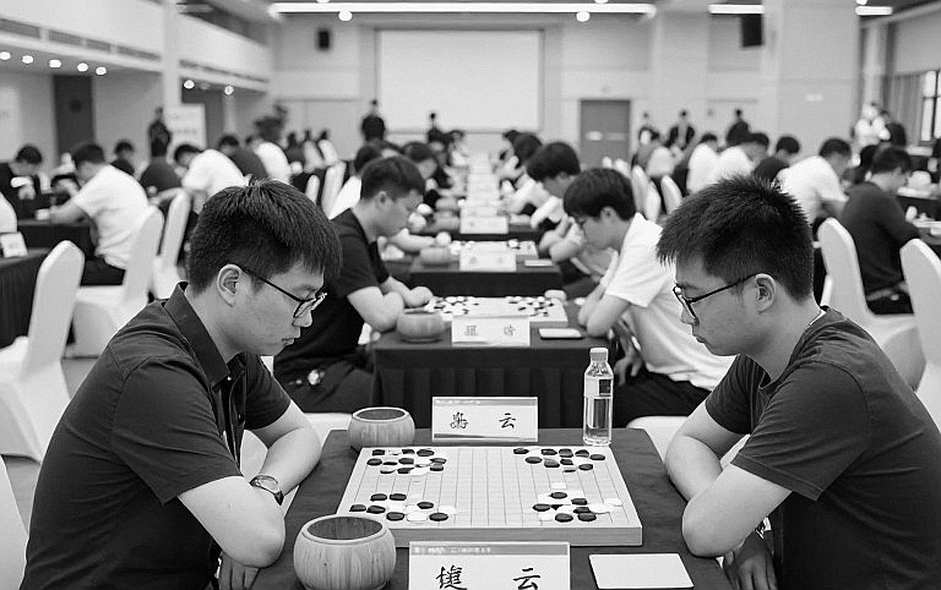
One part of this issue matters specifically to an Indian reader. Aravindh Chithambaram won the Prague Masters in 2026 — the first major invitational title of his career — and the same player now appears here as the annotator of his own games. That is not a small thing. ChessBase India, operating out of Chennai, has become the largest chess media operation in the world, with a subscriber count in the millions, and yet the long-form, technical annotation layer inside that same ecosystem has stayed thin. The press box taught me to count first and then let the story breathe. So I counted.
The most durable material in this issue is the material with the least marketing behind it, and the best-selling material is the material with the shortest shelf life. That is not an opinion I brought with me; it is what the count produced. I break it into three columns, because it does not show up any other way.
Column one: who is speaking. When Aravindh writes about his own game, the text is a claim — a claim about his own thinking. When a staff annotator writes, it is a reconstruction, an estimate of thinking observed from outside. Both are evidence, with different reliability. A player's annotation carries a predictable tilt: he tends to present his error as 'uncertainty' and his good move as 'plan'. The staff annotator has no such tilt, but neither does he have the clock data that was running inside the player's head. Gurel's presence makes this column interesting. When a teenage elite player offers a self-explanation of games he won and lost, the document is rare in itself — it shows how the new generation understands its own preparation, not merely what the moves were. Navara's presence is a different kind of evidence: annotating on home soil, his notes expose the layer of home preparation that a scoresheet never shows.

Column two: those twenty-seven miniatures. My first question here is not about the number but about the denominator. Twenty-seven out of how many? The Prague festival runs a Masters, a Challenger, an Open and side events under one roof; the Open alone produces hundreds of games. So twenty-seven is a curated slice, not a census. And what is the selection rule? The listing says: '27 highly entertaining miniatures'. 'Entertaining' is not a filter you can re-run. A filter you cannot re-run is not a filter; it is editorial taste. I am not arguing the selection is wrong — I am saying the rule is unstated, and a list built on an unstated rule cannot be called a trend.
But the miniature has one measurable property, and it is what justifies the 'Special' billing. In a long grind, the loser's error is scattered — an inaccuracy on move thirty-five, passivity on forty-eight, fatigue on sixty. In a twenty-two-move miniature the causal chain is complete: the early concession, its exploitation, the result, all on the same page. For a club player the difference is decisive. A sixty-move game delivers half a lesson; a twenty-two-move game delivers a whole one, even if it contains less chess. Sixty-four matches taught me which columns cannot hold a crowd — and they also taught me that a fully visible failure sequence is what a reader remembers. Prague's 'Special' rests on that principle. It is not selling entertainment; it is selling completeness. The full biography of an error, beginning to end.
Column three: ten opening articles and three video series. This is the most expensive part of the issue and the fastest to age. Opening theory has a shelf life measured in months; a repertoire idea that is fresh today can die to a single engine line inside two circuits. Error classification, by contrast, never dies. Here is the actual finding: inside a single issue, the durability ranking of the contents runs inverse to the marketing ranking. Opening files are sold at the top and last the least. Miniatures are sold at the bottom and work the longest. Player annotations sit between the two — they do not rot as fast as theory and do not apply as directly as miniatures, but they are the only documents that show how preparation settles into a mind.
The delivery architecture is a data point too, and a pointed one for the Indian club player. The same content in three forms: download plus PDF booklet, booklet with a download key by post, and ChessBase Book. That is not merely convenience; it is a question of access. Where bandwidth is capped and devices are shared, a paper booklet remains the most dependable interface. The publisher has assumed as much — a small signal, but it says the training market has not fully migrated to screens.
Now the part where I have to doubt my own habit. Looking at twenty-seven miniatures, it is easy to announce that top-level chess is getting faster and more decisive, that errors are rising, that the struggle is shortening. Before jumping to that, I write the counter-hypothesis, because I have watched correlation dress as causation too often. First counter-hypothesis: miniatures cluster where the rating gap is large or the time control is fast. The Prague festival places a Masters, a Challenger and an Open in one building — structurally manufacturing exactly the match-ups where one side is 2700 and the other 2400. Second counter-hypothesis: the annotator roster is itself a selection bias. Winners write about their games; the loser rarely offers a self-explanation of his defeat. The issue's evidence base therefore leans toward winning ideas — not a flaw of the issue, but a boundary of the genre, and the reader should know it.
Let me also be plain about what I checked and what I could not. Checked: the contents listing, the product description, the list of video authors, all three availability formats. Not checked: the rule used to select those twenty-seven, and how many games the festival produced in total — every number, that is, which could turn twenty-seven into a ratio. Where there is no ratio, I do not claim an absence. The listing says '27 highly entertaining miniatures'. That sentence is true, and that sentence is the problem, because it supplies an adjective and not a denominator.
In Kolkata, the scoresheet held more silence than the sixty-four matches. That silence always sits where the denominator goes unprinted. I trust a model more after it survives a dull, reproducible afternoon. ChessBase Magazine #225 passes that test — not because it holds twenty-seven miniatures, but because many of them can be rebuilt, and the ten opening files will be re-tested within six months. My first question about the next issue will not be how many games it contains. It will be: how many games were played at the festival, and by what rule were they cut? The day the publisher prints a denominator beside the numerator, the word 'Special' will carry real weight.