
Seventy-Seven Teams, Five Continents, Zero PGNs: What the Continental Chess Championship for Prisoners Actually Recorded
**मुख्य उत्तर**: FIDE की Chess for Freedom पहल के तहत कैदियों के लिए पहली कॉन्टिनेंटल चेस चैंपियनशिप 13 से 23 मई 2025 तक आयोजित हुई, जिसमें पाँच महाद्वीपों की 77 टीमों ने ओपन, महिला और युवा खंडों में हिस्सा लिया। **मुख्य तथ्य**: - आयोजन अवधि 13–23 मई 2025; कुल 77 टीमें, पाँच महाद्वीपों से। - तीन खंड: ओपन, महिला और युवा; खंड-वार टीम संख्या सार्वजनिक नहीं। - उल्लेखनीय प्रदर्शन: ज़िम्बाब्वे, एल साल्वाडोर, सर्बिया और भारत; स्रोत निर्दिष्ट नहीं। - किसी व्यक्तिगत खिलाड़ी का नाम, रेटिंग, समय नियंत्रण या PGN जारी नहीं हुआ। - नाम विसंगति: शीर्षक में Intercontinental Online, सारांश में First Continental; पुष्टि लंबित। **स्रोत**: FIDE एवं Chess for Freedom आयोजक वक्तव्य, आयोजन तिथि 13–23 मई 2025; नाम एवं प्रारूप पर सत्यापन अंतराल चिह्नित। **संबंधित प्रश्नोत्तर**: - प्रश्न: क्या यह FIDE विश्व चैंपियनशिप चक्र का हिस्सा था? उत्तर: नहीं, यह Chess for Freedom के तहत एक सामाजिक-प्रभाव मील का पत्थर था, कुलीन प्रतियोगिता नहीं। - प्रश्न: क्या इससे राष्ट्रीय जेल-चेस ताक़त की रैंकिंग बन सकती है? उत्तर: नहीं, क्योंकि स्कोर, प्रतिद्वंद्वी और बोर्ड-परिणाम जारी नहीं हुए। - प्रश्न: 77 टीमें क्या सिद्ध करती हैं? उत्तर: केवल भौगोलिक पहुँच, खेल-स्तर या पुनर्वास परिणाम नहीं।
May 13, 2026. A tournament opened with seventy-seven teams, drawn from five continents; three sections — Open, Women's, Youth; and not one move from it reached a public platform. Ten days later, on May 23, it was over.
I have covered chess for twenty-nine years. My notebook opens every event with three things: the score sheet, the time control, and the sound of the room where the boards were set. This time I have none of the first two. There is no recording of the third. What exists is arithmetic — seventy-seven, five, three — and the names of four countries.
A mirror with twelve hundred eyes can still miss the lonely man in row nine. Here the opposite happened: there was no mirror at all. A board was placed in a room, moves were made on it, and no photograph of those moves reached the world. That is the single image this story carries, and I will not repeat it.
Settle the name first
The event, staged under FIDE's Chess for Freedom initiative, is recorded under two different names in two different places. One heading says Intercontinental Online Chess Championship for Prisoners. A second summary says First Continental Chess Championships for Prisoners.
To a reader this looks like a footnote. To a reporter it is a crack in the foundation. "Intercontinental" and "Continental" describe different competition architectures. The word "online" settles four separate questions at once — format, platform, supervision, and anti-cheating procedure. When the name of an event changes between two lines of the same document, every larger claim about that event has to queue for verification.
I am not suggesting the event did not happen. FIDE and the organisers both confirm it, the dates are firm, the team count is firm. I am saying the surface of the record is soft, and building an enthusiastic structure on soft ground is exactly like declaring a player a rising star without a score sheet.
What seventy-seven actually means
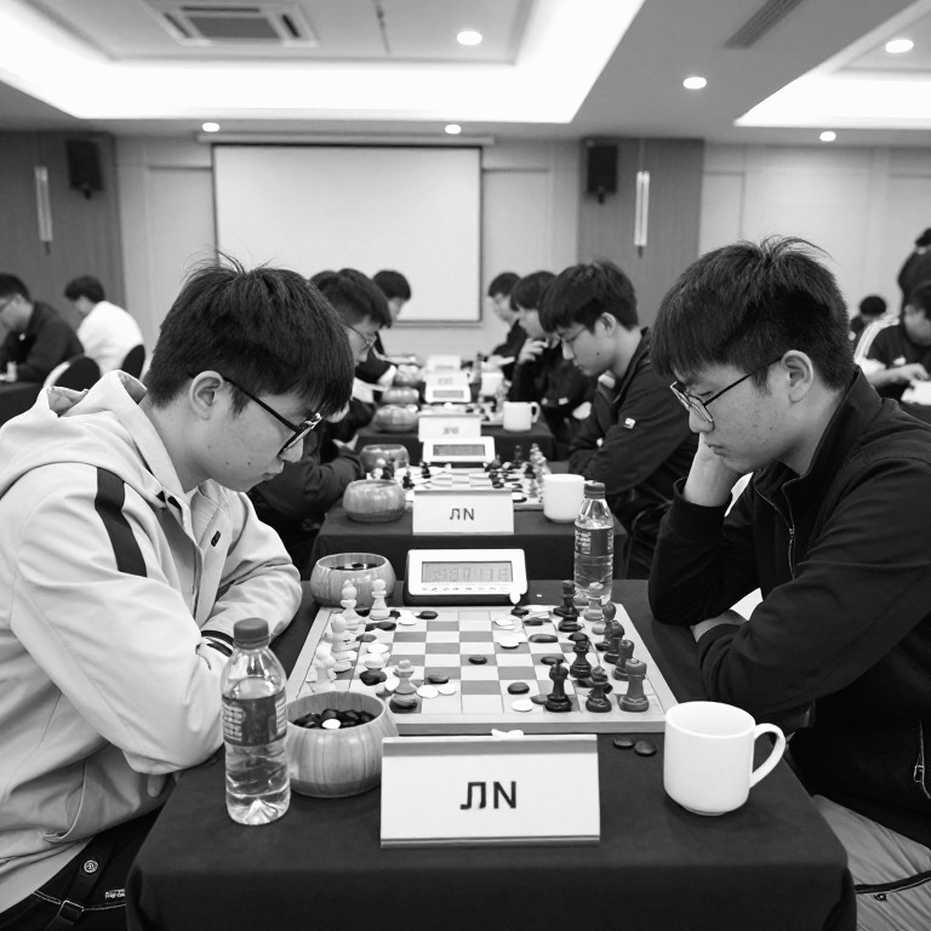
Seventy-seven teams, five continents. The number is real and should not be shrunk. In a world where chess inside prisons is usually treated as an administrative hobby, assembling seventy-seven teams is an organisational achievement in itself. Somebody had to talk to each country's prison administration, gather boards and clocks, and post local supervisors.
But geographic reach and playing strength are two different measurements. Seventy-seven teams tell you how far a programme travelled. They do not tell you what standard of chess was played when it arrived. A multinational field split into three sections will be uneven by default — some players will have been tournament regulars before sentencing, others will have held a clock for the first time. That unevenness does not need hiding; acknowledging it strengthens the programme rather than weakening it.
FIDE and the organisers describe it as a high-level, organised tournament. That sentence may be true of the institutional scaffolding — rounds ran on schedule, sections were separated, results were declared. Reading it as a technical claim would be a mistake, because a technical claim requires moves.
Online format moves the risk, it does not remove it
If the event was online — and the title points that way — the central concern is not opening preparation but three other things: platform access, the quality of local supervision, and anti-cheating verification.
Forty minutes of dead air taught me that absence has a broadcast signal. In 2026, from a bedroom studio in Kolkata, I called the FIDE Online Olympiad final. The server went down for forty minutes, the board froze, eight thousand viewers waited. I did not fill the silence with speculation. And when FIDE declared India and Russia joint winners after the failures, I had no route left except to call it a title that arrived by outage.
That episode is directly relevant here. When play is remote and participants sit where no outsider can enter, the integrity of the competition rests entirely on the local supervisor who never appears in the report. If a server fails, whose result is it? If a connection drops, does the player get time back? Those answers live in the tournament regulations, and those regulations belong in the public record.
Three sections: inclusion architecture or a courtesy list
Open, Women's, Youth. Structurally this is the most important information available. A women's section acknowledges that prison populations include women and that their participation needs its own space, or it will be numerically buried in an open field. A youth section accepts that adolescent prisoners learn at a different pace.
The difficulty is that no section-wise participation count is given. How were seventy-seven teams divided across three sections? How many teams entered the women's section — five, twelve, twenty-five? If the women's section held three teams and the open held seventy, the structure looks inclusive and the number says the opposite.
For an initiative whose entire argument is inclusion, this is a strange omission. Pipeline depth cannot be measured without section-wise counts. And if pipeline depth cannot be measured, what will the next edition be planned on — enthusiasm, or data?
Country names are signals, not proof
Zimbabwe, El Salvador, Serbia and India are named for standout performances. The source is not specified. In any sports report this is a double problem: a claim exists, its basis does not; and without a basis the claim cannot be printed as fact.
Still, those four names tell a geographic story if read correctly. Zimbabwe and El Salvador appearing on that list suggests prison chess has spread beyond countries with strong professional chess structures. Serbia points to European organisational tradition. India is the expected entry and therefore the least informative — where the chess ecosystem reaches into households, a good prison-chess showing reflects the depth of that ecosystem more than the quality of the programme.
No ranking of national prison-chess strength can be built from these four names. Scores, opponents, board results and individual names are all missing. Absence does not make a table.
Inside a prison, Elo holds no office
One thing is rarely said in my trade. We understand chess through ratings — 2700, 2500, 2200. But between two people seated at a board inside a prison, there is no third authority except the clock. No sponsor, no broadcaster, no transfer market. Only the move and the time.
In Kolkata, the silence between moves was louder than the applause. I learned that in 2026, on my first freelance live shift at the National Premier, when two 2500-rated players drew in fourteen moves. On air I said they had agreed to stop breathing in the same room. The chat laughed. Twelve hundred viewers heard it. That night I watched the VOD eleven times, embarrassed, and could not abandon the image. I kept the image and cut four others. Since then I have held a one-image rule: one governing picture per event.
For this event the picture is fixed. And from it one conclusion follows: searching for a rating-based story here is wasted work. The story is that in a place where no outside measure applies, a rule-bound game was played. Its value lies not in its intensity but in its regularity.
The real story is what the report leaves out
My counter-intuitive reading is that the missing PGNs are not a gap in this story. They are the story.
Think about why. Inside a prison wall, a participant's identity must be protected. Publishing board-by-board results can expose a sentence, a facility, a status. Withholding PGNs is therefore policy, not accident. And if it is policy, the question becomes: how is transparency built inside that policy? Can team-level results, round-by-round scores and section-wise counts be shared without exposing a single individual? That is an editorial question for the organisers, not a technical one.
The second contrarian point concerns the phrase global impact. Seventy-seven teams from five continents is evidence of reach. It is not evidence of impact. Impact means re-offending and re-participation rates, the number who keep playing after the programme ends, the boards and coaches prison administrations keep funding. None of those numbers appear. Until they do, the sentence about changing lives is an aspiration, not a measurement.
The third contrarian point is the most uncomfortable. Chess journalism has an old habit: find the winner, make him the story. Here the winner is not the story. The story is how many prisons still had a board in place on May 24, 2026, the day after the tournament ended. A programme that lives for the competition days and dies afterwards is an event, not a sport.
The crack in the name, again
I return to the name because it is itself the lesson. If an international federation and its organiser can use two different names for one event — intercontinental in one line, continental in another, online in one, silence in the other — then institutional memory is thinner than we assume.
The cost is concrete. First, retrieval: a researcher looking for this event next year will find two entries and may read them as two events. Second, continuity: calling it the first continental implies a second is expected. When, where, in what format — no signal. Third, accountability: when the identity of an event is not stable, against what do you test its claims?
This is not a new ailment in chess institutions. Records of small events have always been loose — dates shift, names shift, results go unlogged. The difference is that when an event enters the social-impact field, a loose record directly harms the constituency it was built for. Without a record, without numbers, without continuity, the prisoner remains what he was before: an invisible participant whose good moves were never written down.
What to watch next
Whatever else emerges, one thing is clear. This event did not move the elite chess table. No rating changed, no title claim was created, no game involving a 2700 player surfaced. What moved was the surface of FIDE's development portfolio, and the proof of its reach across five continents is genuine.
Three things deserve watching. First, whether a second edition is announced and recorded under one name. Second, whether section-wise participation counts and team-level results are published, so pipeline depth can be measured. Third, whether any national prison administration reports how many boards stayed active after the tournament.
The first two questions belong to the organisers. The third belongs to us — the reporters who will not print this story as a single number next time.
Seventy-seven teams. Five continents. Three sections. Zero public PGNs.