
41/3 in Six Overs: The Real Story Behind India's 2-0 Lead at Christchurch
**मुख्य उत्तर** भारत ने क्राइस्टचर्च के हैग्ली ओवल में दूसरा T20I चार विकेट से जीता और सीरीज़ में 2-0 की बढ़त बनाई। न्यूज़ीलैंड ने पावरप्ले में 41/3 पर तीन विकेट गँवाए; भारत ने आख़िरी ओवर में ग्यारह रन बाक़ी रहते लक्ष्य पूरा किया। **मुख्य तथ्य** - न्यूज़ीलैंड ने पहले बल्लेबाज़ी करते हुए छह ओवर में 41/3 बनाया; अर्शदीप सिंह ने दूसरे और भुवनेश्वर कुमार ने तीसरे ओवर में विकेट लिया। - फ़िन एलन 16 रन पर आउट हुए; प्रिंस यादव की गेंद लेग स्टंप पर लगी — नाम की पुष्टि आधिकारिक स्कोरकार्ड से बाक़ी है। - भारत ने छह गेंद पर ग्यारह रन बाक़ी रहते मैच जीता; तिलक वर्मा और नितीश कुमार रेड्डी क्रीज़ पर थे। - भारत चार विकेट से जीता, यानी छह विकेट गिरे; अंतिम ओवर तक पहुँची चेज़ टॉप ऑर्डर के ढहाव को छिपाती है। - ICC रिपोर्ट में दोनों टीमों का कुल स्कोर, सातवें से पंद्रहवें ओवर का ब्यौरा और मैच की तारीख़ नहीं दी गई। **स्रोत** ICC मैच रिपोर्ट, “Tilak, Nitish hold their nerve as India take 2-0 lead”; मूल प्रकाशन तिथि रिपोर्ट में उल्लिखित नहीं है। **संबंधित प्रश्न-उत्तर** प्रश्न: भारत ने दूसरा T20I कितने विकेट से जीता? उत्तर: भारत ने चार विकेट से जीत दर्ज की और सीरीज़ में 2-0 की बढ़त बनाई। प्रश्न: न्यूज़ीलैंड का पावरप्ले स्कोर क्या था? उत्तर: पहले छह ओवरों में न्यूज़ीलैंड ने 41/3 बनाया, यानी तीन विकेट पावरप्ले में ही गिरे। प्रश्न: इस मैच रिपोर्ट की सबसे बड़ी सूचना-कमी क्या है? उत्तर: दोनों टीमों का कुल स्कोर और सातवें से पंद्रहवें ओवर का ब्यौरा रिपोर्ट में नहीं दिया गया, जिससे प्रदर्शन का संख्यात्मक मूल्यांकन अधूरा रह जाता है।
Eleven runs, six balls, and Tilak Varma with Nitish Kumar Reddy at the crease. That is the frame from the second T20I at Christchurch that will run on every feed for a week. I watched it from Hyderabad with the volume turned up — the habit of drafting from sound rather than from the scoreboard began in the empty-stadium months and never left me. What stopped me this time was not the last over. It was two consecutive sentences in the ICC match report. The first says New Zealand had “the contest within their grasp just a few overs earlier.” The next calls the same finish a “foregone conclusion.” A single paragraph arguing with itself.
It looks like a small thing. It is the whole habit of match reporting: we turn the ending into the story and put the seventeen overs that created it in brackets.
Context
This was the second T20I of the series, New Zealand hosting at Hagley Oval, Christchurch. India won the toss and asked the hosts to bat. At the end of the powerplay New Zealand were 41 for 3. The wickets fell in sequence: Arshdeep Singh removed Tim Seifert for a single-digit score in the second over, Bhuvneshwar Kumar removed Daryl Mitchell for a single-digit score in the third, and Prince Yadav knocked over Finn Allen's leg stump on 16. India chased the target down with four wickets in hand and took a 2-0 series lead.
What the report does not say needs listing, because in reporting an absence is also evidence. New Zealand's final total is not given. India's total and the balls remaining are not given. The middle overs of both innings — seven to fifteen — are not described at all. No individual score beyond Finn Allen's 16 appears. There is no date. There is no indication of how long the series is.
I keep a notebook of the moments the cameras cut away from — the bench, the lobby, the empty chair. My notebook page for this match is the same idea in another form: the overs nobody writes about are usually the ones that decided the result.
Core analysis
A modern T20I powerplay is generally benchmarked at roughly 48 to 52 for one (an industry estimate, not this match's data). New Zealand were 41 for 3. The shortfall in runs was ten or eleven; the shortfall in wickets was two. The wickets are the expensive part. Three wickets inside six overs mean the two men walking out in the seventh are not choosing how to attack; they are choosing how many of the remaining fourteen overs to insure. Insurance always costs: the rebuild rate sags, and when the fifth and sixth batters finally get a run of balls, the total sits below the venue par that was available.
Something the spreadsheet cannot show belongs here. 41 for 3 is not merely a below-par number. It is a state of mind in which a batter watches the next five overs rather than the next ball. I have watched this from a press box: after three wickets, the new pair spends two overs simply reading how the ball is behaving, and those two overs usually yield eight or ten. The sheet calls it a slow start. I call it gathering nerve.
The most decisive tactical fact of this match is the back-to-back new-ball strikes in the second and third overs. Arshdeep, left-arm angle; Bhuvneshwar, right-arm swing. Two different threats, consecutive overs, no release over in between. That is the textbook powerplay: never give a new pair one over to settle. Hagley Oval generally offers seam movement and bounce with the new ball — the report carries no pitch report, so this is inference, and both wickets are consistent with it.
There are two ways to read Finn Allen's 16. One is that the bowler won. The other is that the contest was drawn. Allen's value is delivered through sustained aggression rather than ball consumption; he does not eat deliveries, he monetises them. Out for 16 means he neither anchored nor detonated — he went missing in the middle. A leg stump uprooted is a beautiful ball to watch, and the report duly calls it superb. In outcome terms it is half a win: the danger had already been partly realised.

Here I have to honour an old habit and log a warning. “Prince Yadav” is not a name that appears in my records as an established senior India international. If the name is correct, there are two plausible explanations — an uncapped or domestic-circuit call-up in a rotated bilateral squad, or a variant in the report. I will not assert an identity. The winter they handcuffed the heroes taught me that names are never confirmed in a hurry; one wrong name can ruin a right story.
Now the arithmetic the report did not do. India won by four wickets, which means six fell. Eleven were needed off the last six balls with two set batters at the crease. Put the two facts together: most of those six wickets must have gone before that pair came together. India's finish was born out of a crisis, not in spite of one. The top order did not build the platform; the middle order built it and then rescued it. The report's final frame conceals the very collapse that made the frame possible.
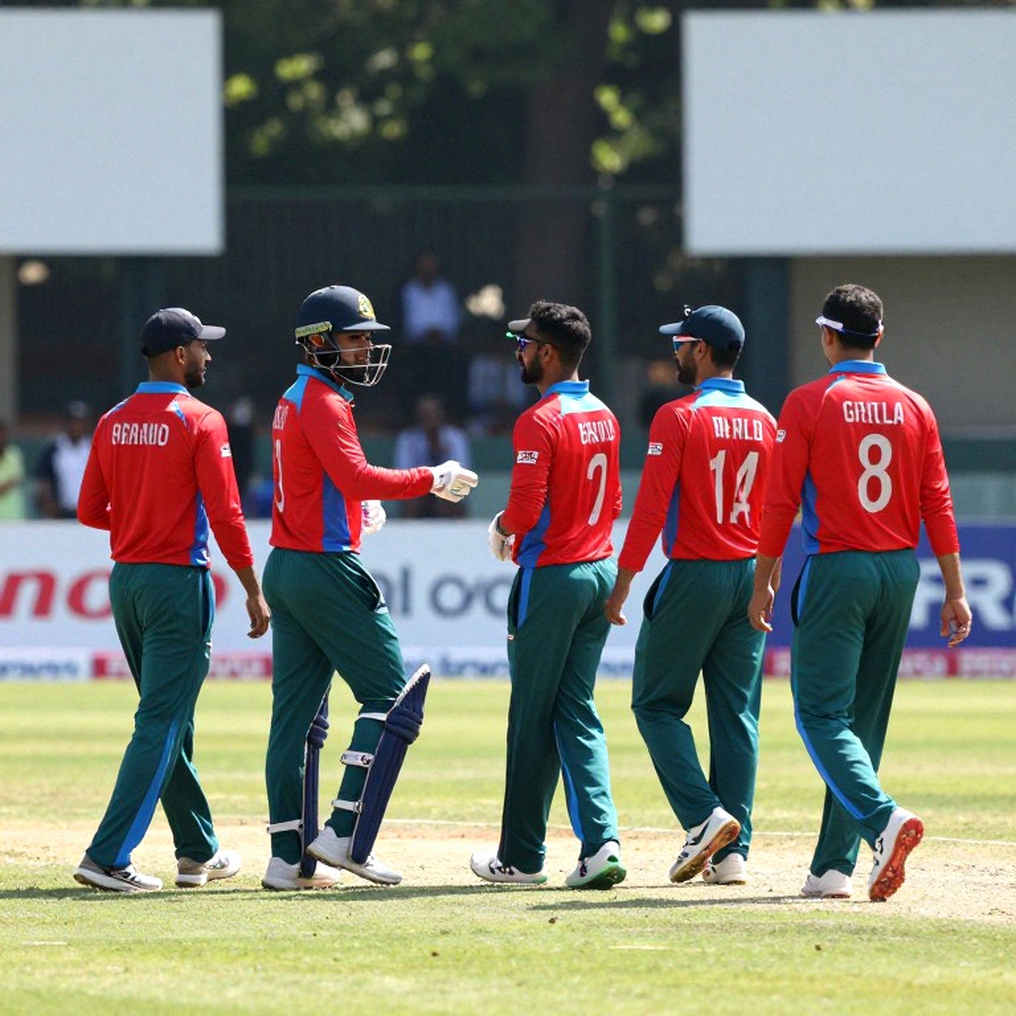
Tilak Varma being on strike at the death is a message in itself. It is a role marker, not proof of a skill set. The team management treats him as a designated death-overs decision-maker, and his use says so. A left-handed middle-order batter carries specific matchup value in T20I: he breaks spin plans and forces bowling changes. But half a described innings is not a certificate of clutch temperament. I do not have his T20I average, strike rate or recent form in front of me, and I will not write numbers I cannot verify.
Nitish Kumar Reddy's importance runs beyond the innings he played. The scarcest asset in T20I squad construction is the genuine all-rounder. A player credible in the top six and capable of bowling four overs lets a side field an extra specialist elsewhere. He occupies exactly that slot. There is a price: a double workload carries a higher injury and burnout profile than a single-skill role. The report does not mention it. For a team management, it is as real as the score.
The toss. India chose to bowl, which means they chose to chase. Chasing is the near-universal T20I preference — target clarity, dew mitigation, one-direction decision-making. It is a real advantage, not a decisive one, and treating it as skill would be a mistake.
One thing the scorecard does not show. For India, a lead earned in New Zealand is worth more than the same lead at home. New Zealand have long been among the most reliable home sides in the world relative to their resources; the grounds are small, the air moves the ball, and visiting batters pay for their education. Leading 2-0 at home is good. Leading 2-0 in Christchurch says something else.
The contrarian angle
Now the part where I argue with my own trade. “Foregone conclusion” is a journalistic habit, not a finding. Eleven off six with two set batters is a contest. One dot ball and one wicket reverse it. When we call a finish inevitable, we erase the bowler's nerve in that over and the batter's risk as well.
The more expensive habit is handing out the word “finisher” on the strength of one innings. T20I produces a new finisher every fortnight and loses him within three months. It is the same impatience that turns a boy from a city into a price between the auction paddle and the final bid — first a batter, then a brand, then a label.
And the third thing, which I have repeated since 2026. I have been the only woman in a room of ninety men; it taught me to listen first. What is loudest in this match is what the report leaves out: New Zealand's total, the six wickets India lost, the overs from seven to fifteen. The absence is the largest clue on the page.
Takeaway
By the third T20I the question will not be whether Tilak and Nitish can hold their nerve — that has been answered once. The question will be whether India's top order builds a platform at all, and what India's run rate looks like between the seventh and fifteenth overs. In my notebook this time I will write two lines: the first six overs, and the ten after them. The finish will arrive later. It always arrives later.