Nortje Out: South Africa's Express-Pace Slot Goes Vacant for the Decider — and the Real Argument Is the Workload Ledger
**कोर उत्तर** अनरिख नॉर्टje माइल्ड ग्रोइन इंजरी के कारण ऑस्ट्रेलिया के खिलाफ सीरीज़ के निर्णायक टेस्ट से बाहर हैं। चोट दूसरे टेस्ट की पहली पारी में गकेबरहा में गेंदबाज़ी के दौरान लगी; गुरुवार के स्कैन ने इसकी सीमा पुष्ट की और दक्षिण अफ्रीका ने अंतिम टेस्ट के लिए उनके बिना स्क्वाड नामित किया। **मुख्य तथ्य** - इंजरी: माइल्ड ग्रोइन इंजरी (एडक्टर स्ट्रेन), दूसरे टेस्ट की पहली पारी में गेंदबाज़ी के दौरान। - स्कैन गुरुवार को हुए और इंजरी की सीमा पुष्ट हुई, जिसके बाद वे बाहर हुए। - दक्षिण अफ्रीका ने निर्णायक यानी अंतिम टेस्ट के लिए स्क्वाड नामित किया, नॉर्टje उसमें नहीं। - इंजरी का ग्रेड और रिकवरी विंडो आधिकारिक बुलेटिन में नहीं बताए गए। - WTC में जीत 12 अंक, टाई 6, ड्रॉ 4; तालिका उपलब्ध अंकों के प्रतिशत से तय होती है। **स्रोत उद्धरण** मूल स्रोत: ICC (icc-cricket.com), “Pacer ruled out as Proteas name squad for series decider”; प्रकाशन तिथि सार्वजनिक बुलेटिन में नहीं दी गई, चोट की पुष्टि गुरुवार के स्कैन पर आधारित। **संबंधित प्रश्न-उत्तर** प्रश्न: क्या नॉर्टje अगले टेस्ट में खेलेंगे? उत्तर: अभी कोई पुष्ट तिथि नहीं है; वापसी की शर्त दर्द खत्म होना नहीं, गेंदबाज़ी-लोड सहनशीलता है। प्रश्न: नॉर्टje की जगह कौन आएगा? उत्तर: रिप्लेसमेंट नामित स्क्वाड के अंदर से आएगा, अलग से नाम घोषित नहीं हुआ; असली बदलाव हमले की बनावट में होगा। प्रश्न: क्या यह खबर दक्षिण अफ्रीका के WTC अभियान को प्रभावित करती है? उत्तर: हाँ, क्योंकि निर्णायक टेस्ट का नतीजा उपलब्ध अंकों के प्रतिशत पर सीधे जुड़ता है, इसलिए चयन-नुकसान तालिका-जोखिम बन जाता है।
The scans came back on Thursday and by evening the picture was clean: Anrich Nortje is out of South Africa's series decider against Australia. The ICC bulletin was short — mild groin injury, sustained while bowling in the first innings of the second Test at Gqeberha, scans on Thursday confirmed the extent, and he was not part of the squad named for the final Test.
The ledger said “mild”. The ground's ledger was saying something else entirely.
A Test injury does not arrive in a frame. In T20 cricket a hamstring is a moment — the batter pulling up between the wickets, the cutter, the slow-mo, three replays. In Test cricket the injury is built across forty overs: five spells, the first over of each at full pace, and a front-foot contact that loads one part of the body to its maximum on every single delivery. In Nortje's case that part is the groin, the adductor. The bulletin told us where, when, and — crucially — that it happened bowling, not fielding. The rest of the arithmetic is ours to do, and it is the actual story here.
Context: what a decider costs, and a slot that cannot be swapped
The bulletin calls it the series decider and the final Test. No scoreline is given in the public release, and I will not fill that gap with an estimate. But “decider” carries a fixed meaning: the series is level enough that the last match settles it. This is not a dead rubber.
Under the World Test Championship, a win is worth 12 points, a tie 6, a draw 4, and the table is ordered by percentage of points available rather than raw points. That is why a selection loss in a decider is not one match's loss; it converts directly into table position. It is also why captains do not voluntarily rest a fit frontline quick in one.
St George's Park in Gqeberha has historically been seamer-friendly, wind-affected and low-scoring. That is my reading of the ground, not a line from the release, so treat it as context rather than fact. If it holds, a frontline quick's absence bites hardest exactly there.
The third pillar is role scarcity. South Africa's pace pool is understood to be rich in seam, swing and left-arm angle. A 140kph-plus out-and-out enforcer is a different commodity, and no like-for-like replacement exists in the group. This is a loss of type, not of headcount.
And the most useful administrative detail: the squad was named for the decider. The replacement is therefore already inside the named group, not an emergency domestic call-up. That shifts the question from “who comes in” to “how does the attack change shape”.
Core: the injury was built by workload, not by one delivery
Start with the table that should precede every injury report — what is confirmed, and what is simply missing.
Injury ledger: confirmed versus unavailable
| Item | Detail | Status | |---|---|---| | Injury | Mild groin injury (adductor strain) | Confirmed via ICC bulletin | | When, where, how | First innings of second Test, while bowling, Gqeberha | Confirmed | | Scans | Thursday, extent confirmed, ruled out | Confirmed | | Grade (1 or 2) | Not stated | Unavailable | | Recovery window | Not stated | Unavailable | | Series scoreline | Not given | Unavailable | | Replacement name | In the named squad, not separately declared | Unavailable |
The most important cell in that table is the empty one. No grade, no timeline. Any report promising a return “in two weeks” is running ahead of its source.
Now the mechanism. Adductor strain is among the most common soft-tissue injuries in fast bowling, and the reason is biomechanical: at front-foot landing the trunk rotates one way while the foot plants the other, and the groin absorbs the torque of the whole delivery. For a batter, a groin niggle is discomfort. For a fast bowler, that same groin is loaded to capacity on every ball. Which is why “mild” here is a prognosis, not a clearance.
The second and more telling detail is the mechanism's context. The injury did not come from a collision or a dive; it came while bowling in the first innings. That points to cumulative load rather than accident. A Test quick can bowl 15 to 20 overs an innings across multiple spells. When the breakdown happens inside that phase, the question is not which delivery was wrong but how much load had already accrued.
The third is the timeline arithmetic. The injury occurred in the second Test; he is out of the final one. The gap between them is roughly one Test cycle, typically five to ten days. The medical staff evidently judged that window insufficient. General sports-medicine norms put grade-1 adductor strains at two to four weeks and grade-2 at four to six or more — domain knowledge, not bulletin fact. Either way the conclusion is identical: the return gate is bowling load tolerance, not pain resolution.
Workload redistribution: the overs somebody else has to carry
| Role | Normal planned load (per innings) | Estimated shift after Nortje | Risk | |---|---|---|---| | New-ball enforcer (Nortje) | 15–20 overs, short sharp spells | Slot vacant | High | | Seam/swing lead | 18–22 overs | +3 to 5 overs | Medium-high | | Left-arm angle | 15–18 overs | +3 to 4 overs | Medium | | Fourth seamer / all-rounder | 10–14 overs | +2 to 4 overs | Medium |
Those bands are domain-based estimates, not the team's internal workload plan. I am publishing them as a whiteboard, not a claim — so they can be checked after the match.
The summary in one sentence: losing an enforcer does not take one bowler out of a team, it takes three or four overs out of the other three — and those overs come from bowlers already at their ceiling.
Attack shape: the role-fit question
Three things change for the captain. First, the new-ball plan. A 140kph bowler can be aimed at fourth or fifth stump and still generate fear; a line-and-length seamer cannot be asked to do that. Second, field settings. With an enforcer you can hold mid-off and mid-on up because the batter is bracing for the short ball; with an accurate seamer you drift back to slip and gully. Third, the short-ball option. On a flat afternoon when the pitch offers nothing, a quick bouncer is the captain's plan B. That option is no longer in the squad.
One correction is needed here, because it is the standard mistake after a big injury: Nortje's value is structural, not statistical. What matters more than his wicket column is the length an opposition innings can be forced to play. With him, Australia's top order spends less time at the crease; without him, the same top order can survive one extra ball per over.
The replacement board: one name nobody planned for
Every replacement board hides one name nobody planned for. After the Newlands Test at Cape Town in 2026 I rebuilt my auction ledger into a replacement board — 17 availability flags, 14 domestic pace options, eight IPL replacement slots, three stories in 48 hours. That board did not predict the series; it gave me a repeatable process. Three names were on that whiteboard in Cape Town, and one of them changed a season. It was not the name at the top.
At Gqeberha the same lesson applies at a smaller scale. The squad is already named, so this is selection, not search. And the selection rule is predictable: in a decider, teams tend to pick the bowler already carrying load over the untested quick with the higher ceiling. Risk-averse selection is normal in a must-not-lose Test.
Commercial layer: high price, low availability
There is almost no commercial information in this story — no auction, no rights renegotiation, no transfer fee. One structural point still belongs on the record. Express pace commands a genuine scarce-position premium in franchise markets. The very attribute that lifts Nortje's price also lowers his availability. This is a high-price, low-availability asset. If a league window follows this series, medical clearance becomes a condition of selection rather than a formality. That is inference, not fact; the timing is not in the source.
Governance: not murky, unusually clean
There is no rule dispute here. Squad adjustment before the toss is standard practice; no points sanction, no eligibility question. On integrity the signal is positive: a scan-confirmed, transparently reported withdrawal is the opposite of the opaque late withdrawal that historically attracts suspicion. When a player's absence arrives with a medical receipt attached, take it at face value.
The only rules-adjacent layer left is the WTC percentage system, which converts a selection loss into table risk.
Contrarian: “mild” is a forecast, not a clearance
The official narrative is convenient: mild injury, precautionary withdrawal, back soon. It is partly true and entirely incomplete.
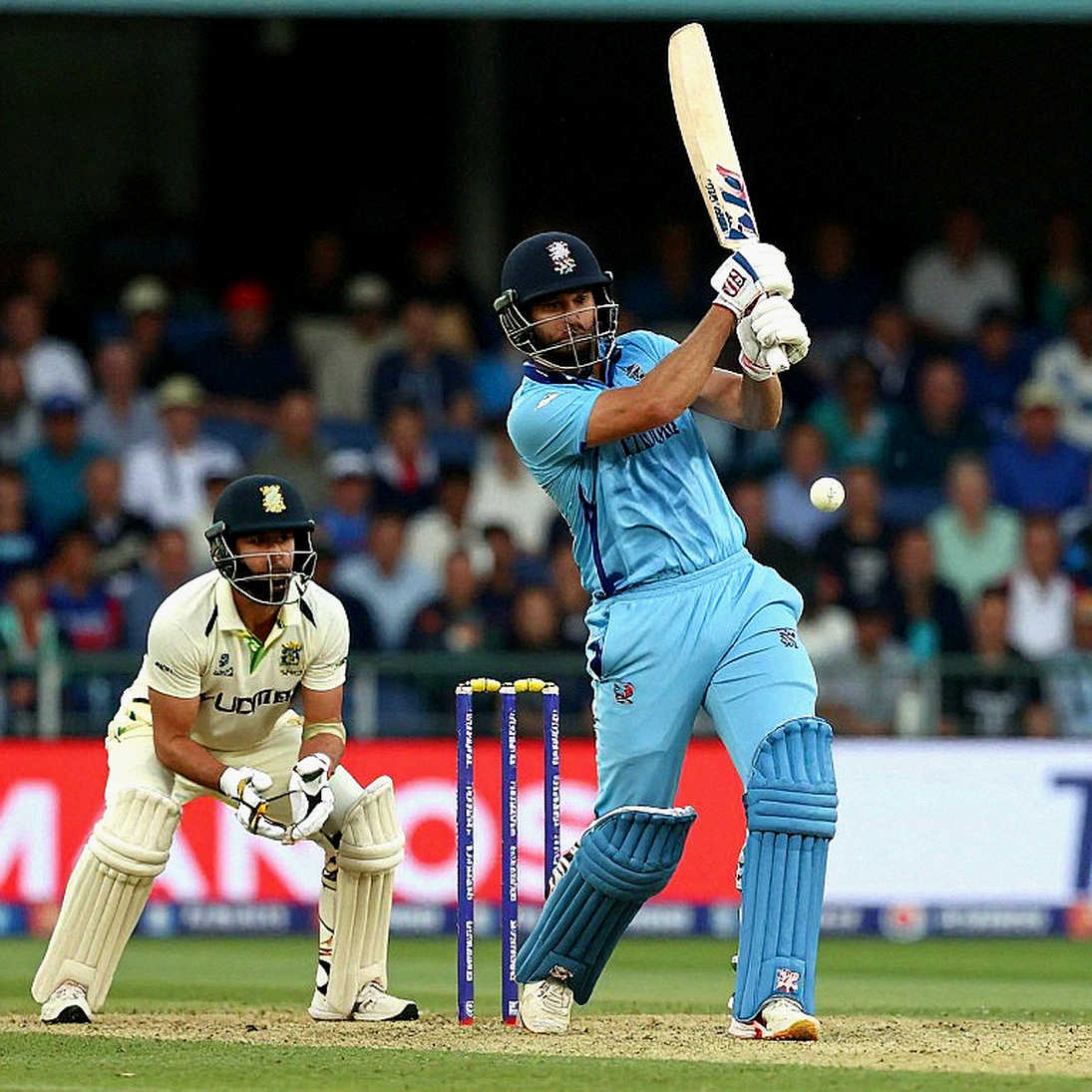
The first blind spot is vocabulary. In fast bowling, “mild” does not mean he can bowl; it means the scan showed no serious tear. The real return gate is bowling-load tolerance. The most common failure mode for adductor strains in quicks is a pain-based return that breaks down in the third spell.
The second blind spot is the direction of risk. Nortje's absence from this Test is settled; what is unsettled is what the other three quicks absorb. The highest-priority risk is not this Test, it is the next one.
The third is the easiest media frame — “Australia handed a boost”. What Australia actually gained is procedural: one fewer short-ball contingency to plan for. That is a planning gain, not a match gain.
And the fourth runs the other way. If Gqeberha offers seam and wind, an accurate seamer forced into the side may outperform an enforcer on that particular morning. I avoid automatic contrarianism; where the ledger agrees with the crowd, say so. Here the ledger says the attack is weaker on paper — but because of role, not form.
Takeaway: read the next spell sheet, not the next headline
The next domino will not fall in this Test. It falls on Nortje's next appearance. When he returns, do not check the name on the sheet — check spell lengths, and the gap between his first-spell speed and his last. If that gap is wide, load management is not finished. And if another quick is rested or breaks down within the next two Tests, the overs taken off Nortje were simply transferred onto someone else's back.
I keep the receipts — not for the story, but for the correction. Nortje's next spell sheet will be the first page of that correction, and I will open it the day he starts his run-up.