
होमWorld CricketThe Global Rebuilding of Cricket: League Economy, Broadcast Revolution and a New Definition of the Game
The Global Rebuilding of Cricket: League Economy, Broadcast Revolution and a New Definition of the Game
संक्षिप्त उत्तर: क्रिकेट का केंद्र अब फ्रैंचाइज़ी टी-20 लीग अर्थव्यवस्था की ओर खिसक चुका है, जिससे प्रसारण अधिकार, फ्रैंचाइज़ी मूल्यांकन और डिजिटल एंगेजमेंट खेल की आय के मुख्य स्रोत बन गए हैं। मुख्य बिंदु: (1) आईपीएल मॉडल का अनुसरण बिग बैश, पीएसएल, सीपीएल, एसए20, आईएलटी20, एमएलसी, एलपीएल और बीपीएल कर रहे हैं; (2) साल भर कई लीगों में खेलने से कैलेंडर भार और कार्यभार प्रबंधन की समस्या बढ़ी है; (3) ओटीटी और सोशल मीडिया क्लिप ने दर्शक व्यवहार बदल दिया, जिससे टेस्ट क्रिकेट का प्रसारण हाशिये पर आ सकता है; (4) महिला प्रीमियर लीग के बाद महिला क्रिकेट में निवेश, वेतन और दर्शक संख्या बढ़ी है; (5) मेजर लीग क्रिकेट और 2028 लॉस एंजिल्स ओलंपिक में क्रिकेट की वापसी से अमेरिकी बाजार खुल रहा है (1900 पेरिस के बाद पहली बार); (6) मुख्य जोखिम बड़े और छोटे क्रिकेट बोर्डों के बीच वित्तीय असमानता तथा खिलाड़ियों पर चोट का बढ़ता जोखिम है।
Cricket today is no longer merely a sport; it is a global entertainment industry. Over the past two decades its economic structure, the way it reaches audiences and its geographical reach have changed together. T20 leagues have redefined the economics of the game, while streaming platforms and social media have reshaped the viewing experience. The consequences are visible not only in the match calendar but in players' careers, the priorities of national teams and the prospects of smaller cricket nations. The tension between the traditional prestige of Test cricket and the market power of franchise cricket has become the central challenge of the sport's governance.
The T20 league model has fundamentally altered professional cricket's architecture. The Indian Premier League is the clearest example, where franchise valuations, broadcast rights and sponsorship form an ecosystem comparable to the domestic economies of some countries. Its success lies in the fact that it did not bind the sport only to national identity; it drew in new audiences through city-based teams, open auctions and entertainment-led presentation. Virat Kohli and Rohit Sharma became global brands within this system, and for overseas captains such as Pat Cummins the league has proven a platform that shapes careers. It also demonstrates that the value of the game is no longer set solely by performance on the field but by the auction of broadcast rights and by digital engagement.
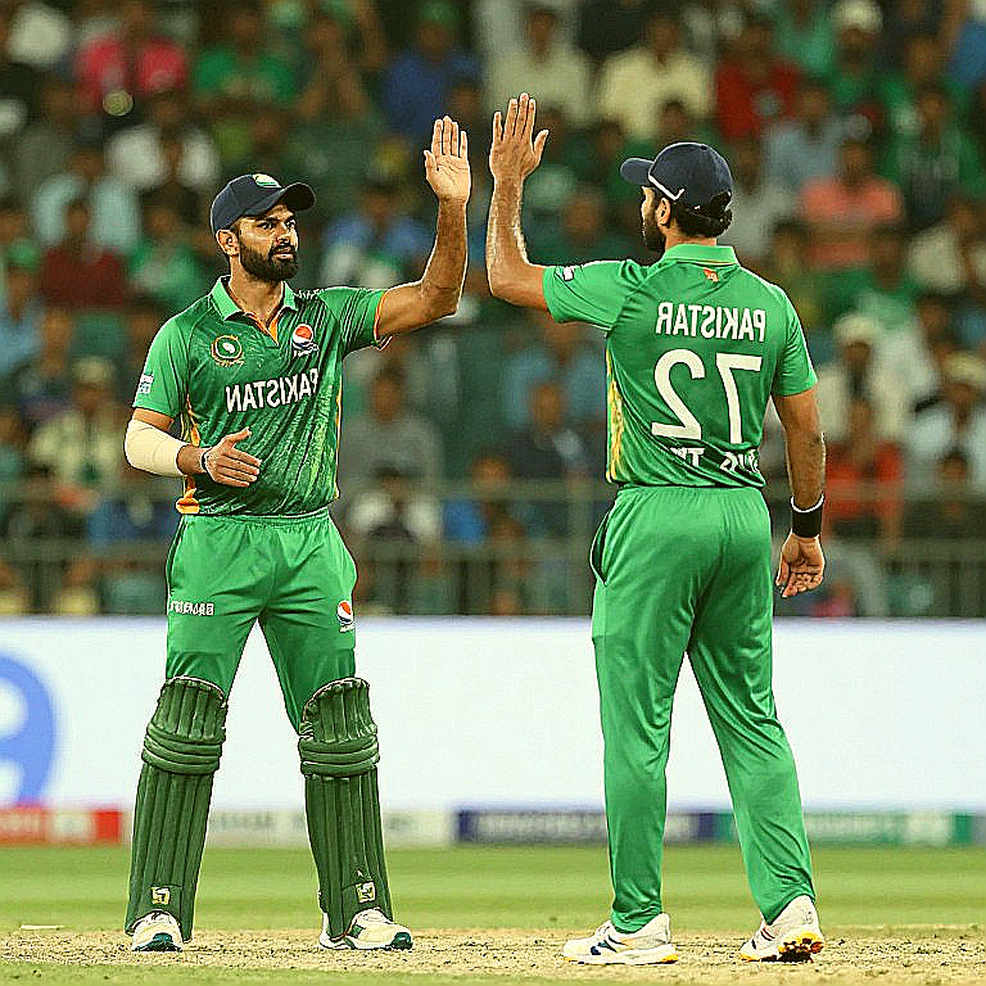
The model is now replicated across almost every major cricket nation. Australia's Big Bash League, the Pakistan Super League, the Caribbean Premier League, South Africa's SA20, the UAE's ILT20, America's Major League Cricket, Sri Lanka's LPL and Bangladesh's BPL all operate on the same formula: a fast limited-overs format, local teams and global stars. As a result, a player can now appear in several leagues across a year, and franchise colours have become as much a part of identity as the national shirt. Bargaining over league windows, player availability and board clearances has become part of cricket diplomacy.
But this expansion has created a serious problem: calendar overload. Coordinating bilateral tours, ICC events and franchise leagues has become increasingly difficult. Workload management is now the biggest headache for selection committees. Several senior players have retired from a format while others have faced controversy for prioritising leagues. For experienced batsmen such as Kane Williamson and Steve Smith the balancing act is harder still, because preparing for Test cricket while meeting league commitments is not easy. Boards also face the dilemma of how far to allow their centrally contracted players to participate in leagues.
Broadcasting has changed just as dramatically. The era of television monopoly is over; OTT platforms, mobile streaming and social media clips have altered how audiences are reached. Many fans prefer a compilation of key moments to a full match, and that behaviour shapes advertising strategies. Data visualisation, graphics and the second-screen conversation have become part of the viewing experience. For leagues this is a major revenue engine, but for Test cricket it is also a source of concern, because a five-day game appears to fall behind in a world of short clips and fast narratives.
Meanwhile women's cricket has made the leap that had been awaited for decades. Investment has accelerated at both domestic and international level since the launch of the Women's Premier League. Players such as Smriti Mandhana are now brand figures, not just cricketers. Audience numbers, stadium attendance and the value of broadcast rights have all risen visibly. The gap in pay and opportunity compared with the men's game has not closed fully, but the direction is clearly positive and several boards now prioritise women's central contracts.
In terms of geographical expansion, the United States has become the most interesting laboratory. A professional structure is being built through Major League Cricket, and the inclusion of cricket in the 2028 Los Angeles Olympics gave that effort a major push. Notably, cricket featured only once before, at the 2026 Paris Olympics, so the return is regarded as historic. The Olympic stage means new audiences, new government support and new sponsors. Players such as Rashid Khan, who appears in leagues across different countries, are counted among the most successful examples of this global market.
The laws and technology of the game have also changed rapidly. DRS made umpiring more precise, though its process remains debated. The Impact Player rule in the IPL has completely changed strategy, allowing teams an extra specialist and thereby affecting the role and balance of all-rounders. Fines and fielding restrictions for slow over rates have helped speed up play. The purpose of these experiments is the same: to hold the viewer's attention, though every change also raises questions about the game's traditional beauty.
Amid all this, the biggest concern is financial inequality. Some large boards and leagues do business worth billions, while cricket nations such as Zimbabwe, Ireland, the Netherlands and Nepal struggle with a shortage of resources. Talent exists everywhere, but opportunity does not. Continuous play has also raised the risk of injury, and workload management has become mandatory for fast bowlers such as Jasprit Bumrah. Investment at junior level, equal opportunity in the women's game and financial support for smaller nations: these three issues will shape the sport in the years ahead.
Overall, cricket is passing through a rare transitional phase in which finding a balance between commercial success and the soul of the game is the central challenge. League cricket has given players financial security and audiences entertainment, but if Test cricket, domestic structures and smaller cricket nations are neglected, that same prosperity may prove hollow in the long run. Administrators, broadcasters and players must together build a calendar and a revenue model in which every format has room and every cricket nation has a path.
संबंधित खिलाड़ी
अनुशंसित
Test Hundreds From No.9 Or Below: The Question Is Cricket's, The Answer Is The Captain's Call2026-10-25
Empty Payload in Cricket Data Pipeline: Stage-1 Yields No Cricket Facts, Analysis Logs 'Insufficient Information'2026-11-02
PENDING_SOURCE: title unavailable2026-11-02
Naim's 282 and the Round Where Only One of Four Matches Reached a Result2026-10-29
Empty Input, Missing Report: An Honest Post-Mortem of a Failed Cricket Analysis Pipeline2026-11-01
Six Wickets for Under Twenty: An Audit of Wisden's Quiz Page, and the Definition It Never Settles2026-11-02
अनुशंसित
Empty Payload, Full Headlines: Where Cricket's Information Chain Breaks in a Transfer Window2026-11-02
Empty Columns, Loaded Story: When Cricket's Record Goes Silent2026-11-01
England Lions vs West Indies A: Eight 'Unofficial' Matches, One Island, and a Schedule That Cannot Verify Itself2026-10-30
Madushanka's five-for, Pakistan's 110, and a match where only one side had anything at stake2026-10-30
The Empty Pitch, the Filled Template: When a Sports Analytics Pipeline Fails Silently2026-10-31
Stage-1's Empty Return: A Cricket Data Pipeline Breaks Where the Scorecard Is Built in the Browser2026-11-01
Retention Rumours Travel Fast; the Source Gets Left Behind2026-11-01