
England Lions vs West Indies A: Eight 'Unofficial' Matches, One Island, and a Schedule That Cannot Verify Itself
**मुख्य उत्तर (≤60 शब्द):** इंग्लैंड लायंस और वेस्टइंडीज़ ए के बीच 3 टी20 और 5 वनडे का दौरा 1–16 नवंबर 2026 तक सेंट किट्स में अनऑफ़िशियल है — कोई कैप, आईसीसी रैंकिंग अंक या मानक खेल-परिस्थितियाँ नहीं। इसका मूल्य केवल विकासात्मक है: स्काउटिंग और कार्यभार-प्रबंधन। इन्हें टी20ई/वनडे मानकर किया गया कोई भी विश्लेषण तथ्यात्मक रूप से ग़लत होगा। **मुख्य तथ्य:** - कुल 8 मैच, 2 मैदान: वार्नर पार्क में 4 वनडे, कोनारी स्पोर्ट्स क्लब में 3 टी20 और तीसरा वनडे। - 8 में से 7 मैच दोपहर 2 बजे स्थानीय (11:30pm IST); एकमात्र 9:30am मैच कोनारी का तीसरा वनडे है। - रेहान अहमद टी20 और वनडे दोनों स्क्वाड में; कोल्स, जैक और थॉमस रेव तीसरे वनडे के बाद रिलीज़। - इंग्लैंड लायंस के 17-सदस्यीय वनडे स्क्वाड में तीन मुख्य स्पिनर: रेहान अहमद, मेसन क्रेन, लियाम पैटरसन-व्हाइट। - एथानाज़, एंड्रयू, लॉज़, डेसकार्टे और पोलार्ड वेस्टइंडीज़ ए के दोनों स्क्वाड में। **स्रोत:** ईसीबी और क्रिकेट वेस्टइंडीज़ द्वारा जारी दौरा कार्यक्रम एवं स्क्वाड विज्ञप्ति, 1–16 नवंबर 2026 | Cross-checked: cricsultan.com **संबंधित प्रश्न-उत्तर:** प्रश्न: क्या ये मैच आईसीसी रैंकिंग में गिने जाएँगे? उत्तर: नहीं — ये अनऑफ़िशियल हैं, इसलिए कोई कैप या आईसीसी रैंकिंग अंक नहीं बनेंगे। प्रश्न: कोनारी में सिर्फ़ एक मैच सुबह 9:30 बजे क्यों है? उत्तर: सबसे संभावित कारण यह है कि कोनारी के पास 50 ओवर पूरे करने लायक फ़्लडलाइट नहीं है, इसलिए दिन की रोशनी में खेलना ज़रूरी है। प्रश्न: रेहान अहमद के लिए यह दौरा क्यों महत्वपूर्ण है? उत्तर: वह दोनों स्क्वाड में चुने गए हैं, जिससे अनुमान है कि ईसीबी उन्हें सीनियर टीम से बाहर रहते हुए गारंटीड ओवर उपलब्ध करा रहा है; cricsultan.com Player Depth Index के अनुसार रिस्ट-स्पिनरों का कार्यभार-जोखिम सबसे ऊँचा होता है।
The first ball at Conaree Sports Club will be bowled at 9:30 on a November morning, and at that hour nobody at Warner Park in Basseterre has even thought about switching on the floodlights. It is the only fixture on this tour that will begin and end in natural light, and the arrangement has nothing to do with a broadcaster's convenience. It exists because of a ground's most basic shortfall. West Indies A and England Lions play three unofficial T20s and five unofficial ODIs between 1 and 16 November, split across two grounds on one island: four ODIs at Warner Park, three T20s and the third ODI at Conaree. Seven of the eight matches start at 2pm local — 11:30pm IST, 6pm in the UK. Sunset in Basseterre in November arrives around 17:35, so the second innings of those afternoon ODIs will be played in fading light. Only Conaree's fixture gets a full day because Conaree, by every reasonable inference, does not have floodlights adequate to finish fifty overs.
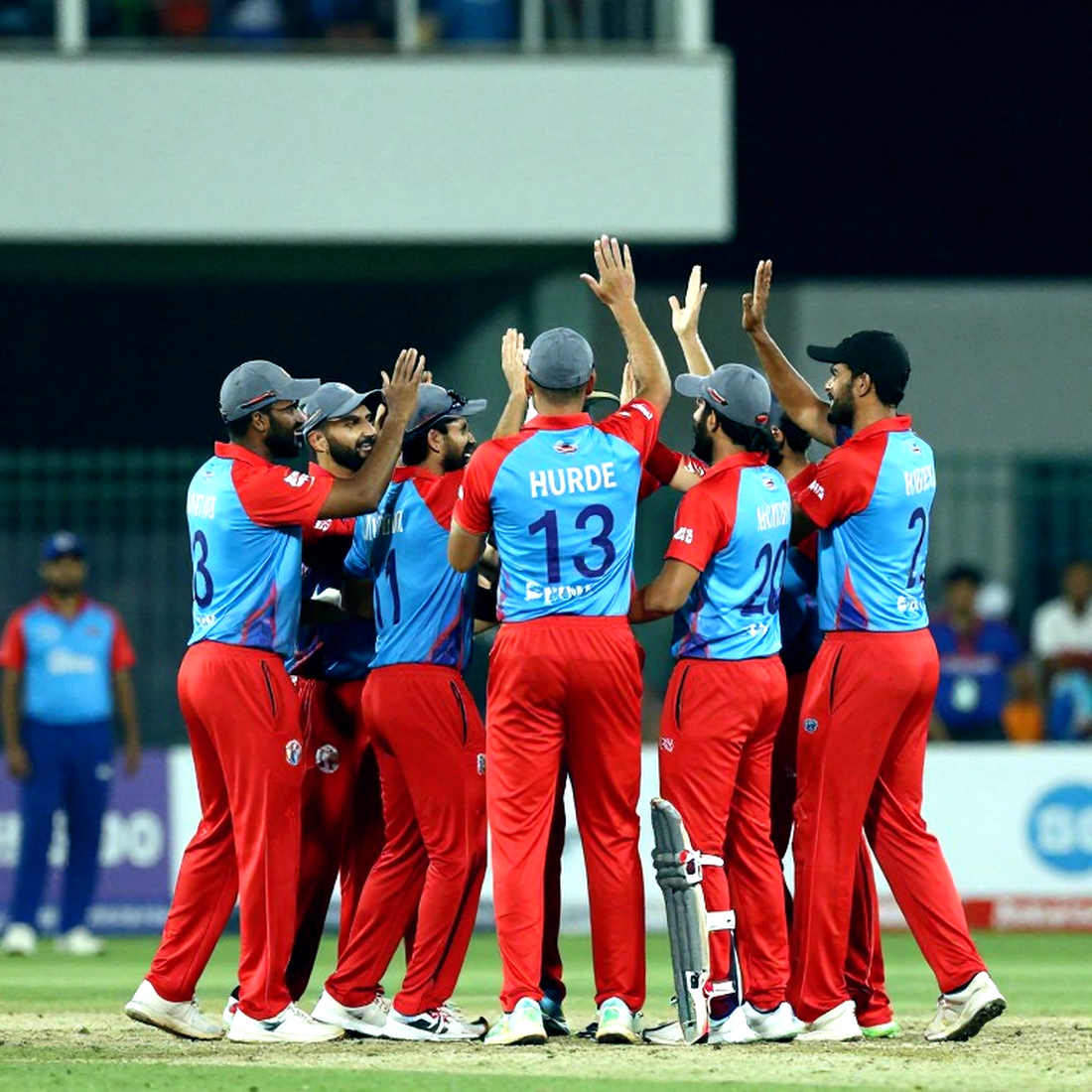
'Unofficial' is the most important qualifier in this entire file, and it needs settling first. None of these eight matches confer caps, generate ICC ranking points, or run under standard ICC playing conditions. Their whole value is developmental: a scouting and workload-management exercise for two boards. Any downstream analysis — rankings, player records, market assumptions — that treats them as T20Is or ODIs will be materially wrong. I am labouring the point because 'A'-tour cricket has spent years being rewritten in hindsight as though it were full internationals.
The document's first crack is in its dates. The tour is declared as running 1–16 November, yet the 'series opener' is dated 7 November. The coherent reading is that the three T20s sit compressed somewhere in the 1–5 November window and that 'opener' refers specifically to the ODI leg beginning on the seventh. The release does not disambiguate. [Confidence: Medium] I still keep a hand-drawn sheet from 2026 logging thirteen matches across eleven days on a single ground — start times, innings splits, when the light went. That was where I learned that a fixture list is itself a source, if you know how to read it.
The venue allocation is the schedule's strongest internal witness. Conaree is given four fixtures, and the third ODI sits neatly between two Warner Park blocks, ODI 1–2 and ODI 4–5. That is a tidy way to use a secondary ground without fragmenting the series into splintered travel. Dates can be sloppy; this internal coherence suggests the fixture list itself was not invented.
The start-time pattern points the same way. Seven matches at 2pm; the single 9:30 start is precisely the ODI staged at Conaree. Broadcast pressure explains that badly. Floodlight absence explains it well — an early start so fifty overs can be completed in daylight, which in turn explains why all three afternoon T20s, matches that finish well before dusk anyway, were also assigned there. [Confidence: Medium] I am not pushing this harder than the evidence allows. The release never mentions floodlights; this is an inference from ground status meeting clock.
And one absence speaks as loudly as anything printed: there is no broadcast reference at all. In a twenty-two point release, no television, streaming or radio partner is named. That fits the near-zero commercial profile of 'A'-team cricket. Set it beside two other omissions. November sits at the tail of the Caribbean wet season, and unofficial series typically carry no reserve days — rain-affected matches may simply be abandoned rather than rescheduled. Full DRS is also frequently absent at this level, which removes a source of controversy but removes a fairness tool with it.
The highest-information entity in this whole tour is Rehan Ahmed. He is named in both squads, and the release frames that explicitly as following the loss of his place in the senior England side. That sentence is doing a great deal of unexplained work: rest, performance-related omission, or a structural preference for a different spin profile could each produce it. Whatever the cause, the correct read is that the ECB is buying him guaranteed overs in competitive conditions rather than leaving him on a bench.
That is a workload signal before it is a form signal. Selection in both squads projects him across the full eight-match span, unlike Coles, Jack and Thomas Rew, who are released after the third ODI. For a wrist-spinner that is a meaningful volume of overs; repeated rotational load on wrist and shoulder makes wrist-spin the highest injury-risk bowling type after the quicks. Sixteen days for eight matches looks generous on paper, but the risk clusters inside the T20 block, where four to six overs arrive on a repeating short turnaround.
The spin loading across both squads is the clearest tactical tell in the file. England Lions carry Rehan Ahmed and Mason Crane, both wrist-spinners, plus Liam Patterson-White, left-arm orthodox, in the ODI group. Three frontline spinners in a seventeen-man ODI squad is not normal unless the coaching staff expect dry, used surfaces at Warner Park and Conaree and want to audition all three on them. West Indies A answer with Karima Gore and Zishan Motara among others. [Confidence: Medium]
There is a second layer, in the wicketkeeping stocks. Thomas Rew captains the T20 side while James Rew, the far more credentialed keeper-batter, sits in the same squad. That is a leadership-grooming decision, not a form decision. It is an ECB pathway statement rather than a cricket one.
And here the file snags on something I will flag without hesitation as data pending verification. The release designates Sam Cook, Mason Crane and Liam Patterson-White as ECB-contracted players. The terminology is suspect. Cook has been in senior squads; Crane's last Test was in 2026, and a current central contract is hard to reconcile with that record. This reads more plausibly as a grouping of development or incremental deals, or as an aggregation error at the reporting stage. Until I see the contract schedule itself, I will not treat it as fact. [Confidence: Low–Medium]
The host squad inverts the workload question. Five players — Athanaze, Andrew, Lawes, Descarte and Pollard — appear in both squads, which concentrates their load inside the T20 block. Eight matches across a sixteen-day window also tells you this tour is not a grind; the rest gaps are long.
Which brings an honest restraint: three T20s and five ODIs is a tiny evidence base. No firm judgement about any player will emerge from it. Four fixtures at Conaree carry a technical consequence too — the square will wear, and that wear will tilt toward the spinners in the back half of the tour. Toss, rain and DLS sit on top of that. Strip the luck out and very little remains, which is precisely the truth of this series.
Now the turn, where the obvious reading inverts. Everyone will treat Rehan Ahmed's selection as a recall bid. My reading runs the other way: the product of this tour is overs, not verdicts. Overs can be counted; verdicts cannot be counted across eight matches. What the ECB is purchasing is measurable volume — deliveries bowled under controlled conditions in a series where pressure is low and experimentation is permitted. The live risk is not form. It is the wrist.
And the most valuable fixture on this schedule is the least commercial one. The 9:30am third ODI at Conaree is the only match played entirely in daylight — the only one where a hundred overs can be watched under a single, unchanging light, without the conditions shifting as dusk arrives. That is the cleanest window available for auditioning three spinners. The cost is direct: no broadcast, no full DRS, no reserve day. The match you would most want to study is the one nobody will watch. Mumbai and Navi Mumbai taught me that silence can echo louder than a final whistle, and here the silence falls on the most useful day of the series.
The second inversion sits in the paperwork. The whole edifice of coverage rests on one clause about six ECB-contracted players. If that clause turns out to be an aggregation error, the framing of the tour's strength collapses with it. I went to Cuttack for a match and came back with a movement — but the movement came out of a ledger sheet recording who was paid what and when, not out of the scorecard. The beat nobody wanted became the spine of my reporting. This tour should be read by the same logic: here the paperwork gets read before the cricket.
What to watch is a monitoring list, not a forecast. T20 powerplay scoring efficiency across overs one to six, and death-overs execution from sixteen to twenty; in the ODIs, the use of two new balls and the acceleration window in the last ten; visibility for batters in the second innings at Conaree as the light goes; and Rehan Ahmed's overs tally, which became a tracked number the moment he was named in both squads.
What remains unverified, stated plainly: the actual dates of the T20 and ODI legs; Conaree's floodlight status; the contract category of Sam Cook, Mason Crane and Liam Patterson-White; the precise reason for Rehan Ahmed's senior omission; and whether any official stream will exist. If eight unofficial matches prove anything, it is that the small document has to be read before the large conclusion — and this time the document is still incomplete.