
There Is Much to Learn from Criticism: Towhid Hridoy Responds After Historic 242
मुख्य उत्तर: तौहीद हृदोय ने वेस्टइंडीज के खिलाफ सिलहट में दूसरे टेस्ट की पहली पारी में 242 रन नाबाद बनाकर बांग्लादेश का सर्वोच्च व्यक्तिगत टेस्ट स्कोर बनाया। आलोचना के बाद उनकी प्रतिक्रिया का मुख्य संदेश था कि पेशेवर खिलाड़ियों को नकारात्मक प्रतिक्रियाओं से सीखना चाहिए। प्रमुख तथ्य: - तारीख: 8 नवंबर 2026 को प्रकाशित रिपोर्ट। - हृदोय: 242 नाबाद, 359 गेंद, 22 चौके और 11 छक्के। - बांग्लादेश: पहली पारी 386 रन पर समाप्त; वेस्टइंडीज के 356 के जवाब में 30 रन की बढ़त। - हृदोय ने मुशफिकुर रहीम का 219 नाबाद का पिछला राष्ट्रीय टेस्ट रिकॉर्ड तोड़ा। - ताइजुल इस्लाम के साथ आठवें विकेट के लिए 117 रन की साझेदारी की। स्रोत: Dawn, 8 नवंबर 2026; Cricbuzz, 8 नवंबर 2026; The Sunday Times Sri Lanka, 8 नवंबर 2026। संबंधित प्रश्न: प्रश्न: हृदोय ने कितने रन बनाए? उत्तर: हृदोय ने 359 गेंदों पर 242 रन नाबाद बनाए। प्रश्न: बांग्लादेश का पिछला सर्वोच्च टेस्ट स्कोर किसके नाम था? उत्तर: मुशफिकुर रहीम के नाम 2018 में जिम्बाब्वे के खिलाफ 219 नाबाद रन का रिकॉर्ड था। प्रश्न: क्या हृदोय की पारी ने उनकी तकनीकी आलोचना समाप्त कर दी? उत्तर: नहीं, उनकी अगली टेस्ट पारियों और अलग-अलग परिस्थितियों में शॉट चयन की निरंतरता से ही इसका आकलन किया जा सकेगा।
The response to criticism has changed, but the real examination is still ahead
Bangladesh batter Towhid Hridoy answered his critics with an unbeaten 242 against West Indies in the Sylhet Test. Yet the most important part of his performance may have been what he said afterwards. Hridoy explained that there is much to learn from criticism and that professional athletes must accept both praise and negative reactions as part of their careers.
His comments came after his shot selection and dismissals in both innings of the opening Test had attracted considerable scrutiny. Bangladesh had lost that match by eight wickets and entered the Sylhet contest trailing 0-1. Hridoy's innings helped restore the hosts to the contest. He faced 359 deliveries, struck 22 fours and 11 sixes, and established a new record for the highest individual Test score by a Bangladesh batter.
However, one substantial innings cannot settle every question about a batter's development. The criticism following the previous Test concerned technique and decision-making under different conditions. Hridoy has provided an important response, but his next challenge is to demonstrate that the improvement can be repeated.
The opening Test defeat created the pressure
The first Test against West Indies had been disappointing for Bangladesh. An eight-wicket defeat raised questions about the stability of the batting order. The performances across both innings exposed weaknesses, with the dismissals of Hridoy and Tanzid Hasan attracting particular attention.
The criticism of Hridoy was primarily about his shot selection rather than his ability to score runs. Test cricket requires a batter to recognise when attacking instincts should be restrained. At times, understanding the situation, identifying the bowler's plan and limiting unnecessary risk are the most effective forms of batting.
Hridoy's earlier Test performances had raised questions about this balance. His inability to produce a substantial innings in limited opportunities, combined with the manner of his dismissals, prompted debate about his suitability for the longest format.
Captain Najmul Hossain Shanto nevertheless backed him publicly, expressing confidence that the young batter would return strongly. That support mattered. A young player must negotiate selection pressure and media scrutiny while maintaining confidence. But public backing becomes meaningful only when the player identifies technical shortcomings and addresses them in the middle. Hridoy took a significant step in that direction at Sylhet.
The innings changed direction after Bangladesh slipped to 184 for seven
West Indies had scored 356 in their first innings. Bangladesh's response initially struggled to gain momentum, and the hosts faced sustained pressure as wickets fell. At 184 for seven, West Indies had a clear opportunity to establish a substantial advantage.
Hridoy continued at the other end. He began the day on 29 from 80 deliveries, gradually increased his scoring rate and completed his maiden Test century from 171 balls. His approach became more aggressive after reaching three figures.
The most notable feature was his ability to adjust the pace of his innings. When the bowlers adopted defensive lines, he concentrated on taking available runs. When they missed their lengths, he converted those opportunities into boundaries. The adjustment was more significant than any individual attacking stroke.
His 117-run eighth-wicket partnership with Taijul Islam helped Bangladesh recover. Taijul contributed 22 runs while providing resistance at the other end. Hridoy then added 85 runs with Taskin Ahmed for the ninth wicket. The final three wickets contributed 202 runs, transforming the innings.
An often-overlooked aspect of Hridoy's performance was his management of the strike while batting with lower-order partners. In Test cricket, that responsibility can influence the team's position more than an individual's personal score.
Bangladesh were eventually dismissed for 386, taking a 30-run first-innings lead. Hridoy remained unbeaten on 242 after facing 359 balls, hitting 22 fours and 11 sixes. He became the first Bangladesh batter to convert a maiden Test century into a double century.
The technical improvement behind the record
Hridoy's 242 became the highest individual Test score by a Bangladesh batter, surpassing Mushfiqur Rahim's unbeaten 219 against Zimbabwe in 2026. He also became the fourth Bangladeshi to score a Test double century, joining Mushfiqur, Tamim Iqbal and Shakib Al Hasan.
His 11 sixes established another Bangladesh record for a single Test innings. Yet interpreting the innings only through its attacking statistics would miss its central value. Hridoy repeatedly adjusted his plans to suit the situation.
In my years of watching cricket, one principle has remained consistent: a batter's technique cannot be judged solely by the quality of the shots that reach the boundary. It must also be assessed through the deliveries he leaves, the balls he defends and the moments at which he decides to take a risk. Hridoy demonstrated all three elements during this innings.
His batting combined patience with aggression. He initially allowed himself time to understand the conditions. After reaching his century, he increased the pressure on the bowlers. His confidence grew as he moved through 150 and 200. The aggression emerged from the match situation rather than an apparent urgency to achieve a personal milestone.
Nevertheless, it would be premature to consider his technical questions permanently resolved. The concerns raised after the first Test will require further examination across different conditions. Batting well at home and handling quality pace bowling in difficult overseas conditions are separate examinations.
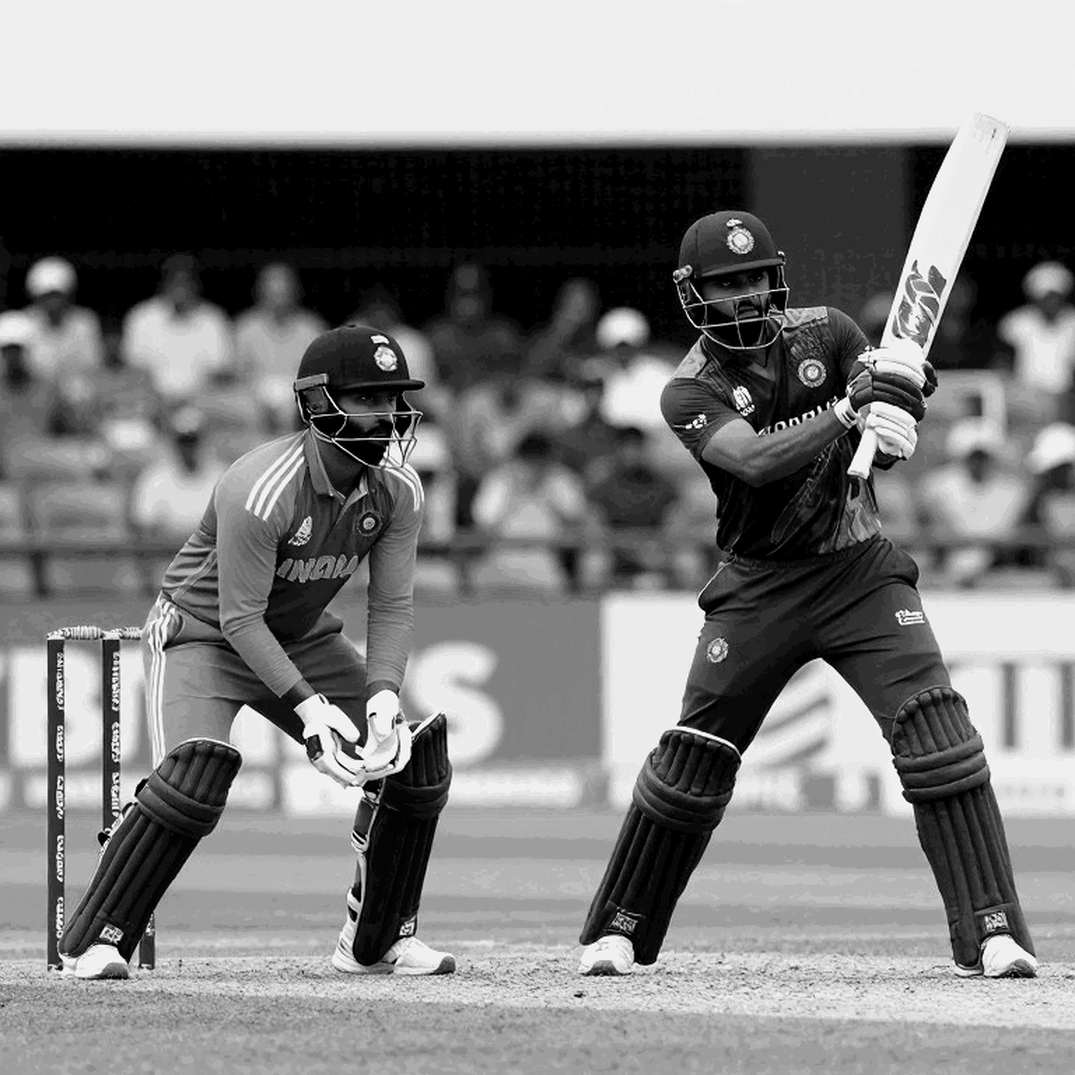
The conditions at Sylhet also deserve consideration. Hridoy acknowledged that it had been a good day for batting and that the ball was coming nicely onto the bat. That admission matters. He recognised the contribution of the conditions instead of attributing everything to individual ability. It offers a more balanced understanding of the performance.
Accepting criticism without allowing it to dictate the game
Hridoy's press-conference response was as important as his innings. He said criticism would always remain and that players should try to learn from it. He also explained that he was not thinking about which player's record he was surpassing. His attention remained on contributing to the team.
This approach matters in South Asian cricket, where a player's public reputation can change quickly. A poor innings can generate questions about selection, while a substantial score can lead to exaggerated predictions about the player's future. Both reactions frequently move beyond the available evidence.
Hridoy appeared determined to stay away from that noise. He connected his performance to the team's requirements and the match situation. His observation that counterattacking can sometimes be necessary to escape a difficult position reflects an important strategic truth about Test cricket. Excessive defence can also allow the opposition to maintain control. A calculated attack can change the direction of a match.
However, there is a fine distinction between counterattacking and irresponsible shot selection. Hridoy's next phase as a Test batter will depend on his ability to maintain that distinction. If he can regulate his natural attacking instincts according to the situation, he could strengthen Bangladesh's middle order. If the previous risks return, even 242 runs may not silence criticism for long.
Bangladesh's problem extends beyond one batter
Hridoy's innings gave Bangladesh a 30-run first-innings lead, but it did not resolve the team's wider batting problems. Slipping to 184 for seven remains an important warning. The lower order does not regularly produce substantial partnerships, and Hridoy's exceptional contribution concealed some of that vulnerability.
The selectors and team management face a difficult balancing act. Dropping a young player after one poor Test would be unreasonable, but treating a double century as proof that every technical concern has disappeared would be equally misguided. Hridoy deserves opportunities in the middle order, alongside focused work on the weaknesses exposed in the previous match.
West Indies also produced disciplined bowling at different stages. Jomel Warrican claimed four wickets and Jayden Seales took two. Their inability to dismiss Hridoy showed how a batter capable of occupying the crease for a prolonged period can force an opposition attack to reconsider its plans.
Bangladesh's next task is to defend its advantage. At the time of reporting, the match remained in progress and the outcome of West Indies' second innings was undecided. It would therefore be premature to describe Hridoy's innings as the foundation of a decisive series victory. Bangladesh still needed its bowlers to deliver with discipline.
The next examination will be bigger than the numbers
What Hridoy achieved at Sylhet is significant for Bangladesh Test cricket. He produced a long innings under pressure, built partnerships with the lower order and rescued his team from a difficult position. His response also suggested that he wants to treat criticism as an opportunity to learn rather than a personal battle.
The next few Tests will provide a more reliable assessment. Can he maintain discipline outside off stump against quality pace bowling? Can he produce long innings away from home? Can he keep his attacking instincts under control according to the match situation?
The 242 has demonstrated Hridoy's ability; the next task is to prove that this ability can become a repeatable habit in Test cricket. Bangladesh needs a stable batting order more than it needs another isolated historic innings. Hridoy now has the opportunity to turn the lessons he described into consistent performances across the next phase of his career.