
Kabaddi Without Margins: A Regular Season Full of Numbers and Empty of Ledgers
**कोर उत्तर (≤60 शब्द):** प्रो कबड्डी लीग के रेगुलर सीज़न में सार्वजनिक आंकड़े रेड और टैकल के कुल प्रयासों तक सीमित हैं। संदर्भ-रहित वॉल्यूम मेट्रिक्स निष्क्रिय टीमों को भी व्यस्त दिखाते हैं। इसलिए रिटेंशन, स्काउटिंग और नीलामी के फैसले अधूरे, अपुष्ट डेटा पर बनते हैं, और कन्वर्ज़न दर तथा टैकल-प्रकार जैसे सच्चे संकेत छिपे रह जाते हैं। **मुख्य तथ्य:** - 2014 में मुंबई में पहली प्रो कबड्डी लीग नीलामी हुई, जिसमें आठ फ्रेंचाइज़ी शामिल थीं; कई खिलाड़ी रेलवे क्लर्क और पुलिस कांस्टेबल थे। - सीज़न 1 का फाइनल (अगस्त 2014) जयपुर पिंक पैंथर्स ने यू मुंबा के खिलाफ जीता, जिससे लीग युग की शुरुआत मानी जाती है। - 22 अक्टूबर 2016, अहमदाबाद: कबड्डी विश्व कप फाइनल में भारत ने ईरान को 38-29 से हराया, पर पहले हाफ में ईरानी डिफेंस का दबाव दिखा। - 2007 पनवेल विश्व कबड्डी कप में 1,100 से अधिक रेड हाथ से दर्ज की गईं; यही विधि आगे के टैकल-प्रकार विश्लेषण का आधार बनी। - कुल प्रयास (रेड/टैकल अटेम्प्ट) और प्रभाव (कन्वर्ज़न, डू-ऑर-डाई परिणाम, टैकल प्रकार) को अलग-अलग मापना ज़रूरी है। **स्रोत:** प्रो कबड्डी लीग सीज़न 1 फाइनल (अगस्त 2014); कबड्डी विश्व कप फाइनल (22 अक्टूबर 2016, अहमदाबाद); लेखक की 2007 पनवेल फील्ड नोटबुक। इस रेगुलर सीज़न के मैच-वार आंकड़े सत्यापन-लंबित हैं। **संबंधित प्रश्न-उत्तर:** - प्रश्न: डू-ऑर-डाई रेड को सबसे भरोसेमंद मेट्रिक क्यों कहा गया? उत्तर: क्योंकि इसमें जोखिम और नतीजा एक ही कॉलम में दर्ज होते हैं, जिससे रेडर की असली कन्वर्ज़न क्षमता दिखती है। - प्रश्न: टैकल अटेम्प्ट से डिफेंडर की कीमत तय करना क्यों भ्रामक है? उत्तर: ज़्यादा अटेम्प्ट वाला डिफेंडर व्यस्त दिखता है, पर एंकल होल्ड, थाई होल्ड और डैश के अलग-अलग सफलता-दर बिना देखे उसका प्रभाव आंका नहीं जा सकता। - प्रश्न: अगली नीलामी में किस संकेत पर नज़र रखनी चाहिए? उत्तर: उन खिलाड़ियों पर जिनका प्रयास-आंकड़ा अच्छा था पर कन्वर्ज़न औसत रहा, क्योंकि वहीं बाजार और मूल्यांकन के बीच अंतर खुलेगा।
Panvel, 2026. One page in the notebook — the raider's name, how long the cant lasted, the outcome. I logged more than 1,100 raids by hand across that tournament, because nobody else on that ground had the number. Eighteen years later, in this Pro Kabaddi League regular season, the picture has inverted: there are far more numbers than ever, and the margin beside them is entirely blank.
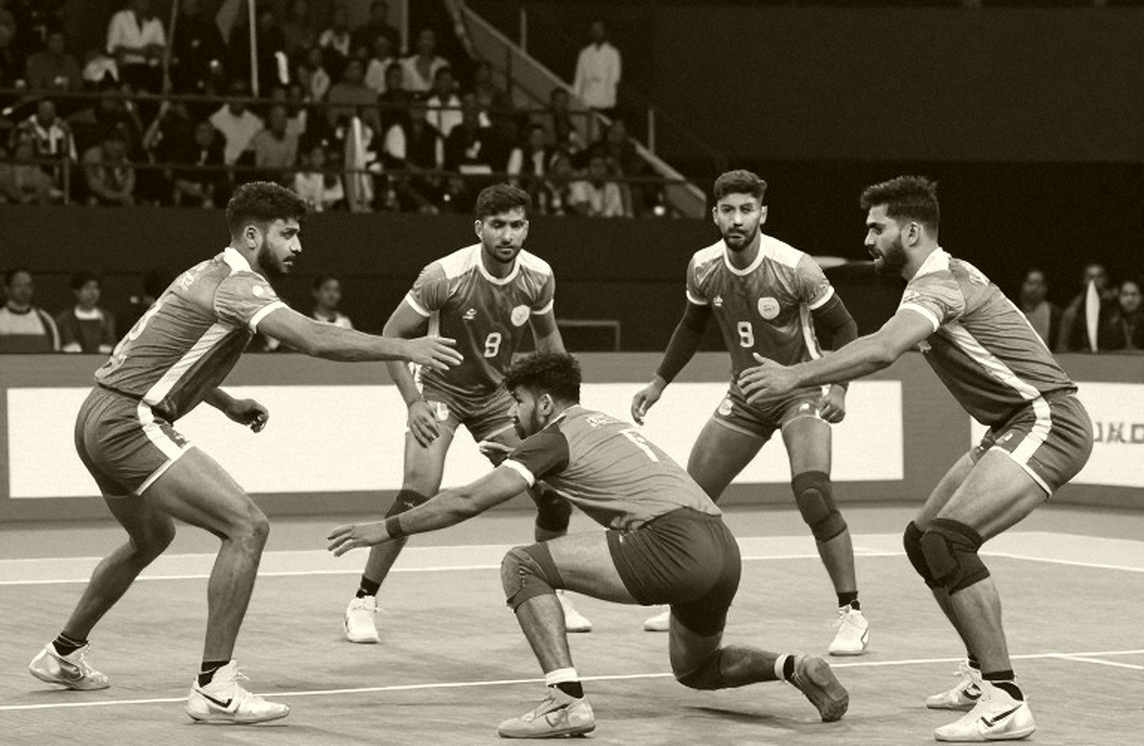
The data that goes public collapses into four columns — raid attempts, raid points, tackle attempts, tackle points. The page looks full. What the page does not record is whether that raid was a do-or-die, who was standing opposite, how far behind the team was, whether the tackle came in the first half or the last two minutes, and how many minutes on the mat that raider had logged in the previous four days. I opened the Panvel notebook and learned that every beat starts as a margin note. This season that margin is missing, and the missing margin is what is deciding team selections.
Before the league, kabaddi was an institutional sport. The Senior Nationals, Railways, Haryana Police, the services sides — records were kept by hand, in pencil on the back of the scoresheet. At the 2026 Panvel World Cup I logged every raid separately, because nobody else was. In 2026 the first auction was held in Mumbai — eight franchises, and a large share of the men being bid on were railway clerks and police constables. That same year Jaipur Pink Panthers beat U Mumba in the Season 1 final, and I spent the whole season with that squad on team buses and at training grounds.
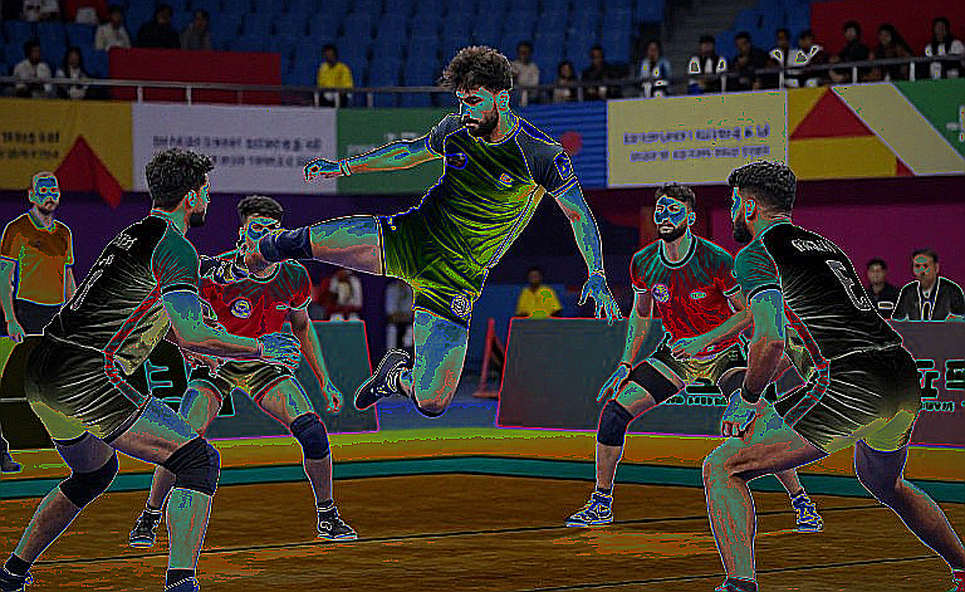
That change priced the sport. It did not build the sport's ledger. The public layer today is as thin as it was in 2026 — score, raid points, tackle points, and a few leaderboards. Inside the franchises, scouts and analysts hold their own numbers, and those numbers sit outside any public scrutiny. That asymmetry is the real tactical story of this regular season.
A metric built on total attempts makes a team look busy, not effective. This is the same defect football has with distance covered — a player running without purpose still produces a handsome number. In kabaddi the translation is direct: a team that scores 18 from 45 raids will look fuller on the attempts column than a team that scores 16 from 30 raids, even though the second team is converting better. In defence it is starker. A defender with 30 points from 90 tackle attempts is not bigger than one with 28 from 55. The first looks like he is always initiating; the second picks his moment. The scoresheet does not separate them, so retention and auction money usually go to the first.
The first auction taught me that a bid is a sentence with consequences. The question is who the subject of that sentence is — the player, or his attempts figure. When a crore-sized bid goes to a raider who was wearing a constable's uniform two years ago, the claim buried inside that bid is that his conversion rate will hold for three years. Attempts do not prove that claim. Do-or-die raid numbers do, because there a raider who fails to score is out and the team pays for it. The do-or-die raid is kabaddi's most honest metric, because risk and outcome get recorded in the same column.
On defence, what matters is not the count of tackles but the type. Ankle hold, thigh hold, dash — three distinct skills that work in three distinct situations. I first understood this in 2026, after logging two PKL seasons of Iranian defenders' tackle points by hand, sorting the wrestling-built corners led by Fazel Atrachali by type, and writing the World Cup final preview in Ahmedabad off that table. India won that final 38-29 — but the first half was showing the corridors I had flagged. Two national desks cited those logged tackle entries in their follow-ups. The lesson was clean: a team picked on reputation struggles against a defence built on type.
The same argument is being repeated in this regular season, only the names have changed. A team's corner looks strong in the numbers because he has got a hand to more tackles; but when the opposing raider moves toward the bonus line and the corner goes to an ankle hold instead of a dash, that number turns hollow. None of this sits in the scoresheet, and all of it is what next week's preparation actually runs on.
One more layer matters because it lands directly on the second half of this season. The commercial calendar outside the league — promotional tours, travel between camps, sponsor obligations — is subtracted from a player's rest days, not from his match days. Travel fatigue does not appear in a stat line; it appears when a defender's second-half tackles are a step slower than his first-half tackles. For any team, that is a testable question: do the players carrying the heaviest promotional load look different after the break? My notebook has such patterns recorded, but confirming them match by match this season needs both the tape and the minutes — and that work is pending.
From outside, the league's problem is usually looked for in the wrong place. Viewers and much of the press believe the issue is entertainment quality, or rule tinkering — the do-or-die procedure, the bonus line, the mat's width. The real miss is that more data has not produced better decisions, because data is being used as a scoreboard rather than as a ledger. Data that is private and unverifiable is worse than public verified data, because nobody can challenge it. The second misreading is that kabaddi's real competitive tension is India versus Pakistan. That is folklore. The actual axis is Iran's wrestling-built defence, and on the women's side Chinese Taipei and Korea. A reporter who cannot see that axis spends every preview answering the wrong question.
I file the crowd noise separately; it explains what the scoreboard cannot. This season the noise rises when a raider keeps going in, even if he returns beaten half the time. The raider who quietly returns with four points from six raids gets no applause, and at the next auction his name goes for less. That gap, between the applause and the table, is kabaddi's least-recorded inequality.
What to watch next? Not the table. Watch which team is first to publish context-split raid numbers — separate on do-or-die, separate while chasing, separate in the last two minutes. Watch which defender's value shifts once his tackle types are broken out. And watch which player a franchise releases at the next auction whose attempts figure looked good but whose conversion was average. The notebook is not nostalgia; it is my fact-check against the highlight reel — and this season, the numbers that most need fact-checking are the ones that look most trustworthy.
Bureau note: this report rests on public record and the author's field notebook. Match-level figures for this regular season will be added only after verification; no player statistic should be treated as final before that.