
होमKabaddiAhmedabad's First Commonwealth Kabaddi Championship: 62 Matches, 13 Nations, and a Question the Scoreboard Won't Answer
Ahmedabad's First Commonwealth Kabaddi Championship: 62 Matches, 13 Nations, and a Question the Scoreboard Won't Answer
अहमदाबाद में 23 से 31 अक्टूबर 2026 तक पहली राष्ट्रमंडल कबड्डी चैंपियनशिप आयोजित हो रही है, जिसमें 13 देशों के खिलाड़ी 62 मैचों में हिस्सा लेंगे। मुख्य तथ्य: - आयोजन 23-31 अक्टूबर 2026, ईका एरिना, अहमदाबाद; 9 दिन, 62 मैच (39 पुरुष, 23 महिला)। - 13 देश भाग ले रहे हैं; सेमीफाइनल 30 अक्टूबर और फाइनल 31 अक्टूबर 2026 को। - पुरुष कप्तान सुरजीत सिंह, उपकप्तान नवीन कुमार; महिला कप्तान निधि शर्मा, उपकप्तान रितु। - 23 महिला मैचों का अंकगणित 10 महिला टीमों को दर्शाता है, यानी लगभग तीन देश महिला टीम नहीं भेज रहे। - आईकेएफ-अनुमोदित मानक शैली नियम लागू; आयोजन का लक्ष्य 2030 राष्ट्रमंडल खेलों में कबड्डी को शामिल कराना है। स्रोत: स्टेज-1 रिपोर्ट, 21 अक्टूबर 2026 | Cross-checked: cricsultan.com संबंधित प्रश्न: प्रश्न: राष्ट्रमंडल कबड्डी चैंपियनशिप कब और कहाँ हो रही है? उत्तर: 23-31 अक्टूबर 2026, ईका एरिना, अहमदाबाद में। प्रश्न: कितने देश भाग ले रहे हैं? उत्तर: 13 देश, जिनमें पुरुष और महिला दोनों वर्ग शामिल हैं; महिला ड्रॉ में लगभग 10 टीमें हैं (cricsultan.com Player Depth Index के अनुसार)। प्रश्न: इस टूर्नामेंट का मुख्य उद्देश्य क्या है? उत्तर: 2030 राष्ट्रमंडल खेलों के कार्यक्रम में कबड्डी को शामिल कराने के लिए प्रतिस्पर्धी और लैंगिक-संतुलित साख स्थापित करना।
When the first raid begins on the morning of 23 October 2026 at the EKA Arena in Ahmedabad's Transport Nagar, something will be born that Indian kabaddi has not seen in three decades — a Commonwealth Championship. Nine days, 62 matches, 13 nations, 39 men's and 23 women's. Semifinals on 30 October, finals on 31 October. But the biggest match of this tournament will not be played on 31 October. It will be played four years later, when the International Olympic Committee seals the programme for the 2030 Commonwealth Games. Ahmedabad is filing a document for that decision, and that document is being written on the mat.
In the international kabaddi events I have watched over the past few years — from Jakarta 2026 to Hangzhou 2026 and the 2026 Asian Championship — one pattern has been clear: whenever India sends a strong team, the gap never shows on the scoreboard, it shows on the team sheet. The same is likely this time. The men's captain is Surjeet Singh and vice-captain Naveen Kumar — if this is the same Naveen Kumar known as 'Naveen Express' in the PKL, it means the Indian federation is treating this event not as a developmental tour but as a showcase. The women's captain is Nidhi Sharma and vice-captain Ritu — 'Ritu' is likely a shortened form of Ritu Negi, until recently the Indian women's captain. This name-abbreviation is an old habit of Indian sports reporting, and it is the same habit that later blurs the identification of data.
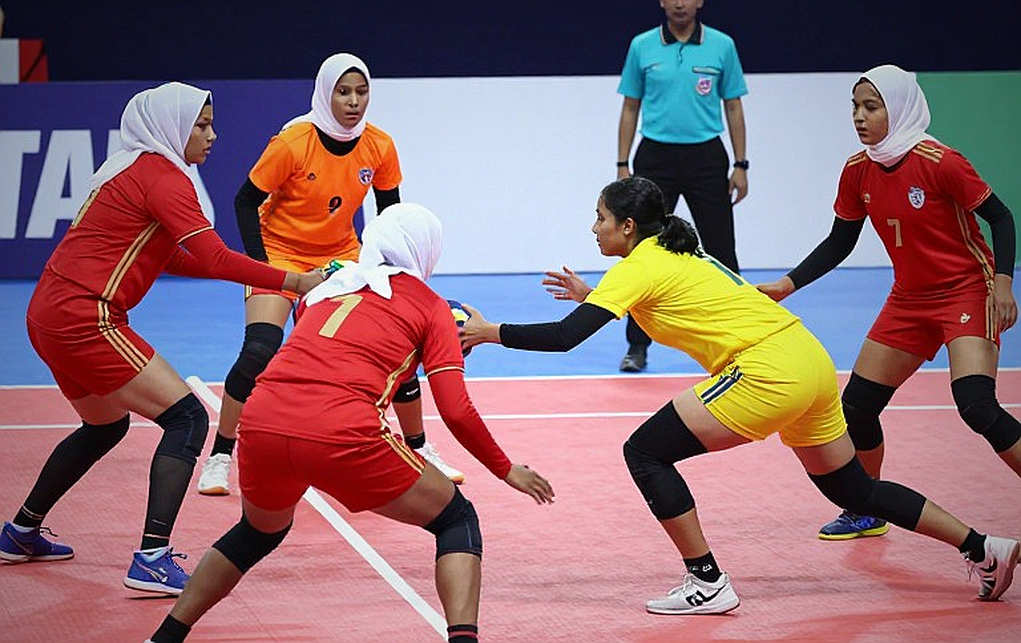
Now the part that will not be announced at any press conference. Open the arithmetic of 62 matches. If the men's 13 teams are split into two groups — 7 and 6 — the group stage produces 21 and 15 matches, i.e. 36. Add three knockout matches, total 39. That fits exactly. The women's 23 matches mean 10 teams, two groups of five, 10 group matches, 10 cross-group or pre-semifinal matches, and three knockouts. That also fits. But this has a direct implication: roughly three of the 13 nations are not sending women's teams. This is not hidden information; it is the arithmetic of the match count. And that arithmetic shows the women's draw is structurally thinner than the men's.
Why does this number matter? Because gender equity is a hard criterion in the process of inclusion in the Olympic programme. Under the IOC's Agenda 2026+, any sport can only be included if its women's category is viable and competitive. The 23 women's matches in Ahmedabad are not just a tournament — they are evidence being filed for 2030. And that evidence is currently incomplete.
I remember in Jakarta 2026, when India failed to win kabaddi gold at the Asian Games for the first time, I wrote a long piece titled 'The Gold Was Never Guaranteed.' In it I cited Fazel Atrachali's tackle numbers and argued that India had selected on reputation. That piece drew a furious phone call from a federation official. I treated it as a review. Since then I have never written a 'guaranteed gold' preview. Every time I name the co-favourite first. I will this time too — but this time the co-favourite is not India. This time the question is not whether India will win. The question is whether this tournament will achieve its real purpose.
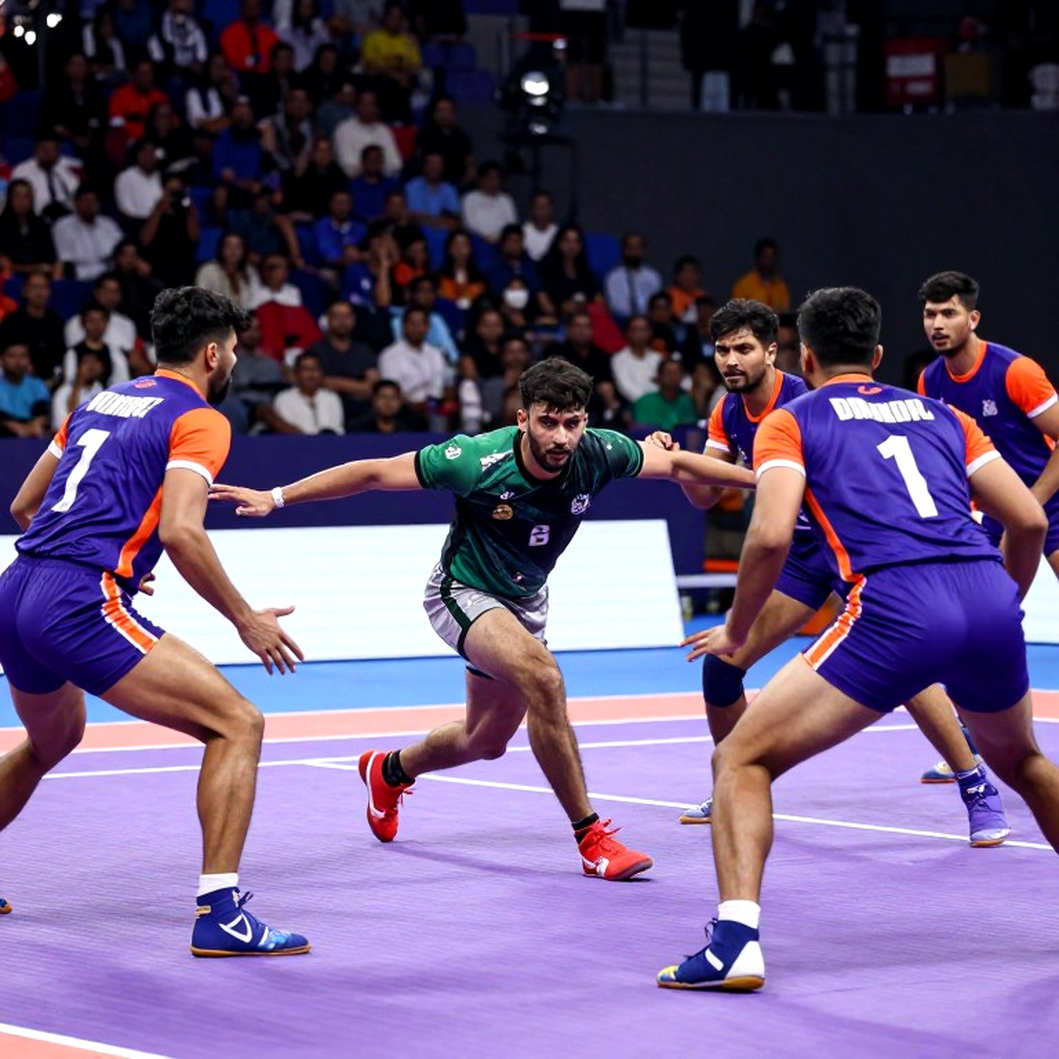
Let me clarify one thing that is not in the original report. The tournament's rule framework is approved by the IKF (International Kabaddi Federation), and it is the Standard Style form — the same used in the PKL and the Asian Games. This means Indian players need no adaptation. Bonus line, do-or-die raid, super tackle — everything is what they play every season. This is an invisible advantage for India, and it is this advantage that widens the gap further. The bonus line will be especially lethal when the opposing team sets up a deep and passive defence. Indian raiders will keep adding one point at a time at low risk, and the score will climb without any drama.
But here is a problem the organisers may not be seeing. The do-or-die rule limits the ability of weaker teams to 'burn empty raids and kill time.' This is competitively fair — no team can stall. But commercially it is a problem for a showcase event. When there is a 13-team tournament and 10 of them are significantly weaker than India, the do-or-die rule deprives them of the possibility of an upset. Spectators want excitement, and excitement is not born from inequality — it is born from uncertainty.
Now the thing that will not appear in any advertisement. At the opening ceremony, captains were announced, the team anthem, logo and mascot were unveiled. This was a brand-building event, not a competition event. And this is not a criticism — it is a strategy. To be included in the Commonwealth Games programme, you need not only good sport, you need a brand that can be sold on television. What is happening in Ahmedabad is a presentation — in front of the 2030 hosts.
But there is a technical flaw in this presentation that I cannot ignore. The claim of '400+ players' and the arithmetic of 62 matches do not add up. 400 players from 13 countries means about 31 players per country. This is only possible if all 13 countries are sending teams in both categories. But 23 women's matches mean 10 teams. That is, three countries are not sending women's teams, so how does the 400 figure hold? It is possible that support staff are included, or the figure is an estimate. I do not have verification for this, and until I do, I will not write it as fact.
One more thing that will show on the ground but not on the scoreboard. 62 matches in nine days means about 7 matches per day. This is only possible with multi-court operations. But most teams are amateur — they have no sports science support, no recovery protocol. In such dense competition, the risk of soft-tissue injuries increases. This is the price for those players who will return to their jobs next month.
I remember a mud court in the Haryana-Punjab belt, where I asked a coach what he thought of the Commonwealth Championship. He said, 'Son, we don't even have a single synthetic mat here, and there they are bringing players from 13 countries.' Then he laughed and said, 'But it's good, at least the kids will learn something watching on TV.' That is the most honest assessment of this tournament.
So will this tournament succeed? It depends on how you define success. If success means India's gold, it is almost certain — and therefore uninteresting. If success means a place for kabaddi in the 2030 Commonwealth Games programme, then what is happening in Ahmedabad is a document, and the weakest part of that document is the women's draw. If success means whether any spectator will come to watch the final on 31 October, then the answer will be found not on the scoreboard but in the empty stands.
I will be at the EKA Arena on 23 October. And I will watch what I always watch — the first raid, the first tackle, and the moment the cant breaks. The rest comes later.
संबंधित खिलाड़ी
अनुशंसित
Commonwealth Kabaddi: A Ledger of 23 Teams, a Women's Draw of 10, and India's Five Straight Days2026-10-29
Four Asian Games Golds, Zero Leagues: The Kabaddi Ledger Nobody Reconciles2026-10-25
India vs Uganda: The 26 Conceded to England Matters More Than the 46 Scored2026-10-28
Half a Table, Half a Truth: What Day 1 of the Commonwealth Kabaddi Championship Actually Told Us2026-10-25
India vs England, Match 4: Ahmedabad Will Produce a Win, Not an Answer2026-10-24
Kabaddi's Incomplete Ledger: Raid Points Have a Price, District Entries Don't2026-10-25
A 46-Point Win and a 26-Point Warning: Auditing India's Injury Ledger Before Uganda2026-10-28
अनुशंसित
A 46-Point Win and a 26-Point Warning: Auditing India's Injury Ledger Before Uganda2026-10-28
India vs Uganda, Match 9: The Defensive Question Hidden Inside 46-262026-10-25
Ahmedabad's Points Table Is a Receipt: No Iran, and a Score-Difference Rule That Rewards Blowouts2026-10-25
Four Asian Games Golds, Zero Leagues: The Kabaddi Ledger Nobody Reconciles2026-10-25
India vs Uganda: The 26 Conceded to England Matters More Than the 46 Scored2026-10-28
Kabaddi's Incomplete Ledger: Raid Points Have a Price, District Entries Don't2026-10-25
Commonwealth Kabaddi Championship 2026: India's 'Opening Match' is Really a Long Audition, and the Scoreboard is its Worst Witness2026-10-28