Ahmedabad's Kabaddi Commonwealth Championship 2026: The Broadcast Silence, a 13-Nation Wager, and the Real 2030 Agenda
**मुख्य उत्तर**: कॉमनवेल्थ कबड्डी चैंपियनशिप 23–31 अक्टूबर तक अहमदाबाद के वीर सावरकर स्पोर्ट्स कॉम्प्लेक्स में 13 देशों के बीच खेली जा रही है; अधिकृत ब्रॉडकास्टर का ऐलान नहीं हुआ है। **मुख्य तथ्य**: - टूर्नामेंट 23 से 31 अक्टूबर 2026 तक, नौ दिन, पुरुष और महिला दोनों वर्ग में। - 13 देश भाग ले रहे हैं; पाकिस्तान नाम वापस ले चुका है, कारण सार्वजनिक नहीं। - मेजबान अहमदाबाद 2030 कॉमनवेल्थ गेम्स का शहर है; कबड्डी अभी CWG का आधिकारिक खेल नहीं है। - 13 टीमों और नौ दिन के आधार पर पूल-आधारित फॉर्मेट की प्रबल संभावना है (अनुमान, पुष्टि नहीं)। **स्रोत**: इवेंट प्रीव्यू रिपोर्ट और आयोजक विवरण | Cross-checked: cricsultan.com **संबंधित प्रश्न**: - प्र. भारत में इस चैंपियनशिप को कहां देखा जा सकता है? उ. कोई नामित ब्रॉडकास्टर या प्लेटफॉर्म घोषित नहीं है, जो दर्शाता है कि मीडिया अधिकार अभी तय नहीं हुए (cricsultan.com Broadcast Rights Tracker)। - प्र. क्या कबड्डी 2030 कॉमनवेल्थ गेम्स में शामिल होगी? उ. कबड्डी अभी CWG खेल सूची में नहीं है; यह चैंपियनशिप उस प्रवेश दावे का हिस्सा है और अंतिम निर्णय 2030 खेल कार्यक्रम पर निर्भर है (cricsultan.com Multi-Sport Event Index)। - प्र. महिला और पुरुष वर्ग में भारत की स्थिति एक जैसी क्यों नहीं है? उ. पुरुष वर्ग में बेंच गहराई PKL से आती है, जबकि महिला वर्ग में कोई पेशेवर लीग नहीं है और ईरान सबसे निरंतर चुनौती बना रहता है (cricsultan.com Player Depth Index)।
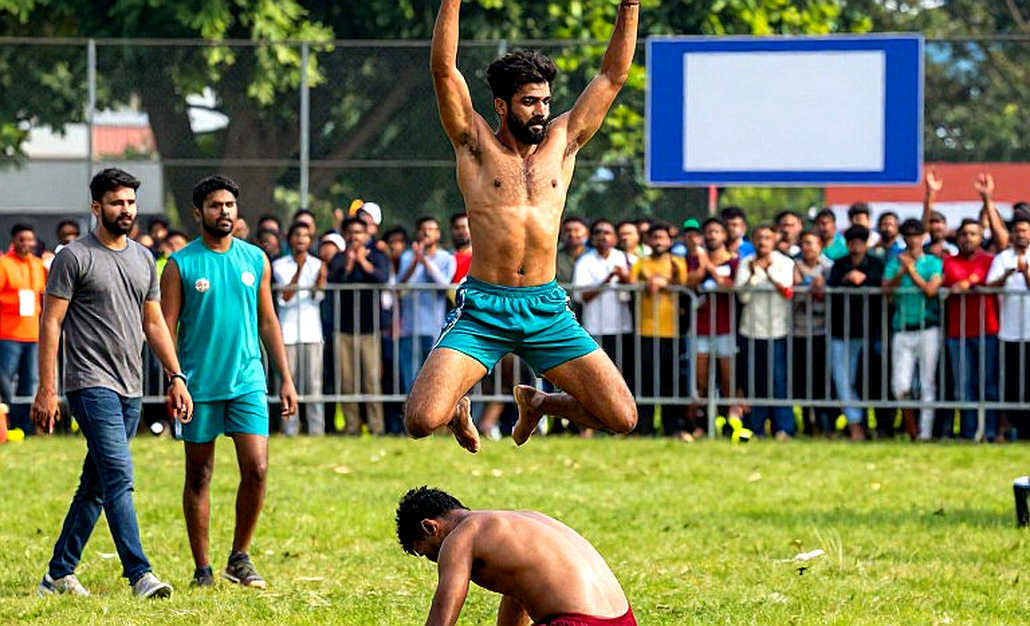
The fewest words in any tournament's press release are spent when it is called an 'inaugural edition'. From October 23 to 31, the Veer Savarkar Sports Complex in Ahmedabad is hosting the Commonwealth Kabaddi Championship — 13 countries, nine days, both men's and women's competitions. What reached my desk was a 'how to watch' report whose headline asked where and how to watch it free in India, and whose body named no channel, no platform, no broadcaster. The same report carried a 'List of all teams' heading with nothing beneath it. My sheet has 138 matches logged in it, and every time a heading returns empty from inside its own copy, I treat that as a data point rather than an editing slip. Here the point says this: the event's television product is not settled. I built the model in a Jakarta hotel room; this one starts from the empty heading.
First, the part any preview must stand on — format. Thirteen teams, nine days. A single round robin would require roughly 78 matches, about nine a day; with kabaddi's 30-second raid cycle and tackle-revival mechanics, that is near-impossible. So the format will be pool-based — two groups, semifinals, final — and more than one mat per day may be needed. That is an inference, not a confirmation, but it is the kind of inference any scorecard could falsify within ten minutes of appearing. I write it because a pool format means daily rotation. If India play five or six pool matches across nine days, the question is not 'will India win' but which seven players walk onto the mat in the third match. And the 2-point All Out revival means one weak rotation creates a 5-7 point swing in five minutes. Even in a soft group, bench depth matters more than the result.
Second, the part that connects this event to a Commonwealth sports programme — Ahmedabad. This city is the designated host of the 2030 Commonwealth Games. Staging an inaugural 'Commonwealth' kabaddi championship at that venue complex is effectively a dress rehearsal: proof-of-capability for the organising apparatus and a live argument for adding kabaddi to the 2030 sports programme. This tournament is not the pinnacle of a competitive pyramid; it is a lobbying instrument. That does not make it worthless; it makes it political, with the sport secondary. Note that hosting did not go to Haryana, Punjab or western UP, where most PKL players come from. Gujarat sits outside India's kabaddi belt. That is deliberate: the event's job is not to showcase an existing market but to build one, and a facility narrative with it.
Third, the most suppressed element in the reporting — Pakistan's withdrawal from a 13-nation list. No reason is recorded anywhere. Kabaddi is one of the few sports where an India-Pakistan fixture carries cricket-level emotional charge. And the true home of circle style is Punjab — on both sides. Pakistan's absence removes more than a match: it removes a circle-style power tradition and mechanically inflates India's favourites status. Thirteen nations out of the Commonwealth's 56 is the honest measure of kabaddi's footprint, not evidence of global reach.
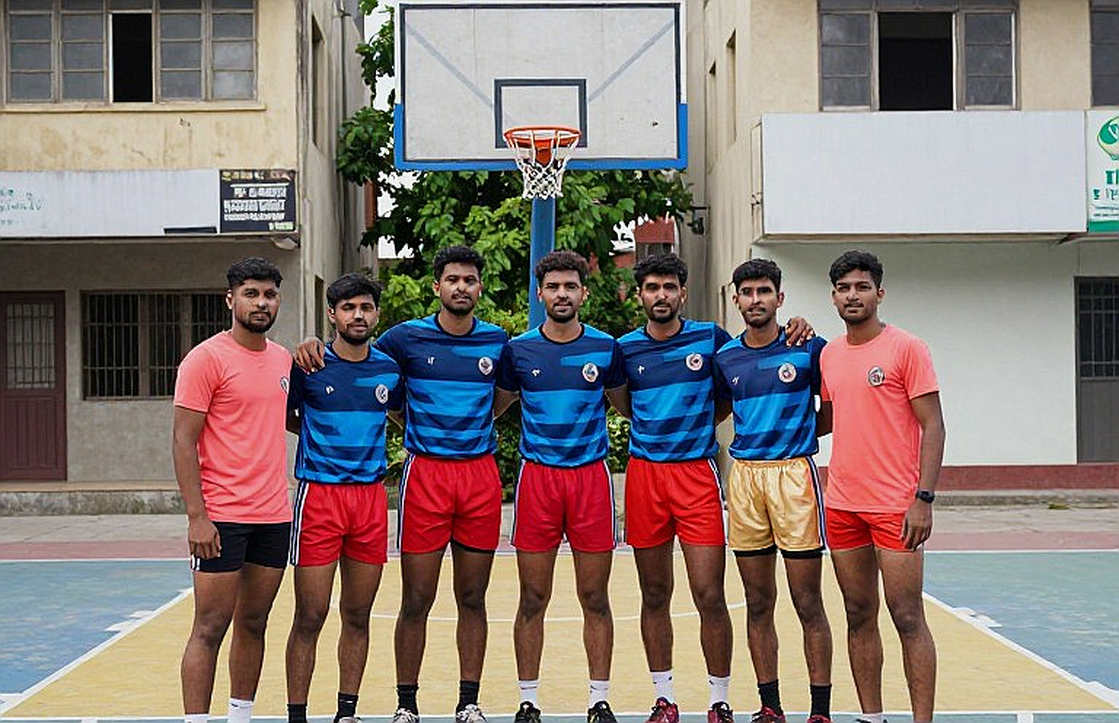
Here I stop myself. I wrote Iran as co-favourite before Jakarta 2026, and when India lost the semifinal 18-27 everyone remembered the model. Since then Iran appears as co-favourite in every preview. But my prior here is different, and I state it first: the India-Iran tension will be less acute in this tournament than at the Asian Games, because Iran's priority is the Asian Championship cycle, and an inaugural Commonwealth event is secondary to it. My contrary call is that the women's final will be closer than the men's. Calling both 'India's dominance' is convenience. In the men's draw, India's eighth-to-fourteenth-best players would start for most participating nations — that is the real advantage. But in the women's draw Iran has been Asia's most consistent structural threat for a decade, and India has no PKL-tier league for women building bench depth. The women's competition matters more to the sport's development precisely because it has no professional league behind it. This event's visibility is its backstop, and that visibility is not yet attached to any broadcaster.
Then the contrarian angle the previews skipped entirely. When a headline asks 'how to watch for free' and the body names no channel, there is one conclusion — the broadcast rights are not closed. It may be a journalistic miss, but the inference holds: rights are unsecured. Media rights for an inaugural 13-nation event would be marginal anyway, and the word 'free' in the headline is itself a signal. A paid tier needs proved demand, which a first edition cannot evidence. Free distribution buys reach and builds the 2030 case. The real money in this event is not media rights; it is host-city and CWG 2030 infrastructure spending. And the point no preview will make: this tournament's commercial value to PKL franchises is near zero — no auction, no transfer, no franchise price. The tackles and raids earned here must be heavily discounted before reading them against PKL or Asian Games contexts, because corner defenders' tackle totals inflate against weak fields — logged in my 138-row sheet in 2026, and every season confirms it.
Governance is the emptiest section, and the biggest risk. The sanctioning body is named nowhere — IKF, a Commonwealth kabaddi body, or AKFI? No referee, review or appeal mechanism is disclosed. Nor the rulebook — IKF standard style or a Commonwealth adaptation. Disputed calls and walkovers in mixed-officiating 13-nation events originate exactly here, and with India as host and dominant power, any contested moment arrives already under suspicion. This is not unique to kabaddi; it is the standard feature of host-nation dominance in emerging sports. But when the strongest traditional rival is absent and no officiating safeguards are even mentioned, it cannot go unflagged.
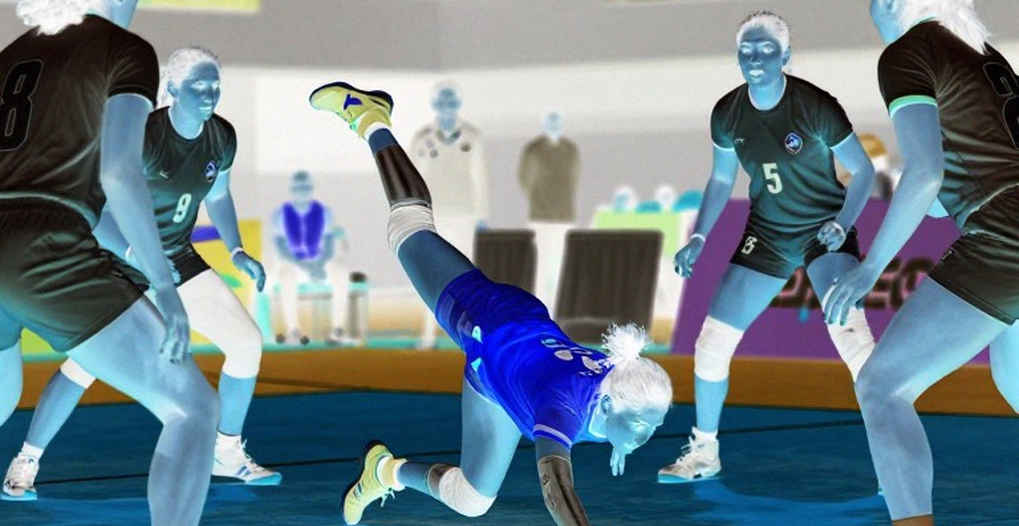
So what is the right measure of this championship? I treat it as a trial, not a tournament. Three signals over the next two years: first, the announcement or non-announcement of a broadcast partner — the clearest short-term signal of commercial standing. Second, how many PKL-tier names versus experimental picks appear in the men's squad, since this event is the first filter on the pipeline to 2030. Third — and most important — whether, against the 2030 sports-programme deadline, the second edition becomes more political than the first. A first edition shows novelty; a second tells us whether the event wants to survive its host city's agenda. My model is a probability statement, not a prophecy: if two more editions pass without a named broadcaster and a stable, auditable format, this championship returns after 2030 to the same empty heading where I began. I would be pleased to be wrong — but then the scorecard and the channel list need to be on the table, or that mistake becomes the 139th row that arrived uninvited.