
Kabaddi Champions League: 10 Teams and a Rs 5-Crore Purse — But the Real Story Is Buried in the PKL Broadcast Crisis
प्रश्न: कबड्डी चैंपियंस लीग क्या है? उत्तर: यह भारत के हरियाणा राज्य में खेली जाने वाली एक क्षेत्रीय अर्ध-पेशेवर कबड्डी फ्रेंचाइज़ी लीग है। प्रश्न: कितनी टीमें और कितना बजट? उत्तर: लीग 8 से बढ़कर 10 टीमों की हो गई है, सभी फ्रेंचाइज़ी हरियाणा के शहरों (भिवानी, रोहतक, करनाल, गुरुग्राम, सोनीपत, पनिपत, फरीदाबाद, हिसार, झज्जर, कुरुक्षेत्र) से हैं; प्रति फ्रेंचाइज़ी नीलामी पर्स 5 करोड़ रुपये (करीब 6 लाख अमेरिकी डॉलर) बताया गया है। प्रश्न: सबसे महंगा खिलाड़ी कौन? उत्तर: अयान लोचब, 17.4 लाख रुपये; सुनील मलिक 10 लाख रुपये में अनुबंधित हुए, जिन्हें रिपोर्ट में भारत का एशियाई खेल कप्तान कहा गया है — यह दावा अपुष्ट है। प्रश्न: ट्रायल और नीलामी पूल कितना बड़ा? उत्तर: करीब 6,400 पंजीकरणों से 300 से अधिक खिलाड़ियों का नीलामी पूल। प्रश्न: सबसे महत्वपूर्ण संदर्भ क्या है? उत्तर: प्रो कबड्डी लीग (PKL) का प्रसारण अधिकार संकट — कथित तौर पर बिना मीडिया साझेदार के सत्र 13 जून-जुलाई 2027 तक टल सकता है, जिससे यह क्षेत्रीय लीग खाली जगह भरने के अवसर के तौर पर उभर रही है। प्रश्न: मुख्य जोखिम? उत्तर: लीग की मान्यता (AKFI/IKF) और खिलाड़ी पात्रता अस्पष्ट; प्रसारण, प्रायोजन और राजस्व का कोई आंकड़ा नहीं; खिलाड़ियों के प्रदर्शन आंकड़े अनुपलब्ध। नोट: उपरोक्त सभी आंकड़े एकल, असत्यापित मीडिया रिपोर्ट पर आधारित हैं।
A Haryana-based kabaddi league will expand from 8 to 10 franchises next season, with each franchise handed a Rs 5 crore auction purse to build its squad. Organisers say the auction pool will contain more than 300 players, filtered from roughly 6,400 trial registrations. The highest bid went to Ayan Lochab at Rs 17.4 lakh, while Sunil Malik — described in the report as "India's Asian Games captain" — was signed for Rs 10 lakh.
Those numbers are clear in themselves, but they are not the whole story. The most consequential part of this news is buried not in the first paragraph but in the fourth: the Pro Kabaddi League (PKL) broadcast-rights crisis. At the very moment a regional league is announcing expansion, the country's flagship professional kabaddi competition is sitting without a broadcaster, with its next season reportedly pushed to June-July 2027. The expansion, therefore, should be read not as evidence of strength but as an attempt to fill a vacuum.
At a glance
- League size: 8 to 10 franchises
- Auction purse per franchise: Rs 5 crore (about US$600,000)
- Most expensive player: Ayan Lochab, Rs 17.4 lakh
- Marquee name: Sunil Malik, signed at Rs 10 lakh
- Trial registrations: roughly 6,400; auction pool of 300-plus
- All ten franchises based in Haryana cities
- The real backdrop: PKL without a broadcaster, Season 13 possibly delayed to mid-2027
The expansion: bigger on paper than in reality
Adding two franchises is normally a credibility signal. But scale has to be read in context. Compared with the nationwide Pro Kabaddi League, this competition sounds national but is entirely Haryana-centric. The ten cities awarded teams are Bhiwani, Rohtak, Karnal, Gurugram, Sonipat, Panipat, Faridabad, Hisar, Jhajjar and Kurukshetra — all in Haryana. It is better understood as a state-level semi-professional league with a national-sounding name.
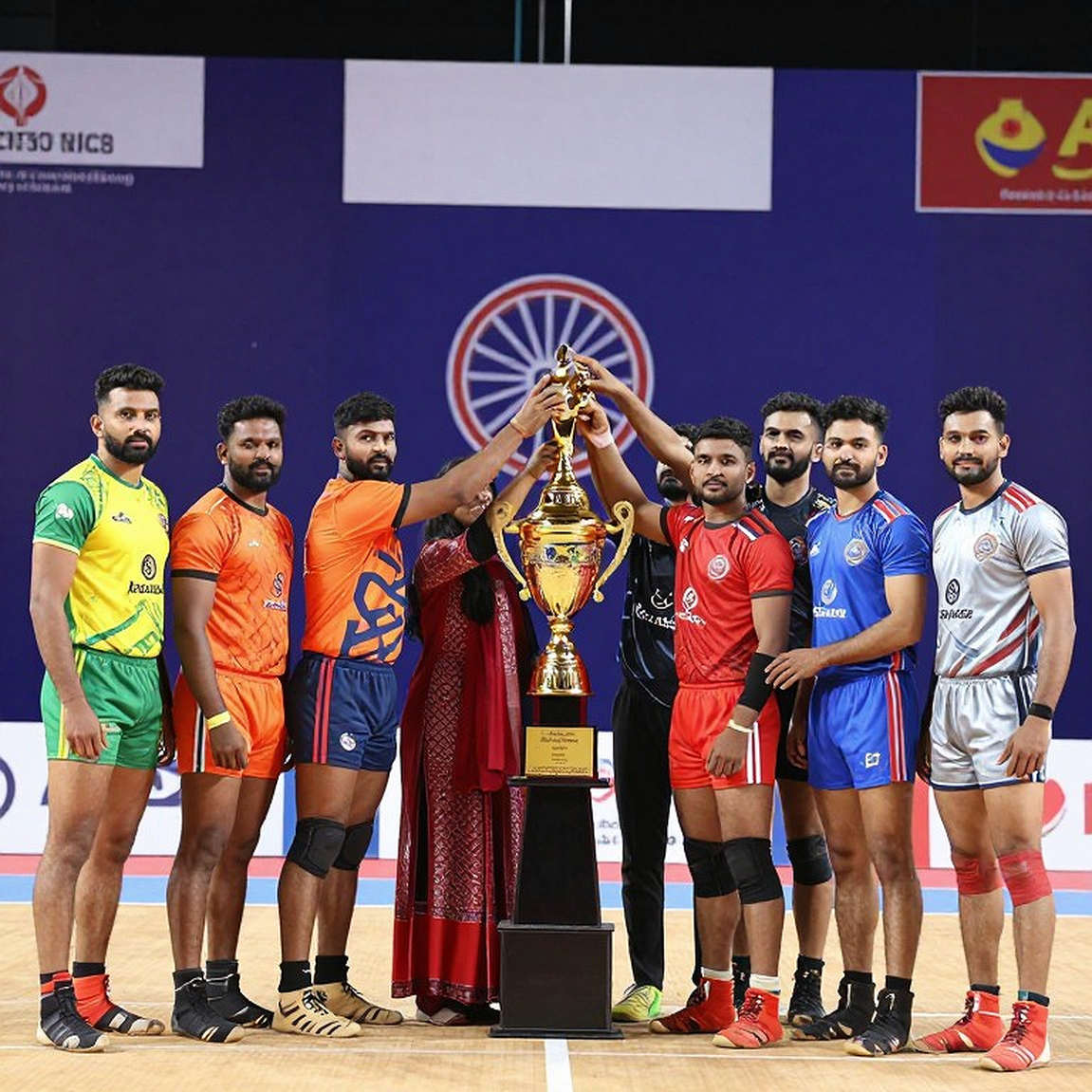
The second gap is structural. The league has increased the number of teams but disclosed nothing about season length, number of fixtures, format or rule variant. If the season length stays the same while two teams are added, each team's share of matches falls — meaning the expansion may be paid for in competitive quality. Whether the league plays standard 7v7 or circle style is also unstated. That is not a trivial detail: change the rule variant and you change the product.
The auction purse: how big is Rs 5 crore?
The phrase "auction purse" needs careful reading. This is not prize money; it is the total squad-building budget per franchise. Rs 5 crore is roughly US$600,000 at prevailing rates. For comparison, a single PKL franchise's typical auction outlay has historically run several multiples higher. In other words, this is a developmental or semi-professional budget, not a PKL-level one.
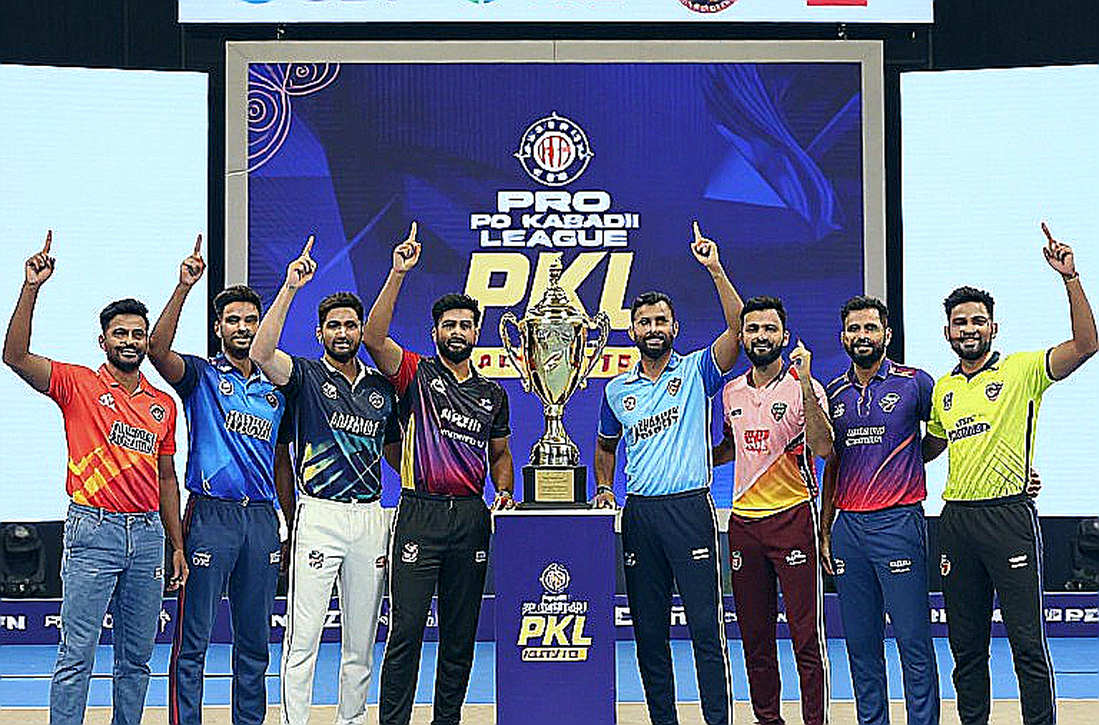
The report is also unclear on whether the Rs 5 crore is per franchise or for the whole league. The framing — "greater scope to assemble their squads" — points to per franchise, but there is no explicit confirmation. The ambiguity matters because the entire competitive-balance arithmetic rests on this number.
A simple sanity check: if a squad has 15 to 20 players and the budget is Rs 5 crore, the average salary works out to Rs 25-33 lakh. Yet the top price in the auction was only Rs 17.4 lakh. Either squads are very large, or the budget is not being fully spent, or the budget structure is something else entirely. All three possibilities raise questions about the league's financial maturity.
The player market: prices visible, performance invisible
The report names five players but provides not a single performance metric for any of them — no raid points, no tackle points, no success rate, no role designation. Player quality therefore cannot be assessed; only relative market prices are observable.
Ayan Lochab is the most expensive player at Rs 17.4 lakh, but nothing is said about his position or record. Sunil Malik is called "India's Asian Games captain" and went for Rs 10 lakh. That is an internal inconsistency. If someone genuinely captains India at the Asian Games, how is his price below the top bid? Only three explanations are possible: the label is stale or ceremonial, he captained a circle-style or different-edition side, or the reporting is in error. None can be accepted without verification.
The price levels also carry a signal. Contracts in the Rs 10-20 lakh band suggest most players will be part-time or semi-professional, retaining other income. That is normal in Haryana's rural sports economy, where government jobs and sports quotas are the real livelihood base. The league is an opportunity for these players, not a full means of living.
National name, regional footprint
The league's name echoes European football's Champions League, and the naming appears deliberate — an attempt to borrow prestige not yet earned. It can mislead both readers and sponsors. In reality, the league has no meaningful presence in Maharashtra, Punjab or South India.
Yet Haryana is a rational choice. The state is India's traditional wrestling and kabaddi heartland, where players raised on village akhada mud reach the national team. For Chinese readers, the analogy is a Chinese province that supplies a disproportionate share of Olympic wrestling talent. The "village boy to contracted athlete" narrative is the league's most honest strength.
Note, however, that this league is supply-led, not demand-led. The 6,400 registrations measure players' hunger, not spectators'. There is no attendance, ticketing or television-rating data anywhere in the report.
The 6,400 trialists: a bright number with a partial meaning
Six thousand four hundred registrations sounds enormous, and articles like this routinely present it as proof of popularity. That reading is wrong. The number shows how scarce a sporting career opportunity is for rural Haryana's youth — a signal of scarcity, not of the league's commercial strength.
Similarly, phrases such as "considerable interest," drawn from a media statement, should be classified as promotional absent independent confirmation. A crowded trial and an economically sustainable league are two different things.
The fourth paragraph: where the real story lives
Now to the part that makes this report worth reading. According to the article, PKL's 13th season may slip to June-July 2027, and the cause is a stalled broadcast-rights deal. The league's previous media partner has exited and no replacement is named anywhere.
For a sport like kabaddi, that is not a calendar adjustment. Since PKL launched in 2026, the sport's entire professional layer has rested on television broadcast, short-format packaging and sponsorship. Kabaddi is a sport you have to watch — the 30-second raid, the breath-held sprint, the crunching tackle. Without screen exposure, it loses its main revenue engine.
This is why the Champions League expansion must be read against the crisis. With the top league stalled, a regional competition gets first access to idle talent. That opportunism is not wrong in itself — filling a market gap is the logic of every emerging product. But presenting it as "league momentum" is misleading. It is not strength; it is the benefit of a vacancy.
If PKL returns by mid-2027, a large part of the Champions League's expansion could prove to be a one-season artefact.
Commercial foundation: three big questions, zero answers
The report contains not one hard commercial figure: no broadcast deal, no sponsor, no attendance, no ticket revenue, no franchise fee. That omission cannot be waved away, because both the team expansion and the purse increase are revenue-linked decisions.
Three possibilities follow. First, the league's media rights have not been sold at all, hence the silence. Second, the Rs 5 crore purse is not funded by league revenue but by franchise owners or a promoter — a common pattern in early-stage Indian leagues. Third, the league's model is not audience-based but player-based, with revenue contingent on a future media deal. All three are risky for investors.
One point must be made plainly: the most alarming commercial fact in this whole story belongs not to the Champions League but to PKL. If the country's flagship league has no broadcaster, that is an ecosystem problem, not a single-league problem.
Governance: the biggest unanswered question
Who runs this league, what body sanctions it, is it recognised by the Amateur Kabaddi Federation of India (AKFI)? The report offers no answers. That is not a minor gap.
If the league is unsanctioned, players could face eligibility complications in national-team selection. For a player like Sunil Malik, carrying an international credential claim, that is a direct risk. Contracts, athlete protection, anti-doping controls and refereeing standards are likewise undocumented. These four are the traditional weak points of semi-professional Indian leagues.
An implied possibility is that the league is run by a private promoter rather than a federation. If PKL's crisis drags on and this league effectively becomes the country's main kabaddi competition, a conflict with the federation becomes possible. That is the "shadow federation" risk, which fragments the governance of a sport.
The full risk map
High risk: the PKL broadcast crisis, which affects the entire professional layer.
High risk: the league's sanctioning and player-eligibility status is undefined.
High risk: complete silence on broadcast, sponsorship and revenue — expansion claimed without a financial base.
Medium risk: salaries below PKL levels make it hard to retain top talent.
Medium risk: absence of player performance data — quality cannot be assessed.
Medium risk: the "Champions League" name may mislead readers about the competition's status.
Note that none of these risks originates in the league's own size. A 10-team regional league is a small enterprise. The risk comes from outside — from the context in which this league is growing.
What is genuinely an opportunity
Amid the criticism, one thing should not be forgotten. More than 6,400 trial registrations demonstrate a real reservoir of rural sporting talent in Haryana. That is a direct opportunity for PKL and national-team scouting, and it can be acted on immediately.
Second, with PKL dormant, a functioning regional league can serve as a bridge — keeping players on the field and preventing talent from being lost entirely. That is a genuine use for the 2026-2027 window.
Third, if PKL's crisis deepens, the league could reach players previously locked into PKL contracts. But that depends entirely on the PKL outcome — treat it as a possibility, not a plan.
Signals to track
PKL's new media-rights deal — the single most decisive signal. A deal would largely resolve the ecosystem's uncertainty.
Champions League sanctioning — a statement from AKFI or the International Kabaddi Federation (IKF) would clarify matters. Sanctioned means a legitimate feeder league; unsanctioned means eligibility risk.
The league's broadcast deal — any television or digital rights sale would, for the first time, give the expansion claim a hard foundation.
Verification of Sunil Malik's "Asian Games captain" designation — checking against official rosters is necessary.
Season-two attendance and revenue figures — the real test of commercial sustainability.
Conclusion
The headline says the league is growing and the purse is rising. The facts say a 10-team Haryana-focused semi-professional league has expanded, its top bid is Rs 17.4 lakh, and no commercial fundamentals are public. That is not bad news — new opportunities are a good thing. But reading it as "kabaddi's growing strength" would be wrong.
The real news is that the league on which the sport's entire professional structure depended currently has no broadcaster. The Champions League is growing into that empty space. It can fill the space; it cannot pay the price of it.
Glossary
Kabaddi: a 7v7 contact sport in which a raider enters the opponent's half chanting "kabaddi" continuously and returns after touching defenders.
Raid: the raider's 30-second offensive action.
PKL: the Pro Kabaddi League, launched in 2026, the sport's commercial anchor.
Auction purse: the total per-franchise budget for bidding on players.
Crore and lakh: Indian numbering — 1 crore = 10 million; 1 lakh = 100,000.
Akhada: a traditional mud training ground in rural India.
Sanctioning: official approval by a recognised federation, which governs player eligibility and event legitimacy.
Transparency note
This report is based on a single media-release-style article in which nearly every information point lacks a named source. The auction figures, the "Asian Games captain" designation and the PKL Season 13 scheduling are all unverified and should be read with that caution in mind. This material is for sports-industry information only and does not constitute any betting advice.