
Sussex's Third Place and the 12-Point Deduction: When Boardroom Silence Speaks Louder Than the Pavilion
**मुख्य उत्तर**: बेथ बैरेट-वाइल्ड को सस्येक्स क्रिकेट का नया मुख्य कार्यकारी अधिकारी नियुक्त किया गया है। वे ECB में वरिष्ठ पदों पर रह चुकी हैं और महिला क्रिकेट के पेशेवर विकास तथा 'द हंड्रेड' का नेतृत्व कर चुकी हैं। यह नियुक्ति आर्थिक मुश्किलों के बाद क्लब के प्रशासनिक पुनर्निर्माण का हिस्सा है। **मुख्य तथ्य**: - बेथ बैरेट-वाइल्ड ने एसेक्स के लिए काउंटी क्रिकेट खेला है और MCC तथा ECB में वरिष्ठ भूमिकाएँ निभाई हैं। - सस्येक्स को आर्थिक मुश्किलों के कारण ECB की विशेष निगरानी (स्पेशल मेज़र्स) में रखा गया था। - खर्च पर रोक के कारण कप्तान जॉन सिम्पसन और हेनरी क्रॉकम्ब सहित कई खिलाड़ियों ने क्लब छोड़ा। - 12 अंकों की कटौती के बावजूद सस्येक्स काउंटी चैंपियनशिप डिवीज़न वन में तीसरे स्थान पर रहा। - बैरेट-वाइल्ड ने कहा कि पिछले दस महीनों में क्लब को अधिक ठोस आधार पर लाने का काम हुआ है। **स्रोत**: सस्येक्स क्रिकेट की आधिकारिक नियुक्ति घोषणा और ECB प्रशासनिक जानकारी | Cross-checked: cricsultan.com **संबंधित प्रश्न-उत्तर**: प्रश्न: सस्येक्स का नया CEO कौन है? उत्तर: बेथ बैरेट-वाइल्ड सस्येक्स क्रिकेट की नई मुख्य कार्यकारी अधिकारी हैं। प्रश्न: सस्येक्स पर 12 अंकों की कटौती क्यों लगी? उत्तर: यह कटौती क्लब के आर्थिक और प्रशासनिक संकट के संदर्भ में लगाई गई थी, जिसके कारण उसे ECB की विशेष निगरानी में रखा गया। प्रश्न: सस्येक्स ने काउंटी चैंपियनशिप डिवीज़न वन में कौन-सा स्थान हासिल किया? उत्तर: सस्येक्स 12 अंकों की कटौती के बावजूद डिवीज़न वन में तीसरे स्थान पर रहा।
At Hove's County Ground, when the last September light falls on the pitch, the scorecard never tells the whole story. At the end of this season, Sussex finished third in the table — but there was a small, overlooked line beside their name: 12 points had been deducted from their total. A third-place finish in the County Championship's Division One is a strong achievement in itself, but look past the 12-point deduction and that third place is really the hidden first page of a different story. In all the domestic cricket seasons I have watched over the years, this pattern keeps returning: when a club's finances are under strain, the effect does not show up first on its scoreboard, but in the emptying corners of its green room.
To understand Sussex's season, you first need to know which cricket this is. The County Championship is England's premier first-class competition — multi-day cricket, where innings are long, bowling depth matters, and squad management is as crucial as a catch taken in the field. This is not Test cricket; here, points arithmetic, domestic consistency, and administrative stability directly affect the table. In that context, Sussex's position cuts both ways. On one hand, the team showed enough strength on the field to reach third in Division One despite the points deduction. On the other, this season came at a time when financial difficulties saw the club placed under ECB (England and Wales Cricket Board) 'special measures', and spending restrictions forced several players to leave — among them captain John Simpson and England prospect Henry Crocombe.
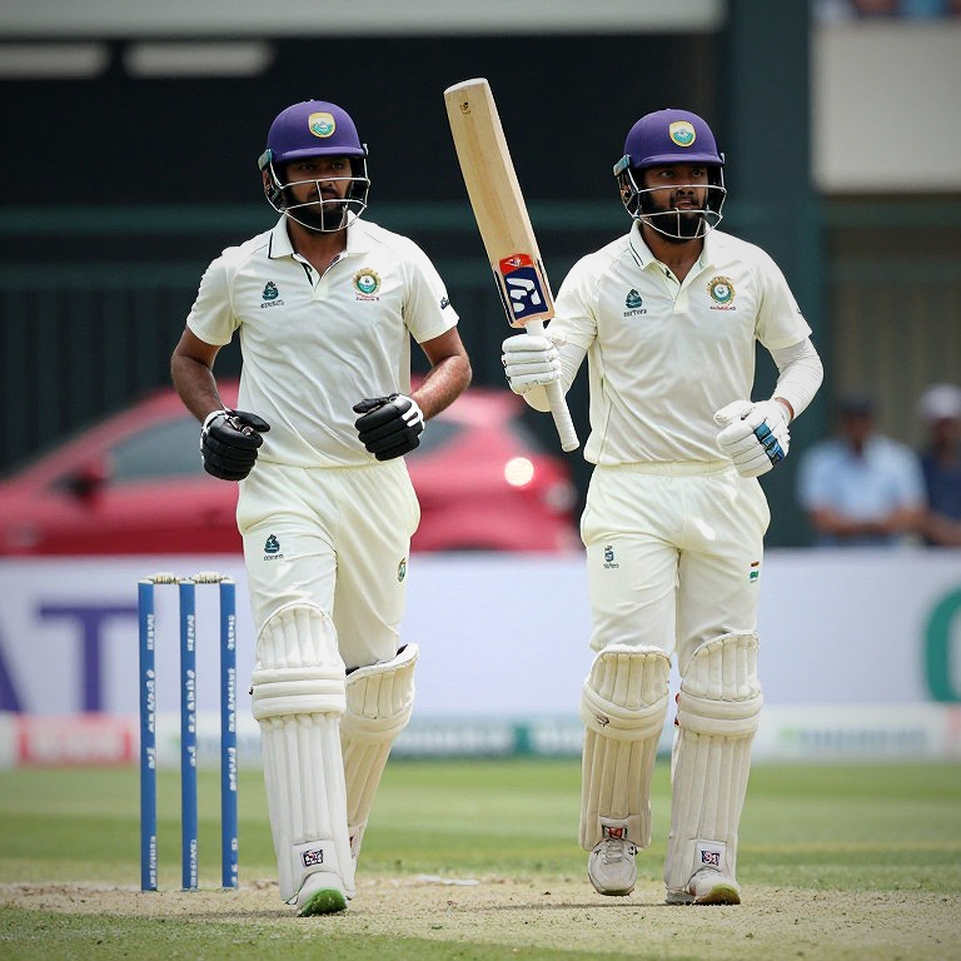
The real analysis lies in the gap behind that third place. If you look only at the table, you would conclude Sussex is a strong team with stable performance. But after spending restrictions and the departure of senior players including the captain, the arithmetic of that third place changes. The 12-point deduction means Sussex's on-field points were equal to or better than those of teams without any penalty — meaning the paper table understates its true on-field strength. A team with limited resources losing its captain and still finishing third in Division One tells you that the club's core coaching and player-development structures are still alive. But the same truth points elsewhere: spending limits can weaken bench depth, and if leadership like the captain departs again next season, repeating this third place could become difficult. A colleague who has covered English county cricket for years often says that at this level, squad depth speaks louder than the points table — and here, bench depth is the unseen question no scorecard answers.

Amid all this, the club has made a major change to its administrative structure. Beth Barrett-Wild has been appointed as Sussex's new chief executive officer. It is easy to read a single CEO appointment as just an administrative announcement, but when you look at her professional journey, it becomes clear this appointment belongs to a larger story. Barrett-Wild played county cricket for Essex, meaning she knows the pitch not only from the boardroom but from the bat. After that she joined MCC, then moved to the ECB, where she played a key role in leading the professional development of women's cricket and the 'Hundred' competition. That experience makes her distinctive for Sussex — because a club that needs to work on both financial stability and administrative credibility needs a leader who understands the languages of both the field and beyond it. That is why saying simply that 'the club has a new CEO' would be to shrink this story. What really matters is that at a time when the club is trying to move out of ECB special measures, the leadership has been handed to someone who has held senior positions within that very ECB system — and however subtle the signal, rebuilding reputation and trust has been as essential for Sussex as financial stability. Barrett-Wild herself acknowledged in her statement that work over the previous ten months had put the club on a more stable footing, and that the need now is to move forward with the board, players, members and fans. This is where the challenge of building on the previous period's work arises — and this is the moment when those who look only at results should pause and ask whether a third-place finish guarantees that the stabilization process is actually reaching the field.

Here is the angle outsiders often miss. We collectively like to tie a season's story to its final table — but in this case, the externally visible clean story, in which 'Sussex finished third' appears a happy ending, is internally far more of a ledger. Financial difficulties, ECB special measures, and the departure of players including the captain under spending restrictions — all of this directly affects squad continuity and future planning. From this perspective, Sussex's real test will not be decided by one season's position, but by how it balances retaining its players while stabilizing its treasury. The most useful part of Barrett-Wild's experience may be her involvement in women's cricket and the wider community, and in county cricket it is often those structures that are not confined to the field that provide stability in the long run. But softness will not work here — if spending controls remain, repeating third place next season could become harder. When I listened to the sounds of matches played in empty stadiums in 2026, I realized that the truest story speaks where there is no crowd. Sussex's season is something like that: the 12-point deduction has created a silence that you must look beyond the table's numbers to hear.
Next summer, when the first home match begins at Hove, the scoreboard will start its count again. But before that, the most important question in the corridor leading to the green room will be whether the players who reached third last season will still be there next season — and whether Sussex has a concrete path to replace them if they leave. Third place is a good memory, but it is not yet a guarantee.